
Ride System
The bicycle as the working structure that moves and controls the rider.
- It includes frame, wheels, drivetrain, brakes, and steering.
- It carries the main load.
- Accessories depend on it.
A bicycle is the ride system; cycling accessories are support systems around it. The bike's frame, wheels, drivetrain, brakes, steering, and tires create motion and control.
Accessories such as lights, helmets, bottle cages, computers, racks, bags, pumps, and repair kits change visibility, carrying, measurement, protection, or maintenance. They depend on the bicycle rather than replacing it.
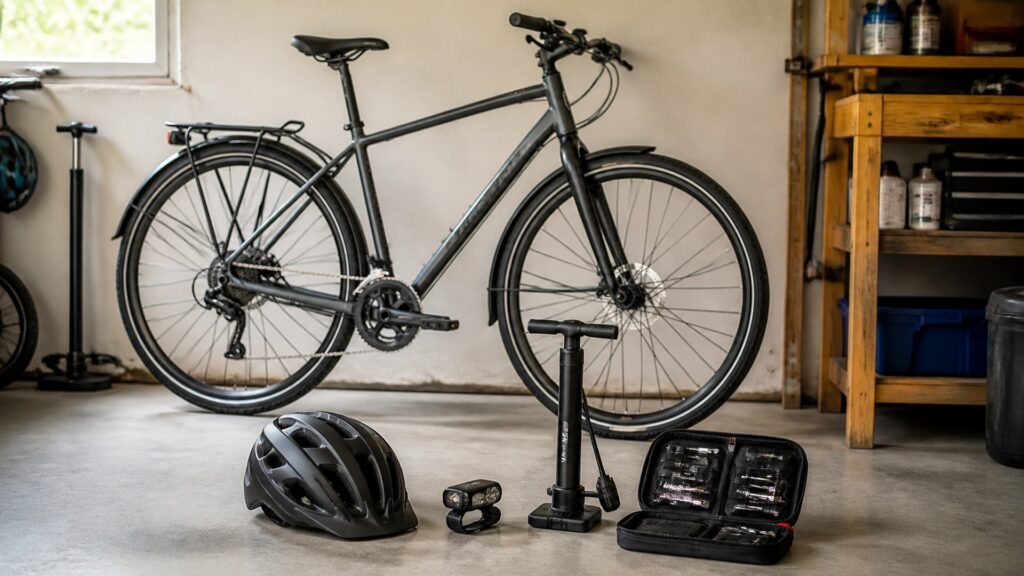
This comparison separates the bicycle's core motion system from the add-ons that support, measure, carry, or protect around it.
Tip: If removing the item stops the bike from functioning as a bike, it is core; if it supports a use case around the bike, it is accessory logic.
These definitions connect the main idea to the variables, limits, and practical signals readers need to compare options.
The bicycle as the working structure that moves and controls the rider.
An accessory that helps a ride without creating motion.
Gear intended to reduce exposure or improve visibility.
The point where an accessory attaches.
A computer, sensor, or app-connected device.
A part required for the bicycle to function as a bike.
Tip: Follow dependency: accessories attach to the bike, not the other way around.
The bicycle is the load-bearing motion system: frame, wheels, drivetrain, steering, brakes, and tires work together to move and control the rider.
Accessories support the ride; they do not create it.
Helmets, lights, bottle cages, computers, racks, bags, and repair kits serve visibility, measurement, carrying, protection, hydration, or maintenance roles around the bicycle.
Accessories are attached functions, not the core machine.
Accessories need mounting points, frame clearance, wheel size, bar diameter, brake type, or tire room to work correctly.
The bike defines the accessory's practical limits.
Safety accessories can matter, but they do not replace brakes, steering, tire contact, maintenance, or rider judgment.
Accessory value should not be confused with bicycle function.
A bicycle purchase is about fit, frame, drivetrain, brakes, wheels, and use. Accessory purchases are about the specific support task around that bike.
Separating categories prevents mismatched decisions.
The distinction is strongest when it separates required ride systems from optional support functions.
It shows why accessories depend on frame, component, and mounting compatibility.
It prevents accessories from being treated as substitutes for brakes, steering, tires, or fit.
It cannot rank every accessory or decide personal safety needs.
It also cannot replace standards, local law, or product instructions.
Common shortcuts and misunderstandings can make the topic seem simpler than it is.
Some accessories matter a lot, but they still support the bike rather than replace it.
Protective and visibility items do not replace brakes, tires, steering, or judgment.
Mounts, clearances, wheel size, and frame design can block compatibility.
It measures or displays data; it does not change the bike's core mechanics.
Tip: Treat strong claims as starting points for comparison, not final answers.
Concise answers to common questions readers may have after the main explanation.
The bicycle creates motion and control; accessories support particular ride needs around it.
They are protective gear, not part of the bicycle's drivetrain, steering, or braking system.
They determine whether racks, cages, lights, bags, or sensors fit securely.
No. Core components still need inspection and care.
No. They can be essential for a use case, but they are evaluated differently from the bicycle.
Bicycles differ from cycling accessories because the bicycle is the core ride system: frame, wheels, drivetrain, brakes, steering, and tires.
Accessories support visibility, protection, storage, hydration, repair, or measurement around that system, so they should be compared by compatibility and use case.
Use these Review Streets paths to connect the explainer to related categories, comparisons, and next decisions.
Use this for the bicycle mechanism behind the topic.
Read this to connect bicycle design with ride use cases.
Browse bicycle options after the concept is clear.
Choose a retailer
Prices checked regularly. We may earn a commission at no cost to you.