What Makes Connected Gym Equipment Different from Fitness Training Apps

Connected gym equipment and fitness training apps can both guide workouts, track activity, and organize training. The difference is where the intelligence lives. Connected gym equipment builds software into the machine or device doing the work, while a fitness app usually provides instruction, tracking, or programming through a phone, tablet, watch, or separate screen. That distinction affects control, setup, feedback, cost, and flexibility. A connected bike, rower, treadmill, cable machine, or smart strength system can measure and adjust the workout through its own hardware. A fitness app can travel across equipment, spaces, and routines, but it may depend on manual input or external sensors.

By: Review Streets Research Lab
Updated: September 17, 2026
Explainer · 8-12 min read
connected gym equipment explainer hero image for Review Streets
What You'll Learn

What You'll Learn

A practical guide to how connected gym equipment differs from fitness training apps in hardware, control, feedback, setup, and workout flexibility.

  • Why connected equipment can control resistance, speed, or machine settings directly
  • How fitness apps usually guide workouts without owning the exercise hardware
  • Where built-in sensors change feedback quality
  • Why apps are often more flexible across different workouts
  • How subscriptions and ecosystems differ between the two
  • When the simpler app-based option may be enough

Tip: Compare what each system controls, not just what each one displays.

Key Concepts

Key Concepts That Define The Difference

Built-In Hardware Control

Connected gym equipment can control or measure part of the workout through the machine itself.

Example: a smart bike that changes resistance during a climb interval.

Why it matters: the workout and the hardware are linked, so settings can change without separate manual adjustment.

Watch for: whether the machine still allows easy manual control.

App-Based Instruction

Fitness training apps usually provide coaching, programming, timers, videos, or tracking without controlling the equipment directly.

Example: a phone app that guides dumbbell intervals while the user changes weights manually.

Why it matters: the app is portable, but the workout depends more on the user's setup and input.

Watch for: whether the app works well with the equipment and space available.

Sensor Source

The place where workout data comes from, such as a machine sensor, wearable, phone camera, or manual entry.

Example: a connected rower measuring stroke rate directly from the machine.

Why it matters: built-in sensors may capture equipment-specific data that a general app cannot see on its own.

Watch for: whether the data is accurate enough to guide the session.

Setup Friction

The amount of effort required before the workout can start.

Example: launching an app, pairing a wearable, setting up a mat, and manually choosing weights.

Why it matters: a flexible app can still feel inconvenient if the user has to assemble the system each time.

Watch for: pairing steps, subscriptions, account requirements, and device placement.

Ecosystem Lock-In

The degree to which workouts, data, subscriptions, and accessories are tied to one platform.

Example: a connected treadmill whose classes, stats, and programs work best inside its own subscription.

Why it matters: tighter integration can improve the experience but reduce flexibility.

Watch for: whether workouts, data, or features remain useful without an active subscription.

Workout Portability

The ability to use the same training system across different places, equipment, or exercise types.

Example: an app that can guide bodyweight workouts at home, dumbbell training in a gym, and outdoor runs.

Why it matters: apps often fit mixed routines better than a single connected machine.

Watch for: whether the reader needs one excellent equipment experience or guidance across many settings.

Tip: Connected equipment usually wins on integrated machine control; apps usually win on portability.

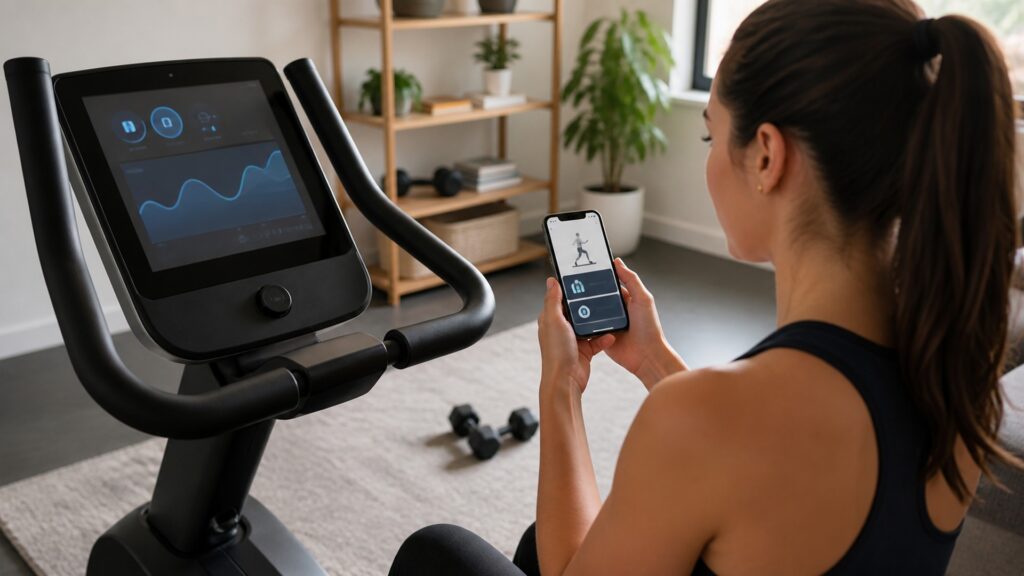
The Core Difference Is Control

Connected gym equipment is tied to the equipment performing the workout. That allows the system to adjust resistance, incline, pace, or feedback based on the machine's own hardware.

Fitness training apps usually sit outside the equipment. They can guide the session, show a timer, track a plan, or display coaching, but they often rely on the user to change weights, speed, resistance, or exercise setup.

That difference matters most when the workout depends on precise setting changes or machine-specific feedback.

Connected Equipment Can Measure The Machine More Directly

Because connected equipment is built into the machine, it can often read data from the workout source itself. A rower can measure strokes, a bike can measure cadence and resistance, and a smart strength system can track load or cable movement.

Apps can still be useful, especially when paired with wearables or external sensors. But they may not know exactly what the machine is doing unless the user enters data manually or connects compatible hardware.

The stronger choice depends on whether machine-specific data matters for the workout.

Apps Are Usually More Flexible Across Workouts

A fitness training app can move from room to room, gym to home, or strength training to mobility work. It is not limited to one machine or one built-in screen.

That flexibility is valuable for people who train with dumbbells, bands, bodyweight movements, outdoor cardio, or a mix of equipment. The tradeoff is that the app may provide guidance without controlling the physical workout environment.

Connected equipment can feel more complete for one workout type, while an app can be easier to use across many.

Setup And Subscription Tradeoffs Differ

Connected gym equipment often combines hardware, software, classes, metrics, and subscriptions into one ecosystem. That can make the experience smoother when everything works together.

Fitness apps can be less expensive and easier to try, but they may require separate devices, mounts, wearables, sensors, or manual tracking. They can also duplicate subscription costs if the user already pays for connected equipment content.

The practical question is whether integration is worth the extra hardware commitment.

The Better Choice Depends On The Training Problem

Connected gym equipment makes more sense when the reader wants one integrated workout station with machine control, built-in metrics, and guided programming. A fitness app makes more sense when the reader wants portable coaching across different workouts and equipment.

These categories are not always substitutes. Many people use both: connected equipment for a bike, treadmill, rower, or strength machine, and an app for mobility, outdoor training, bodyweight sessions, or general planning.

Where Each Option Helps And Where It Has Limits

The difference is not that one is always more advanced. It is that each solves a different part of the training experience.

Where Connected Equipment Helps

It can connect guidance directly to resistance, speed, machine feedback, or built-in workout data.

Where Fitness Apps Help

They can guide many types of workouts without requiring a specific machine or permanent setup.

Where Both Can Fall Short

Both can become less useful when the subscription, setup, data, or workout library does not match how the person actually trains.

Common Myths

Common Myths

Connected equipment is just an app on a machine

Some products are close to that, but true connected equipment can also measure, control, or respond through the hardware itself.

Fitness apps cannot support serious training

Many apps can support structured training well, especially when the user already has suitable equipment and knows how to manage load.

Built-in screens always make workouts better

A built-in screen helps only when the content, controls, and feedback improve the workout. Otherwise it can become an expensive display.

Apps and connected equipment are always competitors

They can overlap, but they often work together. An app may handle planning while connected equipment handles one specific training station.

Tip: Focus on the training problem first, then decide whether integrated hardware or portable software fits it better.

FAQ

FAQ

What is the simplest difference between connected gym equipment and fitness apps?

Connected gym equipment combines training software with the workout hardware. Fitness apps usually provide guidance or tracking separately from the equipment being used.

When is connected gym equipment the better fit?

It is usually better when machine control, built-in metrics, guided resistance, or a dedicated workout station matters to the routine.

When is a fitness app enough?

An app may be enough when the reader already has equipment, wants portable programming, or trains across several spaces and exercise types.

Can a fitness app control gym equipment?

Sometimes, if the equipment supports integration. Many apps still rely on manual input, wearable data, or external sensors rather than direct machine control.

Should someone use both?

They can. Connected equipment can serve one main workout station, while an app can support mobility, outdoor training, strength planning, or mixed routines.

Bottom Line

Bottom Line

Connected gym equipment differs from fitness training apps because it ties software to the physical workout hardware. That integration can improve control and feedback, while apps usually offer more portability and flexibility across different training situations.

Next Steps

Go Deeper or Compare Your Options

Use these Review Streets paths to compare related categories and practical next decisions.

Quick Summary

Connected Gym Equipment Explained

  • Connected Gym Equipment should be judged by real workout use.
  • Hardware Owned Feedback and App Only Instruction are the first practical checks.
  • Use cases such as bike resistance controlled by screen reveal whether the product fits.
  • Claims about performance or safety need clear limits.
  • The simpler option is often better when extra features do not solve the main problem.