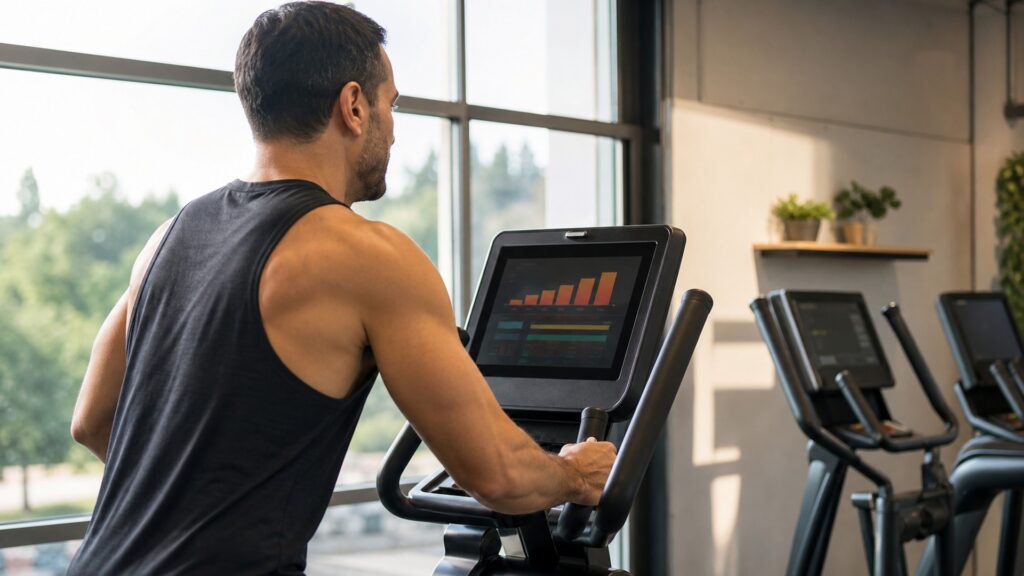
Why Connected Gym Equipment Training Function Matters

Connected gym equipment is most useful when its technology changes the workout in a meaningful way. Screens, sensors, resistance controls, workout libraries, and performance dashboards are not automatically valuable; they matter when they help structure training, select appropriate effort, track progress, or adjust the session with less guesswork. Training function is the difference between a connected feature that looks impressive and one that actually shapes the work being done. A useful connected bike, rower, treadmill, cable machine, or smart strength system should make the training session clearer, more repeatable, or easier to progress.

By: Review Streets Research Lab
Updated: September 17, 2026
Explainer · 8-12 min read
connected gym equipment training function explainer hero image for Review Streets
What You'll Learn

What You'll Learn

A practical guide to how connected features affect programming, load selection, feedback, progression, and the training stimulus.

  • How programming tools change the structure of a workout
  • Why resistance and pace controls affect the training stimulus
  • Where performance tracking helps progression over time
  • How guided intervals and adaptive sessions can change effort
  • Why feedback quality matters more than the amount of data shown
  • Where connected features add friction instead of training value

Tip: Judge connected features by what they change in the workout, not by how many metrics they display.

Key Concepts

Key Concepts That Define Training Function

Programming Structure

The way the equipment organizes warmups, work intervals, recovery periods, strength sets, or progression plans.

Example: a connected bike that builds a ride around cadence targets, effort zones, and recovery intervals.

Why it matters: better structure can make the workout easier to follow and repeat.

Watch for: programs that match the intended training goal instead of offering a large library with little direction.

Load And Resistance Control

How the equipment sets, suggests, or changes resistance, incline, speed, pace, or strength load.

Example: a smart strength machine that recommends a starting load and adjusts it between sets.

Why it matters: training effect depends on the amount of work being asked of the body.

Watch for: resistance changes that feel predictable, understandable, and easy to override when needed.

Feedback During The Session

The real-time cues, targets, and performance signals shown while the workout is happening.

Example: a rower that shows stroke rate, split pace, output, and target range during intervals.

Why it matters: useful feedback helps the user adjust effort before the set is over.

Watch for: displays that clarify the next action instead of overwhelming the workout with numbers.

Progression Over Time

The way the system uses past workouts to show trends, adjust recommendations, or make future sessions more purposeful.

Example: a treadmill program that gradually changes interval length after several completed workouts.

Why it matters: progression is what turns isolated sessions into a training plan.

Watch for: trend data that connects to real decisions, such as effort targets, volume, rest, or exercise selection.

Guided Interval Control

The equipment's ability to coordinate timed changes in speed, resistance, incline, rest, or work periods.

Example: a connected bike that automatically cues climb efforts, recovery blocks, and cadence changes.

Why it matters: intervals work best when the user can focus on effort instead of constantly managing settings.

Watch for: transitions that are clear, timely, and appropriate for the workout intensity.

Manual Override

The user's ability to adjust or exit the connected programming when the session no longer fits.

Example: lowering resistance during a strength set when the suggested load is too high.

Why it matters: connected programming should support training judgment, not trap the user inside a bad setting.

Watch for: simple controls for changing load, pausing, skipping, or switching to manual mode.

Tip: The strongest connected training features make the next training decision clearer.

Programming Turns Features Into A Workout Plan

A connected console or app is not valuable simply because it contains classes. Its training function depends on whether it organizes work into a clear session with a purpose.

  • Endurance sessions need pacing, duration, and effort targets.
  • Strength sessions need load, reps, rest, and progression logic.
  • Conditioning sessions need clear work and recovery timing.
  • Recovery or mobility sessions need intensity limits and movement guidance.

Good programming reduces guesswork. Weak programming leaves the user scrolling through content without a clear reason to choose one session over another.

Load Selection Changes The Training Stimulus

Resistance, pace, incline, and load determine what kind of work the body is doing. Connected equipment can help by suggesting targets or changing settings automatically, but those changes need to match the workout goal.

  • A bike may use resistance and cadence to shape endurance or interval work.
  • A treadmill may use speed and incline to control intensity.
  • A rower may use pace targets to guide output.
  • A smart strength machine may suggest loads based on previous sets.

The value is not automation by itself. The value is whether the settings produce an appropriate, understandable training demand.

Feedback Helps Only When It Guides Action

Connected equipment often shows more data than traditional equipment. Training function improves when that data helps the user make a better decision during or after the workout.

Useful feedback might show whether pace is drifting, whether resistance is too light, whether output is consistent, or whether the user is staying inside the intended zone. Less useful feedback adds numbers without explaining what to do with them.

The best systems make feedback readable in the middle of effort, not just interesting afterward.

Progress Tracking Makes Training More Repeatable

A single workout can feel good without being easy to evaluate. Connected equipment can make sessions more repeatable by storing outputs, showing trends, and comparing similar workouts over time.

  • Repeated ride outputs can show whether endurance is improving.
  • Strength history can help choose a starting load.
  • Interval data can show whether pace falls apart late in the session.
  • Completion history can reveal whether a program is realistic.

Progress tracking matters most when it leads to a practical next step. Data that never changes programming, effort, or expectations is less useful.

Connected Training Still Needs Control

Training function can fail when the connected system becomes harder to manage than the workout itself. Automatic resistance, guided programming, and performance targets should remain adjustable.

Manual controls, clear pause options, simple resistance changes, and fallback modes are part of the training experience. They let the user respond to fatigue, space limits, equipment setup, or a workout that is not matching the day.

Connected equipment works best when guidance and control stay balanced.

Where Training Function Helps And Where It Has Limits

Connected features help when they clarify programming, effort, feedback, or progression. They are less useful when they add screens, subscriptions, or data without improving the workout.

What It Can Improve

It can make sessions easier to follow, make effort targets clearer, and make progress easier to review.

What It Cannot Guarantee

It cannot guarantee results, replace consistency, or make a poorly matched workout appropriate for every user.

Common Myths

Common Myths

More data always means better training

More data helps only when it supports a decision. A clean resistance target can be more useful than a crowded screen of metrics.

Automatic adjustment is always better

Automatic changes can help intervals or progression, but users still need simple ways to adjust intensity when the setting is wrong.

A large class library means stronger programming

Quantity does not guarantee structure. A smaller library with clear progression can be more useful than endless disconnected sessions.

Connected equipment replaces training judgment

Connected features can guide training, but effort, fatigue, form, comfort, and consistency still require human judgment.

Tip: Treat connected features as training support, not as proof that the workout is automatically better.

FAQ

FAQ

What training function matters most in connected gym equipment?

The most important function is the one that changes the workout in a useful way, such as clearer programming, better load selection, more actionable feedback, or easier progression.

When is automatic resistance useful?

It is useful when the workout requires planned intensity changes, such as intervals, climbs, or guided strength sets. It is less useful when the user needs full manual control.

Does performance tracking improve results?

Tracking can support better decisions, but it does not guarantee results. The data has to connect to programming, effort, consistency, or recovery choices.

What is a warning sign that connected features are not helping?

If the system adds setup time, confusion, or constant adjustment without improving the workout, the connected layer may be creating friction instead of training value.

Should connected equipment always choose the workout for the user?

No. Good connected equipment can suggest a path, but the user should still be able to change the session, adjust intensity, or use manual mode.

Bottom Line

Bottom Line

Connected gym equipment training function matters when technology improves the actual workout. The strongest systems make programming, effort, feedback, and progression easier to understand without taking away practical control.

Next Steps

Go Deeper or Compare Your Options

Use these Review Streets paths to compare related categories and practical next decisions.

Quick Summary

Connected Gym Equipment Explained

  • Connected Gym Equipment should be judged by real workout use.
  • Programming Progression Logic and Load Selection Feedback are the first practical checks.
  • Use cases such as progressive ride plan reveal whether the product fits.
  • Claims about performance or safety need clear limits.
  • The simpler option is often better when extra features do not solve the main problem.