
Worn Cycling Layer
Clothing that moves with the rider rather than holding the bicycle.
- It can include bibs, jerseys, gloves, shells, and shoe covers.
- Its job is body-side support.
- It does not create trainer resistance.
Cycling apparel differs from indoor bike trainers because apparel is worn by the rider while a trainer is equipment that holds or loads a bicycle indoors.
Bib shorts, jerseys, gloves, shells, pockets, and chamois placement answer clothing problems. Trainer axles, resistance units, flywheels, cassettes, mats, and support frames answer indoor equipment problems.
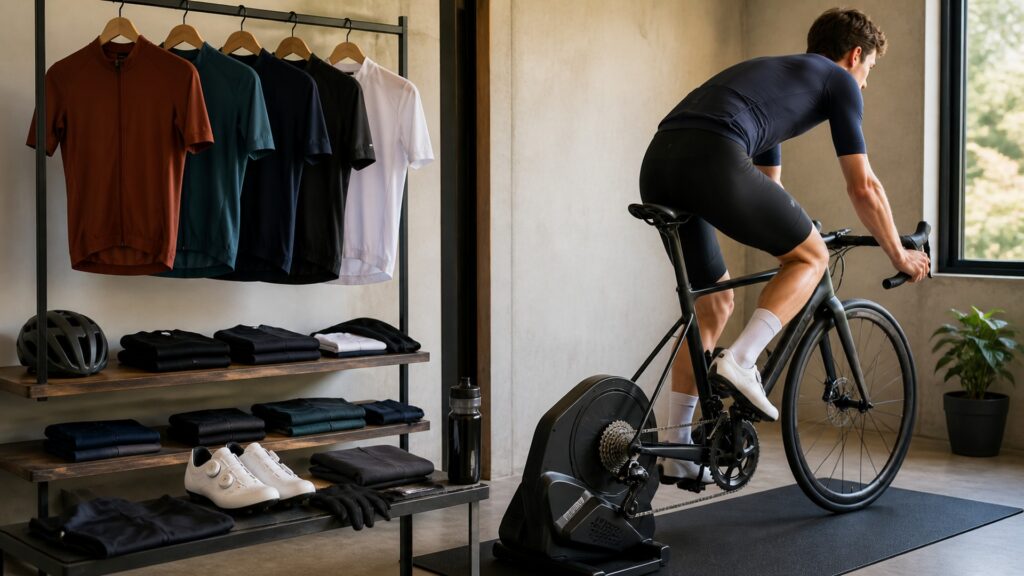
This comparison separates clothing support from trainer mechanics and room setup.
Tip: Ask whether the product is worn on the body or anchors the bicycle in place.
These definitions connect the main idea to the variables, limits, and practical signals readers need to compare options.
Clothing that moves with the rider rather than holding the bicycle.
A device that supports a bicycle indoors while the rider pedals in place.
The position of a pad inside cycling shorts or bibs.
The part of a trainer that creates pedaling load.
The movement needed to access jersey or vest storage.
The space used by trainer, bike, mat, fan, and nearby items.
Tip: Use these terms to keep worn garments separate from indoor resistance equipment.
Cycling apparel works through fabric, cut, straps, pockets, pads, gloves, and layers that move with the rider.
The apparel side is worn rather than installed under the bike.
An indoor trainer supports the bicycle and creates a pedaling station through axle, wheel, cassette, roller, or resistance interfaces.
The trainer side is a stationary equipment system.
A chamois changes clothing contact at the saddle, while a trainer changes how the bicycle is loaded during indoor pedaling.
The comparison fails if contact and load are blended.
A shell or thermal layer answers outdoor exposure, while a trainer often moves the ride inside to avoid route or weather constraints.
Setting keeps the categories apart.
Choose apparel for worn fit, contact, pockets, and weather; choose a trainer for stationary pedaling, resistance control, and indoor bicycle support.
The practical owner of the problem decides the category.
The comparison clarifies whether a cycling problem belongs to worn clothing or indoor trainer equipment.
It separates body-side apparel from bike-side trainer load.
It keeps contact, weather, resistance, and room setup distinct.
It does not rank workouts or guarantee results.
It does not replace fit, product, or health guidance.
Common shortcuts and misunderstandings can make the topic seem simpler than it is.
A trainer is equipment that holds or loads the bike; apparel is worn gear.
Some apparel can still matter indoors, but it does not perform trainer functions.
Pads change clothing contact, not the trainer load curve.
One covers the body; the other supports the indoor setup area.
Tip: Treat strong claims as starting points for comparison, not final answers.
Concise answers to common questions readers may have after the main explanation.
Cycling apparel is worn support, while an indoor trainer is stationary equipment for a compatible bicycle.
Yes, but it still works as clothing rather than resistance hardware.
No. It changes the ride location and load, not the clothing interface.
When the issue is body contact, pockets, fit, or weather coverage.
When the goal is indoor pedaling with bike support and controlled load.
Cycling apparel and indoor bike trainers differ because one is worn on the rider and the other supports a bicycle indoors.
Keep clothing contact and weather functions separate from trainer resistance, compatibility, and room setup.
Use these Review Streets paths to connect the explainer to related categories, comparisons, and next decisions.
Use this for clothing-side construction and fit mechanics.
Read this for axle, resistance, and indoor setup mechanics.
Browse apparel after confirming the issue is worn support.
Choose a retailer
Prices checked regularly. We may earn a commission at no cost to you.