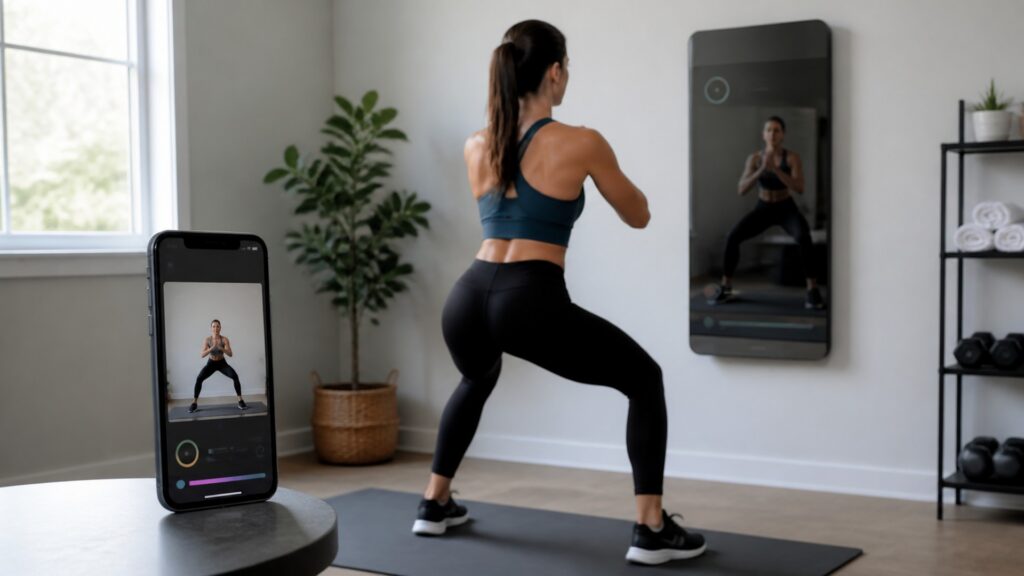
What Makes Fitness Training Apps Different from Smart Workout Mirrors

Fitness training apps and smart workout mirrors both deliver guided workouts, but they solve different problems. A training app is portable coaching that can follow a user across locations and equipment. A smart workout mirror is a dedicated home display built around a specific training space.

The better choice depends on whether the user needs flexibility or a more immersive home workout station. Apps are easier to try and use anywhere. Mirrors can make home training feel more structured, visible, and class-like.

By: Review Streets Research Lab
Updated: September 21, 2026
Explainer · 8-12 min read
fitness training apps explainer hero image for Review Streets
What You'll Learn

How Fitness Apps And Smart Workout Mirrors Differ

A practical comparison of portable coaching versus a dedicated interactive home display.

  • What each option is built to do
  • Why portability is the app's biggest advantage
  • Where mirrors improve visibility, presence, and home workout flow
  • How equipment, space, and subscription costs change the decision
  • When an app is enough and when a mirror may be worth it

Tip: Decide whether the workout needs to travel with you or live in a dedicated home space.

Definitions

Key Differences Between Apps And Smart Mirrors

These concepts clarify how the two options behave in real training decisions.

Portable Coaching

Portable coaching is workout guidance that works across locations, equipment setups, and schedules.

  • Example: using the same app at home, in a hotel gym, and at a commercial gym
  • Check: decide how often training happens away from one room
  • Limit: portability does not provide a large built-in display

Dedicated Display

A dedicated display is a fixed screen designed to make home workouts easier to see and follow.

  • Example: a mirror showing a trainer, timer, and class flow in front of the user
  • Check: confirm there is a practical place to install or stand it
  • Limit: a fixed display is less useful outside that space

Workout Presence

Workout presence is the feeling that the session has a clear place, screen, and class-like structure.

  • Example: standing in front of a mirror for a guided strength class
  • Check: ask whether a more immersive setup would increase consistency
  • Limit: presence is not the same as personalized coaching

Equipment Flexibility

Equipment flexibility is the ability to adapt workouts to different tools, from bodyweight to gym machines.

  • Example: switching from dumbbell workouts at home to cable exercises at a gym
  • Check: review how each option handles substitutions
  • Limit: some mirror programs assume a specific home setup

Space Commitment

Space commitment is the amount of permanent room and setup the product requires.

  • Example: reserving wall or floor space for a mirror
  • Check: measure the space before treating the mirror as simple decor
  • Limit: even slim hardware needs a safe movement area

Cost Commitment

Cost commitment includes hardware price, subscription, accessories, delivery, and long-term platform dependence.

  • Example: buying a mirror plus a monthly class membership
  • Check: compare total first-year cost
  • Limit: a cheaper app is not better if it goes unused

Tip: The right comparison is not software versus hardware. It is flexible coaching versus a dedicated home training station.

Core Difference

Apps Follow The User. Mirrors Anchor The Workout Space.

A fitness app is designed to move with the user. A smart workout mirror is designed to make one home space feel more like a guided studio.

  • Apps work across rooms, gyms, and travel.
  • Mirrors create a more intentional home workout zone.
  • The better fit depends on where training actually happens.

Choose the format that matches the user's real training environment.

Coaching Experience

Mirrors Can Feel More Immersive

A mirror gives the user a larger screen, a standing viewpoint, and a more class-like setup. That can make workouts easier to follow for people who want a visible guide in front of them.

  • A larger display can make demos easier to see.
  • A fixed screen can reduce phone handling during workouts.
  • Class-style presentation may help motivation.

The mirror's value is strongest when the display changes consistency or focus.

Flexibility

Apps Adapt More Easily To Changing Conditions

Apps usually win when the user trains in different places, uses mixed equipment, or wants to test programs before buying hardware.

  • Apps are easier to start, pause, or replace.
  • They can work with existing gym or home equipment.
  • They are better for users who travel or split training locations.

When the routine is mobile, app-based coaching is hard to beat.

Cost And Space

Mirrors Require A Bigger Commitment

Smart workout mirrors may look minimal, but they still require money, wall or floor space, a subscription, and enough room to move safely.

  • Compare first-year cost, not only monthly price.
  • Check whether accessories are required.
  • Make sure the training area works for the workouts offered.

A mirror should be treated as a home-gym purchase, not just a screen.

Best Use

Use The Mirror When The Home Setup Drives Consistency

A smart workout mirror can be worth it when a dedicated space and large guided display make the user train more often. If the same user mainly needs a plan on a phone, the app is the cleaner choice.

  • Choose a mirror for home-studio structure.
  • Choose an app for flexibility and lower commitment.
  • Avoid buying hardware to solve a problem the app already solves.

The right choice should make workouts easier to start and easier to repeat.

Quick Reality Check

Where Apps Win And Where Smart Mirrors Win

Both can guide workouts, but their strengths are different.

Fitness Apps Win When

Training happens across multiple places or equipment setups.

Lower cost, easy trials, and portability matter more than a dedicated display.

Smart Mirrors Win When

A large home display would make classes easier to follow.

A dedicated workout space would make training feel more consistent and intentional.

Common Myths

Misconceptions About Apps And Smart Workout Mirrors

The two products overlap, but they are not the same purchase.

A smart mirror is just a bigger app

The fixed display, home setup, and hardware commitment change how the product fits a routine.

A fitness app is always less serious

Apps can support strong training when the user has the right plan and equipment.

A mirror automatically improves form

A mirror can help users see and follow movement, but it does not guarantee correct technique.

The more immersive option is always better

Immersion helps only if the user wants a dedicated home workout environment.

Tip: Choose based on the workout setting, not on which product looks more advanced.

FAQ

Frequently Asked Questions About Apps Versus Smart Mirrors

Short answers for choosing between portable coaching and a dedicated workout display.

What is the biggest difference between a fitness app and a smart workout mirror?

A fitness app is portable coaching. A smart workout mirror is a dedicated home display and workout station.

Can a fitness app replace a smart workout mirror?

Yes, when the user mainly needs workout plans, demos, and logging. It cannot fully replace the large fixed display or mirror-based home setup.

Who should choose a smart workout mirror?

Choose a mirror if a dedicated home workout space, larger screen, and class-like presentation would make training more consistent.

Who should choose a fitness app?

Choose an app if you want lower cost, portability, flexible equipment, and the ability to train in more than one place.

What is the practical takeaway?

Use a fitness app for flexible coaching. Consider a smart mirror when the dedicated home display is what will make you train.

Bottom Line

Fitness training apps are built for flexible coaching, while smart workout mirrors are built for a dedicated home workout experience.

The better choice depends on whether portability or a more immersive home training space matters more.

Next Steps

Go Deeper or Compare Your Options

Use these Review Streets paths to compare related categories and practical next decisions.