What Makes GPS Safety Wearables Different from Baby Breathing Monitors

A GPS safety wearable answers a location question: where is the wearer, and has that position crossed a boundary that matters? A baby breathing monitor addresses a bedside pattern: is its sensor detecting movement or another respiratory proxy that falls outside configured expectations? The products may both send phone alerts, but the evidence behind those alerts is fundamentally different.

Imagine a tracker reporting that its wearer remains inside a house while a contactless nursery monitor loses a usable signal after bedding shifts. The first result can still be accurate because position has not changed; the second may need a placement check because its sensing field has changed. Neither device supplies the other device's missing information, and neither alert explains a medical cause.

By: Review Streets Research Lab
Updated: August 19, 2026
Explainer · 8-12 min read
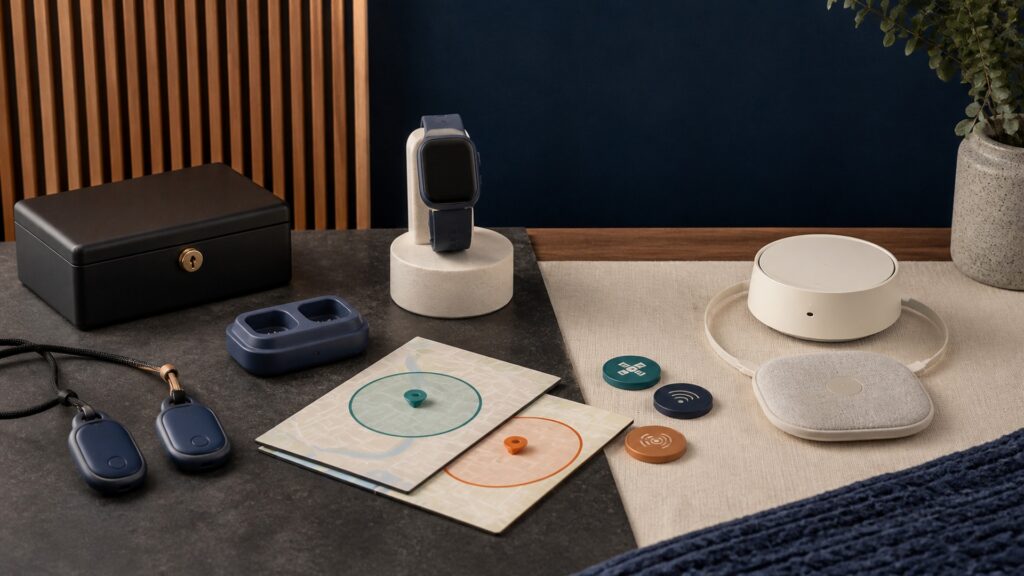
People-free editorial still life for What Makes GPS Safety Wearables Different from Baby Breathing Monitors
What You'll Learn

Two alerts, two entirely different questions

This guide separates geographic position from respiratory-pattern sensing, follows each signal to its notification, and shows why response plans must match the evidence actually collected.

  • How location estimates are assembled
  • What breathing monitors can detect
  • Why sensor placement affects only one side
  • Where connectivity creates distinct delays
  • How caregivers should interpret alerts
  • Which claims exceed either product's role

Tip: Read the concept as part of a system, then connect it back to the use case.

Definitions

Six Concepts That Shape This Decision

These definitions connect the main idea to the variables, limits, and practical signals readers need to compare options.

Position estimate

A wearable calculates an approximate location from available satellite, cellular, Wi-Fi, or nearby-device observations. It is a geographic estimate rather than a continuous picture of the person.

  • The device combines whichever sources are visible, resolves them into coordinates, and sends the result to a service or paired phone. Buildings and weak signals may widen the reported uncertainty.
  • Check the map in several ordinary places, including indoors and near property boundaries. Note whether the interface displays accuracy, age of the fix, or a stale-location warning.
  • A correct dot on a map reveals neither breathing quality nor the wearer's immediate clinical condition.

Respiratory proxy

Many consumer baby monitors infer breathing from motion, sound, pressure, video, or oxygen-related information. They do not directly identify every cause of a changed pattern.

  • A sensor samples the chosen proxy and compares recent activity with thresholds or algorithms. The monitor may alarm when the signal disappears, slows, or looks unusual.
  • Follow the manufacturer's placement rules and observe whether normal infant movement produces a stable reading. Never test an alarm by creating an unsafe breathing situation.
  • A proxy can be disrupted by fit, bedding, motion, or another person, so an alarm is not a diagnosis.

Geofence

A geofence is a virtual area drawn around a meaningful place, such as a home, school, or care facility. It turns location updates into boundary events.

  • Each new position is compared with the stored perimeter. A server or phone may notify selected contacts after an apparent entry or exit, sometimes with a delay.
  • Set a boundary large enough to accommodate ordinary GPS drift, then conduct a safe walk-through with the wearer and confirm that the correct contact receives the notice.
  • Small fences can create nuisance alarms, while large fences may postpone awareness of departure.

Sensing field

A contactless breathing monitor observes a limited physical area around the crib. Bedding, angle, distance, and nearby movement can alter what falls inside that field.

  • The sensor must distinguish subtle infant motion from background activity and noise. A changed crib arrangement can weaken that separation even though the baby remains in the same room.
  • Recheck mounting and crib conditions after moving furniture, lowering a mattress, changing bedding, or relocating the monitor. Use only arrangements permitted for the child's age.
  • Good reception in one nursery setup does not validate a different room or sleep surface.

Alert latency

Alert latency is the elapsed time between an observed event and a notification reaching the intended person. Its causes differ for tracking and bedside monitoring.

  • A wearable may wait for another position fix or network upload. A breathing monitor may require a sustained pattern before alarming, then depend on local radio, Wi-Fi, or app delivery.
  • Record event time and notification time during manufacturer-approved checks. Test each communication route instead of assuming that one successful phone alert proves every path.
  • A delayed message can still contain accurate data, but it may arrive too late for the planned response.

Response owner

The response owner is the named adult who evaluates an alert and takes the next appropriate action. Technology cannot fill this role by itself.

  • Location notices prompt a search, call, or welfare check; breathing alarms call for immediate observation and age-appropriate emergency judgment. The plans should not be merged simply because both appear in one app.
  • Assign primary and backup contacts, confirm notification permissions, and rehearse what each alert type means. Keep emergency numbers available outside the device.
  • No consumer notification should delay direct assistance when a baby or wearer appears in danger.

Tip: Keep the definitions connected; the strongest answer usually comes from the whole system, not one term.

Start With the Question Behind the Device

Choosing begins by naming whether the uncertainty concerns place or breathing-related activity.

A family worried about wandering needs location updates that travel beyond one room. A caregiver watching an infant's sleep environment needs a sensor designed for the specific bedside signal. Buying on the word “monitor” alone obscures this distinction. Write the event you want to detect in plain language, identify who must know, and reject features that do not answer that event.

  • Describe the unwanted event
  • Choose geographic or bedside evidence
  • Identify the person who receives it
  • Set a separate emergency fallback

The primary question is more useful than a long feature list.

Follow the Wearable's Location Chain

Tracking depends on a successful position fix, a network path, and a readable destination.

Outdoors, satellite signals often provide the main estimate; indoors, a device may fall back to Wi-Fi or cellular clues. Firmware then packages the location and transmits it to a platform that can apply a geofence. Battery level, building materials, subscription status, and update frequency all affect the chain. A current timestamp matters as much as the apparent precision of the map marker.

  • Obtain a position observation
  • Estimate coordinates and uncertainty
  • Upload through an available network
  • Deliver a time-stamped map or boundary alert

Tracking quality is a property of the whole route, not merely the GPS chip.

Follow the Nursery Sensor's Local Signal

Breathing monitors begin with subtle physical activity close to the sleep space.

Depending on design, the input may be motion under a mattress, video changes, chest movement, sound, or another physiologic proxy. Software filters ordinary noise and decides whether a pattern warrants an alarm. Correct age range, mounting, sleep-surface compatibility, and calibration therefore matter before the app becomes relevant. A strong Wi-Fi connection cannot repair a poorly positioned bedside sensor.

  • Prepare the approved sleep setup
  • Acquire the intended respiratory proxy
  • Filter movement and background interference
  • Sound a local or connected alarm

Nursery monitoring rises or falls on sensor context before notification delivery.

Interpret Failures Without Crossing Categories

A missing signal has different implications in a tracker and a breathing monitor.

If a wearable stops updating, look for battery loss, network gaps, indoor shielding, or a removed device while following the person's safety plan. If a baby monitor alarms, observe the infant immediately, act on visible warning signs, and only then investigate placement or interference when it is safe. Using a map location to dismiss a breathing alert would confuse presence with physiology.

  • Protect the person or infant first
  • Read the alert type and timestamp
  • Inspect category-specific failure points
  • Preserve details for technical or clinical review

The fastest sound response still begins with knowing what the alarm represents.

Keep Independent Safeguards

Neither product creates a complete safety system for every foreseeable event.

A wearable can be forgotten, discharged, removed, or out of coverage. An infant monitor can produce false alarms, miss events outside its sensing design, or foster false reassurance. Supervision, safe-sleep practices, clinical instructions, and an agreed contact plan remain independent protections. Privacy also differs: location history exposes movement patterns, while nursery systems may transmit video or sensitive household information.

  • Maintain direct supervision where required
  • Protect accounts and location sharing
  • Follow safe-sleep and medical advice
  • Review charging, fit, and alert contacts

Redundancy should cover a device's blind spots rather than duplicate its marketing claims.

Quick Reality Check

What each product can reasonably establish

Useful evidence stays tied to the sensor's actual input and the conditions present when it was collected.

Supported conclusions

A recently updated wearable can help a permitted contact estimate where the device is and whether it crossed a configured area.

A correctly installed baby monitor may identify changes in the particular movement or respiratory proxy described by its manufacturer.

Important unknowns

Location does not establish wellness, consciousness, or breathing status, even when the map appears precise.

A nursery alarm cannot identify the medical reason for a change and should never replace observation, safe-sleep guidance, or urgent care.

Common Myths

Misconceptions That Distort the Decision

Common shortcuts and misunderstandings can make the topic seem simpler than it is.

A shared phone alert means the devices perform similar monitoring

The notification screen is only the final delivery layer. A GPS wearable begins with radio-based position evidence, whereas an infant monitor begins with a respiratory proxy. Similar apps do not make those inputs interchangeable or support the same response.

An indoor map pin confirms that a baby is breathing normally

A location fix can establish that a tracking device remains near the nursery, but it does not inspect the infant. Breathing-related reassurance requires direct observation and properly interpreted bedside information, with urgent action whenever the baby's appearance causes concern.

More frequent GPS updates make a wearable a health monitor

Shortening the interval may improve route detail and geofence timing, but it still produces location data. It can also drain the battery faster. Health conclusions require relevant physiologic evidence, not simply a denser collection of geographic coordinates.

A breathing alarm identifies the cause of an infant's problem

Consumer monitors usually respond to a measured or inferred pattern rather than diagnose disease. Movement, bedding, placement, connectivity, and genuine distress can produce different alarm situations. Observe the baby and follow appropriate medical or emergency guidance.

Tip: Treat strong claims as starting points for comparison, not final answers.

FAQ

Questions to Ask Before Choosing

Concise answers to common questions readers may have after the main explanation.

Can one device replace the other?

No. The wearable is designed to estimate and share location, while the nursery product observes a breathing-related proxy near the crib. Families needing both functions require appropriately selected systems plus separate human response plans for each type of alert.

Why might both products send false or misleading alerts?

GPS drift can place a tracker across a virtual boundary, and nursery conditions can weaken or imitate a breathing signal. Review timestamps, accuracy information, positioning, and visible circumstances before troubleshooting, without delaying urgent help when anyone appears unsafe.

What should be tested after setup?

For the wearable, confirm charging, indoor and outdoor updates, geofences, and contact delivery. For the baby monitor, use only manufacturer-approved functional checks, verify mounting and alarm audibility, and keep the infant in a safe sleep environment.

Which limitation matters most during purchase?

Ask whether the product senses the event you actually need to know about. Location hardware cannot screen respiration, and a bedside breathing sensor cannot provide wide-area tracking. Secondary conveniences should be judged only after that primary match is established.

Bottom Line

GPS safety wearables describe where a carried device appears to be; baby breathing monitors evaluate a narrowly defined signal beside an infant. Their common use of sensors, wireless links, and apps occurs after that decisive difference in input.

Select by the unanswered question, test the full alert route under safe conditions, and assign a capable adult to respond. Keep supervision, safe-sleep practice, and emergency judgment outside the technology so a lost signal never becomes a lost plan.

Next Steps

Go Deeper or Compare Your Options

Use these Review Streets paths to connect the explainer to related categories, comparisons, and next decisions.