
Trainer Frame
The structure that supports trainer hardware and bike attachment.
- It holds equipment load.
- It is not worn on the body.
- Stability depends on setup.
Indoor bike trainers differ from cycling apparel because trainers are stationary equipment for a bicycle, while apparel is worn support for the rider.
Trainer frames, axle clamps, direct-drive cassettes, resistance units, smart control, and floor mats answer equipment problems; bib shorts, jersey fabric, chamois pads, gloves, weather shells, and towels answer worn or surrounding support problems.
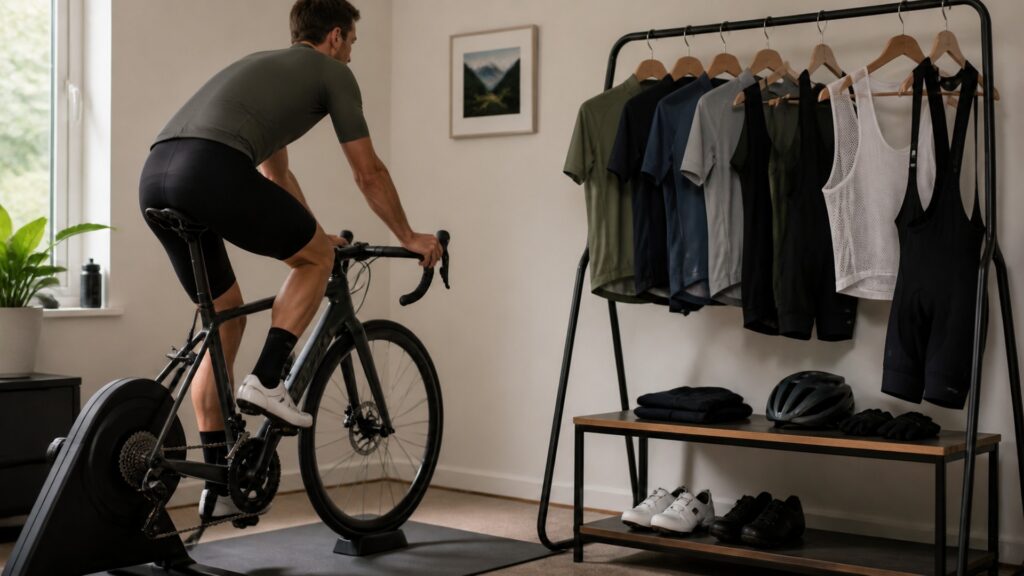
This comparison keeps trainer mechanics distinct from apparel function.
Tip: Ask whether the product supports the bicycle as equipment or supports the rider as clothing.
These definitions connect the main idea to the variables, limits, and practical signals readers need to compare options.
The structure that supports trainer hardware and bike attachment.
A trainer interface that holds a bike at or near the rear axle.
A trainer that can electronically adjust resistance or report data.
Garments used by the rider during cycling.
The padded area in cycling shorts or bibs.
Towels, fans, mats, or clothing choices used around indoor riding conditions.
Tip: Use these terms to distinguish trainer hardware from clothing contact and indoor sweat support.
A trainer works by supporting the bicycle and creating pedaling resistance in a fixed indoor setup.
The trainer side is mechanical equipment.
Apparel works through fabric, pads, straps, gloves, shells, and fit around the body.
The apparel side is worn support.
A resistance unit changes pedaling load, while a chamois changes clothing contact at the saddle.
The comparison hinges on function, not cycling context alone.
Indoor riding can use bibs, towels, fans, and sweat-resistant layers, but those items still do not become trainer hardware.
Overlap in use setting does not merge categories.
Choose the trainer when the need is stationary bike support or resistance; choose apparel when the need is clothing fit, pad contact, fabric, or worn comfort support.
The problem owner decides the category.
The comparison explains why trainer hardware and cycling apparel have different jobs.
It separates bicycle support, resistance, clothing contact, and indoor overlap.
It prevents indoor-riding context from blending product categories.
It does not rank workouts or guarantee comfort.
It does not provide health or safety advice.
Common shortcuts and misunderstandings can make the topic seem simpler than it is.
Riders may still use apparel indoors, but it does not replace trainer hardware.
The pad changes clothing contact; resistance is equipment-side.
It is stationary equipment with electronic control.
One supports the indoor station; the other is body-carried storage.
Tip: Treat strong claims as starting points for comparison, not final answers.
Concise answers to common questions readers may have after the main explanation.
Indoor trainers support and load the bike; cycling apparel is worn by the rider.
Yes. Apparel can still matter indoors, but it remains clothing.
No. It creates resistance and support for the bike, not a clothing interface.
When the need is indoor stationary pedaling or controlled load.
When the issue is clothing fit, pad contact, fabric, or worn support.
Indoor bike trainers differ from cycling apparel because trainers hold and load the bicycle, while apparel supports the rider's worn interface.
Indoor riding can involve both, but resistance hardware and clothing contact remain separate concepts.
Use these Review Streets paths to connect the explainer to related categories, comparisons, and next decisions.
Use this for trainer hardware and resistance mechanics.
Read this for clothing-side fit, fabric, and pad mechanics.
Browse trainers after confirming the issue is indoor equipment.
Choose a retailer
Prices checked regularly. We may earn a commission at no cost to you.