What Makes Landscape Utility Trailers Different from Foldable Utility Trailers

Landscape utility trailers are described by the work they support: moving landscaping machines, tools, and supplies. Foldable utility trailers are described by a construction feature that lets specified parts move into another position, often for storage or access. A trailer can support landscaping work and include folding features, so the two categories can overlap.

The practical difference is what the design prioritizes and how it fits your routine. A landscape arrangement may keep a mower, racks, and boxes ready for repeated stops. A folding arrangement may help solve a storage or access problem, but its movement, locking requirements, and compatibility with installed equipment must be checked.

By: Review Streets Research Lab
Updated: October 7, 2026
Explainer · 8-12 min read
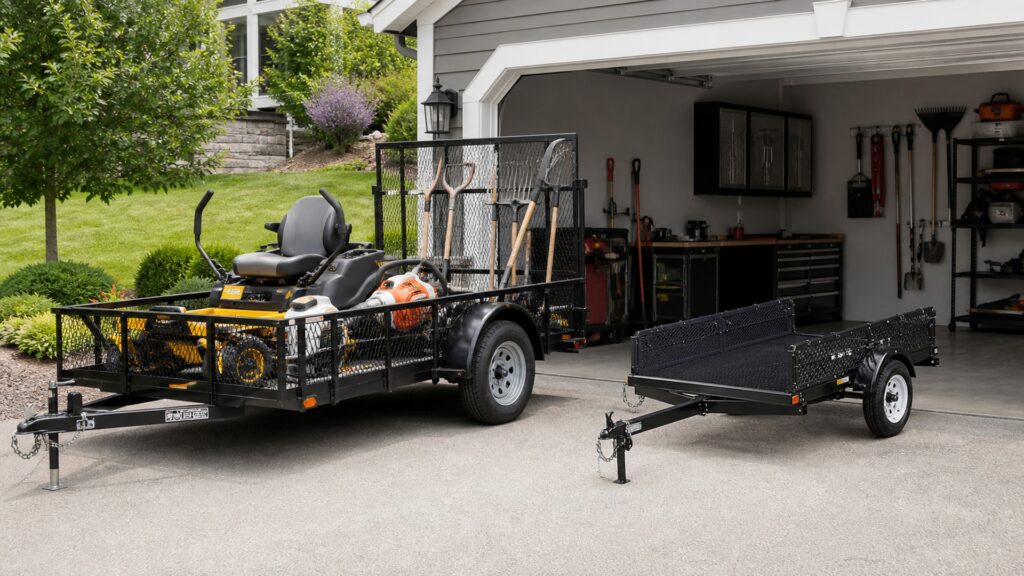
landscape utility trailers explainer hero image for Review Streets
What You'll Learn

Compare Working Readiness with Folding and Storage

Examine the actual layout instead of assuming the names describe opposing designs.

  • Why landscape use and foldability can coexist
  • How equipment layout supports repeated work stops
  • Why a folding gate differs from a folding deck
  • How accessories can affect folding clearance
  • What to check for storage, travel, and maintenance

Tip: Compare the trailer fully equipped for work and in every approved storage or folding position.

Definitions

Six Concepts Behind the Design Comparison

Separate intended work, moving features, and usable space.

Landscape arrangement

A landscape arrangement organizes a trailer for the machines, tools, and supplies used in grounds work.

  • Example: a mower deck position with suitable tool storage
  • Check: load, access, restraint, and loading requirements
  • Limit: landscape use does not require one axle count or body size

Folding feature

A folding feature lets a designed component move between specified positions.

  • Example: rails that lower for access
  • Check: which part moves and the approved positions
  • Limit: a folding gate does not prove the main deck folds for storage

Working configuration

The working configuration is the trailer’s supported arrangement for the actual equipment and task.

  • Example: a deck with installed racks and restrained machines
  • Check: complete mass, clearances, access, and load limits
  • Limit: an empty display trailer may hide conflicts in the finished arrangement

Storage envelope

The storage envelope is the space occupied in the approved stored position.

  • Example: height and footprint after a deck is folded as instructed
  • Check: projections, supports, and the path into storage
  • Limit: a small final footprint does not provide movement clearance

Accessory compatibility

Accessory compatibility means added equipment can be installed and used within both trailer and accessory requirements.

  • Example: a toolbox that leaves a folding joint unobstructed
  • Check: mounting, mass, movement, and instructions
  • Limit: fitting on the deck does not guarantee compatibility with folding

Setup burden

Setup burden is the time, handling, checks, and assistance needed to make the trailer ready for use or storage.

  • Example: deploying and locking a supported folding arrangement before loading
  • Check: the exact operating procedure and frequency of use
  • Limit: compact storage can still require substantial handling space or help

Tip: A feature earns its place only if it works with the completed load and daily routine.

Purpose

Landscape Describes the Job, Not One Construction Method

A landscape trailer may be configured for machine transport, hand-tool storage, or suitable supplies. Manufacturers offer different decks, sides, axle arrangements, and loading features for those tasks. Folding capability is a separate design attribute. Start by identifying what the trailer must carry and how the equipment will be used at each stop.

  • List the real machines and tools.
  • Check each loading and retrieval path.
  • Keep construction features separate from the job description.

Big Tex’s utility and landscape range contains multiple configurations. That variety illustrates why the term landscape cannot establish a fixed deck size, capacity, or storage method.

Reference: Big Tex utility and landscape configurations.

Readiness

An Equipment Layout Can Keep Repeated Work Practical

When a trailer visits several sites, access to frequently used equipment matters. A supported rack or box can retain tools in assigned positions, while the deck and ramp accommodate machines. All of that hardware adds mass and needs suitable attachment. Assess the layout with the equipment aboard and restrained, not only with the trailer empty.

  • Try the intended machine loading path.
  • Keep necessary tools and restraints accessible.
  • Include racks, boxes, and contents in loading checks.

For example, a box that is easy to reach before the mower is loaded may become inaccessible afterward. Moving it might help, but its new mounting and effect on load distribution must still be acceptable.

Reference: Carry-On landscape accessories.

Folding design

Identify Which Part Moves and Why

Folding rails can improve access, a folding tongue may reduce stored length, and a folding deck can change the storage footprint. These features are not interchangeable. Some trailers permit upright storage; others do not. Use the manufacturer’s exact instructions to identify permitted positions, locks, handling assistance, and travel arrangements.

  • Name the component that folds.
  • Measure the dimensions the feature actually changes.
  • Use only supported configurations.

Carry-On’s SmartFold supplement addresses folding rails and gate arrangements. It demonstrates that a folding feature can be about access and configuration without meaning the entire trailer folds into an upright storage package.

Reference: Carry-On SmartFold feature instructions.

Compatibility

Check Added Equipment Across the Full Movement

Boxes, racks, decking, wiring, and restraint equipment can occupy the space a folding part needs. Check clearances through the intended movement and in the final positions. Confirm that mounting does not interfere with joints or locking hardware. Do not remove required pins, alter the structure, or force the mechanism to accommodate an incompatible accessory.

  • Review the trailer and accessory instructions together.
  • Keep moving and locking parts accessible.
  • Reassess after installation or relocation.

A rack mounted across a folding boundary can turn a useful feature into an unusable one. Compatibility must be designed into the installation, not discovered after the trailer is fully equipped.

Daily use

Include Storage Conversion and Maintenance in the Decision

A folding design may make ownership possible where storage space is limited. A fixed working arrangement may suit frequent use when adequate parking already exists. Compare actual handling effort, required help, setup checks, and service of moving parts. Both options still need sound road equipment and load-handling components; folding does not remove those duties.

  • Allow room to move between configurations.
  • Include the required locking and condition checks.
  • Consider how often the trailer will be folded.

Kendon’s model-specific manuals show the importance of selecting instructions for the actual product. The right choice is the arrangement you can safely prepare and store as often as the work demands.

Reference: Kendon model-specific trailer manuals.

Consider a homeowner who has room for the folded trailer beside a garage wall but not enough clear floor space to unfold it there. The stored footprint may fit while the daily handling still does not. Measure both the final position and the space needed to reach it, including any racks or boxes that remain attached.

Quick Reality Check

Two Questions to Ask of the Same Trailer

A candidate may answer both successfully, but neither answer should be assumed.

Does it support the work?

Machines and tools fit with suitable loading, restraint, and access.

The completed load stays within the relevant limits.

Does it fit the storage routine?

Approved stored dimensions and movement clearance fit the available space.

The required handling, assistance, and setup checks are practical.

Common Myths

Misconceptions About Landscape and Folding Trailers

Separate useful design features from broad category claims.

Landscape trailers cannot have folding parts

The working purpose and a folding feature can coexist.

A folding ramp means the deck folds for storage

The ramp and main deck are different components.

Adding a rack cannot affect storage

Its position may obstruct folding movement or change the stored envelope.

All folding designs require the same setup

Permitted positions, locking parts, handling, and support vary by model.

Tip: Inspect the fully equipped trailer in the configurations you actually intend to use.

FAQ

Questions About Landscape and Foldable Utility Trailers

Answers for combining equipment readiness with practical storage.

Can a foldable trailer handle landscaping work?

Yes, if its exact deck, loading features, capacity, equipment compatibility, and operating instructions support that work.

What favors a fixed equipment arrangement?

Frequent use, suitable permanent storage, and compatible equipment that benefits from staying in its working layout.

What favors a folding feature?

A real access or storage problem that the specific feature solves without compromising load handling or required setup.

Can I leave accessories attached during folding?

Only where the trailer and accessory instructions permit it and the complete movement and locking arrangement remain compatible.

What measurements should I compare?

The working deck and load path, the approved stored envelope, and the clearance needed throughout the folding movement.

Bottom Line

Landscape use describes the work a trailer supports; foldability describes a specific construction feature. One trailer may provide both.

Compare equipment access, load limits, accessory compatibility, setup effort, and storage space in the actual finished arrangement.

Next Steps

Go Deeper or Compare Your Options

Use these Review Streets paths to compare related categories and practical next decisions.