
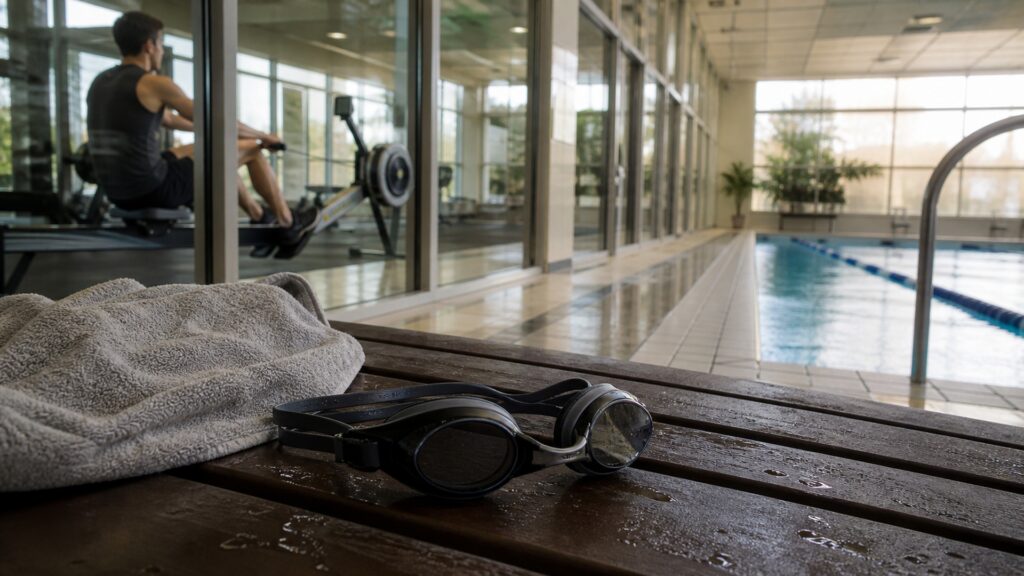
What Makes Swim Goggles Different from Rowing Machines

Swim goggles and rowing machines both belong near fitness routines, but they solve completely different problems. Swim goggles are worn in the water to protect vision and comfort. Rowing machines are dry-land cardio machines used to train endurance and power.

Swim goggles belong on the face; rowing machines belong in dry-land conditioning. The difference matters because goggles support a swim that is already happening, while a rowing machine creates a workout away from the pool.

By: Review Streets Research Lab
Updated: October 2, 2026
Explainer · 8-12 min read
swim goggles explainer hero image for Review Streets
What You'll Learn

How Swim Goggles And Rowing Machines Solve Different Jobs

A practical comparison of water visibility gear and indoor conditioning equipment.

  • Why goggles are swim support equipment, not a training machine
  • How rowing machines create resistance and workload on land
  • Where goggles affect comfort, awareness, and eye protection
  • When rowing can support conditioning without replacing pool time
  • How to choose based on the workout setting

Tip: Start with the swimming situation, then choose the gear detail that solves that specific problem.

Definitions

Key Concepts Behind What Makes Swim Goggles Different from Rowing Machines

These concepts keep the decision tied to fit, water conditions, training purpose, and realistic limits.

Water Visibility

Water visibility is the ability to see walls, lane lines, people, and surroundings while swimming.

  • Example: clear lenses that help a swimmer sight the wall
  • Check: check lens clarity and fog control
  • Limit: visibility does not create fitness by itself

Face Seal

Face seal is how the goggle gasket rests around the eyes to keep water out.

  • Example: a soft gasket sealing without painful strap tension
  • Check: test the seal before tightening
  • Limit: a poor seal can distract from the swim

Dry-Land Resistance

Dry-land resistance is load created outside the water by a machine or exercise tool.

  • Example: a rowing machine flywheel or magnetic resistance setting
  • Check: review how resistance changes during the stroke
  • Limit: it does not teach water feel

Stroke Specificity

Stroke specificity is how closely a tool matches the movement demands of swimming.

  • Example: goggles used during freestyle practice
  • Check: ask whether the tool is used in the pool or on land
  • Limit: land conditioning can help fitness without matching technique

Training Environment

Training environment is the place where the workout happens.

  • Example: pool lanes for goggles and a gym floor for rowing
  • Check: start with where the workout will occur
  • Limit: gear from one setting may not solve the other setting

Workout Goal

Workout goal is the outcome the user wants from the session.

  • Example: clearer lap swimming versus low-impact cardio
  • Check: choose the tool that serves the goal directly
  • Limit: a useful tool for one goal may be irrelevant for another

Tip: The useful feature is the one that makes the swim clearer, safer, or easier to repeat.

Primary Job

Goggles Support Swimming Already In Progress

Swim goggles do not create the workout. They make swimming easier to see and tolerate by reducing splash, chlorine irritation, glare, and fog problems.

  • Use goggles for pool, lesson, race, or open-water visibility.
  • Focus on fit and lens choice.
  • Judge them by how they behave in the water.

The goggle is a support tool for the swim, not the workout engine.

Machine Role

Rowing Machines Create A Dry-Land Workout

A rowing machine supplies resistance, pacing, and measurable workload without requiring a pool. It can build endurance and pulling strength, but it is not a substitute for seeing well in the water.

  • Use rowing when the goal is conditioning on land.
  • Compare resistance feel and console feedback.
  • Keep pool skill practice separate.

The machine creates a session; goggles improve a swim session.

Technique

Swimming Skill Still Needs Water

Goggles can help swimmers practice technique because they can see better, but they do not teach stroke mechanics by themselves. Rowing develops a different movement pattern.

  • Practice turns and sighting with goggles on.
  • Use rowing for general conditioning.
  • Avoid treating rowing strokes as swimming strokes.

The closer the goal is to swimming skill, the more the pool matters.

Comfort

Goggle Fit Affects Whether The Swim Feels Manageable

A leaking or painful pair of goggles can interrupt sets, lessons, or open-water confidence. That comfort issue has no equivalent on a rowing machine.

  • Check gasket shape.
  • Avoid painful strap tension.
  • Match lens tint to light.

Comfort is a performance detail when it keeps the swimmer focused.

Decision

Choose Based On Water Versus Land

The choice is straightforward once the setting is clear. Use goggles when the workout happens in water. Use a rowing machine when the goal is land-based conditioning.

  • Start with the location.
  • Identify the immediate barrier.
  • Do not compare them as direct substitutes.

They can complement each other, but they do not do the same job.

Quick Reality Check

Where Each Tool Helps

Swim goggles and rowing machines can both fit a fitness routine, but at different points.

Swim Goggles Help When

The swimmer needs clearer vision and eye comfort in water.

Pool or open-water practice is the main activity.

Rowing Machines Help When

The user wants indoor cardio without a pool.

Low-impact conditioning matters more than swim visibility.

Common Myths

Misconceptions About Goggles Versus Rowing Machines

The comparison only works when each tool keeps its real job.

They are competing workout tools

They are usually complementary because one is swim gear and the other is land equipment.

Rowing can replace swimming technique

Rowing can support conditioning, but it does not replace water feel, breathing, or sighting practice.

Goggles are only comfort gear

Comfort matters because vision and seal affect how smoothly the swim goes.

The better choice is the harder workout

The better choice is the one that fits the setting and goal.

Tip: Strong claims still need to match the swimmer, pool, and session.

FAQ

Frequently Asked Questions About Swim Goggles And Rowing Machines

Short answers for practical swimming decisions.

Are swim goggles and rowing machines substitutes?

No. Goggles support swimming in water, while rowing machines provide land-based cardio.

Can rowing help swimmers?

Yes, rowing can support conditioning, but swimmers still need pool practice for technique.

When should I choose goggles?

Choose goggles when the session involves swimming and vision, seal, or eye comfort matters.

When should I choose a rowing machine?

Choose a rowing machine for indoor cardio, general endurance, or dry-land training.

What is the practical takeaway?

Use goggles for the water problem and rowing machines for the land-conditioning problem.

Bottom Line

Swim goggles are different from rowing machines because they support visibility and comfort in water instead of creating a dry-land conditioning workout.

They can both belong in a fitness plan, but they should not be evaluated as if they solve the same problem.

Next Steps

Go Deeper or Compare Your Options

Use these Review Streets paths to compare related categories and practical next decisions.