What Makes Swim Training Gear Different from Rowing Machines

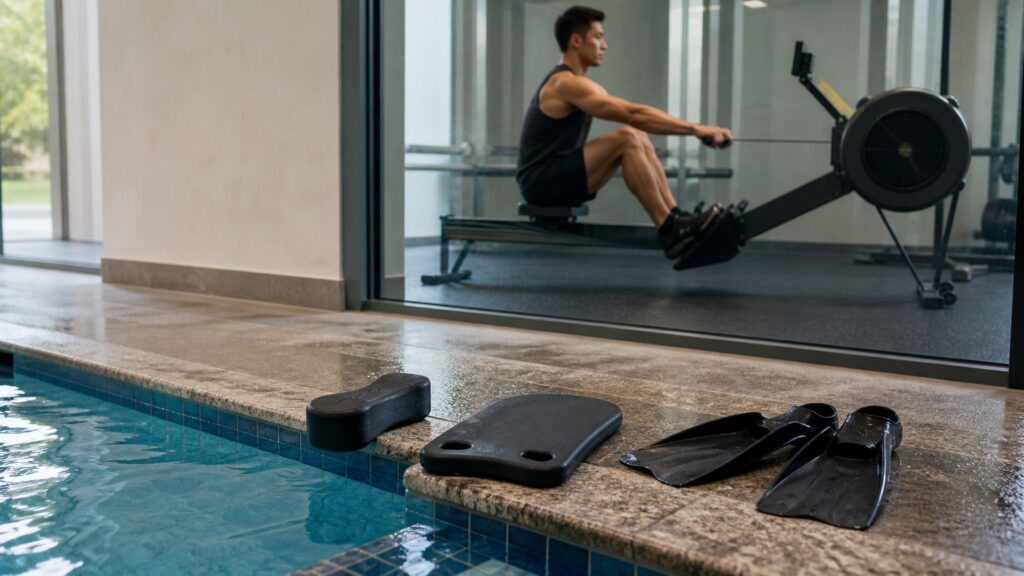
Swim training gear and rowing machines both can support athletic training, but they do not train the same setting or movement. Swim training gear is used in the water to adjust stroke practice, body position, kick, pull, breathing, or resistance. A rowing machine is a dry-land cardio and power tool built around a seated rowing motion.

The difference matters because swim training gear changes a swim drill, while a rowing machine creates a separate workout. Rowing can support conditioning, but it cannot replace the water-specific feedback that swim tools are designed to create.

By: Review Streets Research Lab
Updated: October 2, 2026
Explainer · 8-12 min read
swim training gear explainer hero image for Review Streets
What You'll Learn

How Swim Gear And Rowing Machines Serve Different Training Jobs

A practical comparison of water-specific practice equipment and dry-land rowing machines.

  • Why swim gear belongs inside pool practice
  • How rowing machines create dry-land workload
  • Where stroke feedback differs from rowing feedback
  • When rowing can supplement swim fitness
  • How to choose based on skill versus conditioning

Tip: Start with the swimming situation, then choose the gear detail that solves that specific problem.

Definitions

Key Concepts Behind What Makes Swim Training Gear Different from Rowing Machines

These concepts keep the decision tied to fit, water conditions, training purpose, and realistic limits.

Water-Specific Feedback

Water-specific feedback is what the swimmer feels from pressure, balance, drag, and body position in the pool.

  • Example: paddles making catch pressure easier to notice
  • Check: check whether the skill appears without the tool
  • Limit: it requires water

Rowing Stroke

Rowing stroke is the seated push-pull motion used on a rowing machine.

  • Example: legs, hips, back, and arms driving the handle
  • Check: learn the machine sequence
  • Limit: it does not match swim stroke timing

Dry-Land Workload

Dry-land workload is conditioning created outside the water.

  • Example: rowing intervals on an erg
  • Check: track pace, stroke rate, and effort
  • Limit: fitness gains are not the same as swim technique

Stroke Isolation

Stroke isolation is focusing on one part of swimming by reducing or changing other demands.

  • Example: a pull buoy set for upper-body focus
  • Check: name the part being practiced
  • Limit: isolation should return to full swimming

Complementary Training

Complementary training supports the main sport without replacing it.

  • Example: rowing on a non-pool day
  • Check: use it for endurance or variety
  • Limit: too much replacement can reduce water practice

Setting Fit

Setting fit is whether the tool belongs in the environment of the workout.

  • Example: fins in a lane versus a rower in a gym
  • Check: start with location
  • Limit: one setting cannot solve every training need

Tip: The useful feature is the one that makes the swim clearer, safer, or easier to repeat.

Pool Practice

Swim Gear Changes A Swim Drill

Fins, buoys, paddles, snorkels, boards, and resistance tools alter swimming while the swimmer is in the water. That makes them useful for technique practice and water feel.

  • Use swim gear for stroke-specific goals.
  • Choose the tool by the drill.
  • Check carryover after removing it.

The gear works because it changes the swim itself.

Rowing Work

Rowing Machines Build Land Conditioning

A rowing machine can provide hard aerobic or power work without a pool. It is measurable and efficient, but the movement is still a seated rowing pattern.

  • Use rowing for cardio or strength endurance.
  • Learn proper rowing sequence.
  • Keep swim technique practice separate.

Rowing can support the athlete without replacing the water.

Movement

The Motions Are Not The Same

Swimming involves body rotation, breathing rhythm, catch feel, kick timing, and balance in water. Rowing uses foot drive, handle path, and repeated compression on a machine.

  • Avoid treating rowing as swim technique.
  • Use each movement for its own purpose.
  • Return to the pool for stroke work.

General fitness does not automatically equal swim-specific movement.

Conditioning

Rowing Can Fill A Useful Support Role

When pool access is limited or the swimmer wants variety, rowing can support conditioning. It may be especially useful for structured intervals or low-impact endurance.

  • Use rowing on non-pool days.
  • Match intensity to the training week.
  • Protect recovery for swim sessions.

The support role is real, but it is not the same as drill feedback.

Decision

Choose Skill Work Or Conditioning

Swim training gear is the better fit when the session is about water skill. A rowing machine is the better fit when the session is about dry-land workload.

  • Name the purpose first.
  • Choose swim gear for technique.
  • Choose rowing for land cardio or power.

Clear purpose prevents false comparisons.

Quick Reality Check

Where Each Tool Helps

Both tools can belong in a training plan when their roles are clear.

Swim Gear Helps When

The swimmer needs water-specific feedback, body position, kick, pull, breathing, or resistance drills.

The goal is improving the swim itself.

Rowing Machines Help When

The user wants dry-land cardio, intervals, or power work.

Pool access is limited or a supplement is needed.

Common Myths

Misconceptions About Swim Gear And Rowing Machines

They overlap in fitness goals, not in exact training function.

Rowing replaces swim training

Rowing can support conditioning, but water skill still needs water practice.

Swim gear is less serious because it is small

Small tools can create very specific technical feedback.

The harder workout is always better

A hard rowing session and a focused swim drill answer different needs.

Both train the same pull

Rowing pull mechanics and swimming catch mechanics are not the same movement.

Tip: Strong claims still need to match the swimmer, pool, and session.

FAQ

Frequently Asked Questions About Swim Gear And Rowing Machines

Short answers for practical swimming decisions.

Can rowing machines help swimmers?

Yes, they can support cardio and power, especially away from the pool.

Can rowing replace paddles or pull buoys?

No. Those tools create water-specific feedback that rowing cannot provide.

When should I choose swim training gear?

Choose it when the goal is stroke practice, body position, kick, pull, breathing, or water resistance.

When should I choose rowing?

Choose rowing for dry-land conditioning, intervals, or general fitness work.

What is the practical takeaway?

Use swim gear to improve the swim and rowing machines to support conditioning.

Bottom Line

Swim training gear is different from rowing machines because it changes water-specific practice instead of creating a separate dry-land rowing workout.

Rowing can help conditioning, but swim tools are still needed when the goal is technique in the pool.

Next Steps

Go Deeper or Compare Your Options

Use these Review Streets paths to compare related categories and practical next decisions.