
Weighted Training Gear
Weighted training gear adds wearable or attached load to familiar exercises.
- Example: a weighted vest during step-ups
- Check: see whether added load improves the exercise
- Limit: load can change posture and joint stress
Weighted training gear is different from agility training equipment because it adds load to the body or exercise, while agility equipment organizes movement paths, foot placement, reaction, and direction changes. Weighted vests, ankle weights, wrist weights, and belts change resistance. Cones, ladders, hurdles, and markers change movement cues.
The categories can support the same athlete, but they do not solve the same problem. Weighted gear asks whether added load improves the exercise. Agility gear asks whether better spacing, timing, or direction-change practice improves movement.
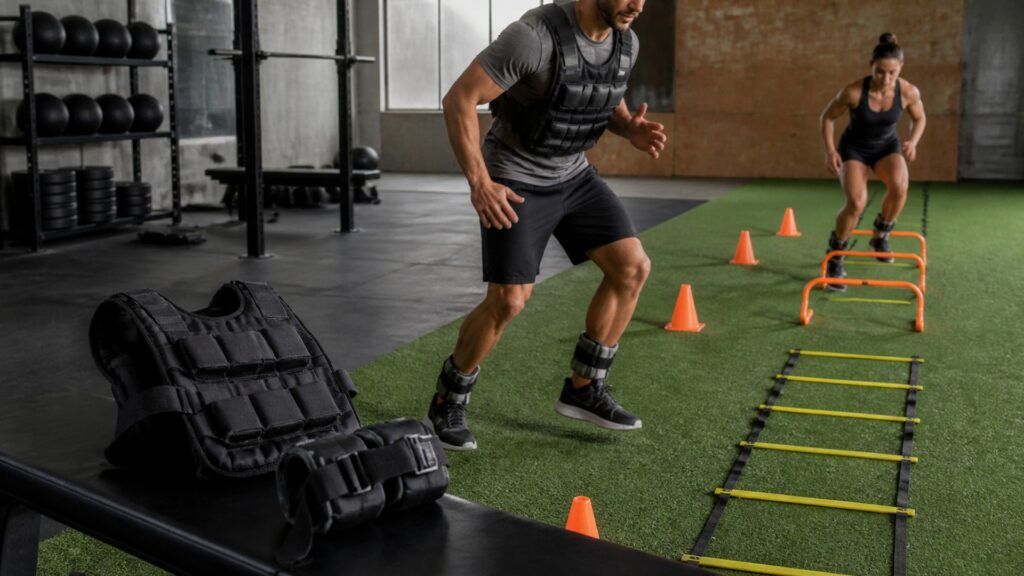
A practical comparison of load-focused accessories and direction-change equipment.
Tip: Decide whether the workout needs load or movement cues before choosing the gear.
These concepts clarify the practical signals readers should check before choosing equipment or planning workouts.
Weighted training gear adds wearable or attached load to familiar exercises.
Agility training equipment uses markers, ladders, hurdles, or cues to organize movement paths and direction changes.
Load placement is where added weight sits on the body or tool.
A movement cue tells the athlete where, when, or how to move.
Training priority is the main quality the session is trying to improve.
Combined use means using both categories when load and movement cues each have a clear role.
Tip: The best equipment choice is the one that matches the training job, available space, and user's current ability.
Weighted gear changes how hard the body works by adding resistance. That can support strength, walking intensity, bodyweight progression, or controlled conditioning.
The load should serve the exercise, not simply make it harder.
Agility equipment is better when the goal is foot placement, spacing, reaction, braking, or direction changes. It gives the athlete a path or cue rather than added resistance.
Agility gear is strongest when movement decisions matter.
A program may use weighted gear for strength support and agility gear for movement practice. The key is to avoid asking one tool to do both jobs at once.
The categories work together when each has a clear job.
Weighted gear changes force and fatigue, while agility gear changes speed, braking, and foot placement. Combining them requires caution because load can make fast direction changes harder to control.
The safest choice matches the main training demand.
If the limitation is not enough resistance, weighted gear may help. If the limitation is movement timing or direction-change skill, agility equipment is the clearer choice.
The training gap should decide the first purchase.
The choice depends on whether the workout needs load or movement cues.
The goal is added resistance, walking intensity, bodyweight progression, or loaded conditioning.
The user can keep movement quality clean with extra load.
The goal is direction change, foot placement, reaction, or spatial organization.
The session needs faster movement rather than extra resistance.
Both categories can support athletes, but they are not interchangeable.
Extra load can slow reaction and change mechanics if it does not match the drill.
Agility tools organize movement but do not provide meaningful overload.
Small loads can still affect braking, gait, and joint stress.
Start with the tool that solves the clearest training problem.
Tip: Treat strong claims as reasons to inspect the workout fit more closely.
Short answers for practical training and buying decisions.
Weighted gear adds load, while agility gear organizes movement paths and reaction cues.
Sometimes, but only when mechanics remain clean and the load does not undermine speed or braking.
Weighted gear can increase effort, while agility gear can organize repeated movement. The better choice depends on the goal.
Buy weighted gear for load needs and agility gear for direction-change or footwork needs.
Use weighted gear for resistance and agility gear for movement organization.
Weighted training gear differs from agility training equipment by adding load instead of organizing movement cues.
Choose weighted gear for controlled resistance and agility gear for footwork, reaction, and direction changes.
Use these Review Streets paths to compare related categories and practical next decisions.
Review how added load changes training.
See how weighted gear should fit a workout role.
Compare tools for direction-change practice.
Choose a retailer
Prices checked regularly. We may earn a commission at no cost to you.