
Work truck
A work truck is a truck configured and used to perform vocational tasks.
- Example: a service-body truck carrying repair equipment
- Check: the work and installed equipment
- Limit: it can be individually operated or part of a fleet
Work trucks and fleet vehicles are overlapping descriptions, not opposing vehicle types. A work truck is configured to carry out a job through its load space, body, or equipment. A fleet vehicle belongs to an organization's managed group of vehicles. The same service truck can be both, while a fleet may also contain vans, passenger cars, and other vehicles.
The distinction matters because it separates two decisions: what the vehicle must do and how the organization will operate it. A truck can be excellent at a specialized task yet difficult to substitute, schedule, or support. Fleet planning adds those management questions without replacing the need for a suitable working configuration.
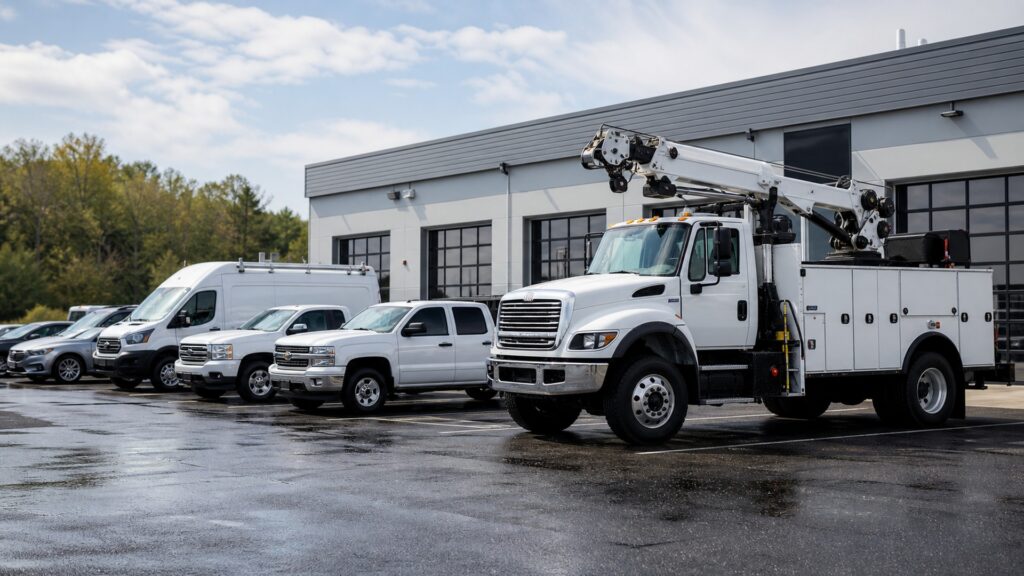
Understand why the same truck can need both a technical specification and an operating plan.
Tip: Write one description of the job and another of how the vehicle will be assigned and supported.
These concepts distinguish the vehicle's function from the organization around it.
A work truck is a truck configured and used to perform vocational tasks.
A fleet vehicle is a vehicle within an organization's managed vehicle group.
A job specification defines the capability needed for an assignment.
Standardization uses common specifications or practices across selected vehicles.
Utilization measures how much a vehicle is used relative to its intended role.
Replacement coverage is the ability to maintain operations while a vehicle is unavailable.
Tip: Ask whether a claim concerns the vehicle itself or the system used to manage it.
Consider a utility organization with service trucks, delivery vans, and passenger cars. All can be fleet vehicles because the organization manages them together. Only some are work trucks. An independently operated truck with a vocational body still performs truck work, even without a large fleet around it. Neither term establishes a universal size, fuel type, or ownership arrangement.
The practical comparison is therefore between job requirements and fleet requirements, not a choice to buy one category instead of the other.
A truck assigned to field repairs may need tool compartments and particular equipment, while one moving materials may need a different load space. Describe the assignment before selecting common fleet features. A preferred brand, cab arrangement, or purchasing policy can narrow choices, but it cannot make an unsuitable body perform the task. Validate the finished configuration with the people who will use it.
Two trucks in the same fleet may reasonably differ because their assignments demand different physical capabilities.
Common controls, storage layouts, parts, and service arrangements can make training and support easier. The benefit disappears if crews must carry unsuitable equipment or spend extra time compensating for the wrong body. Group similar tasks before seeking a common specification. Keep a clear reason for exceptions so that specialized requirements remain understandable later.
Standardization should remove unnecessary variation while preserving the features that let each vehicle do its job.
A managed group needs a way to know who uses a vehicle, when service is due, what defects remain open, and what can replace it during downtime. A work truck adds body and equipment responsibilities to those ordinary vehicle questions. Define whether a workshop, operator, equipment supplier, or fleet team owns each action, and keep the records connected to the correct asset.
A spare vehicle is useful only if it can perform the assignment; availability on a parking lot does not establish replacement capability.
Distance can be useful for some transport tasks and misleading for a truck that spends much of the day working in one location. Depending on the assignment, equipment hours, completed jobs, availability, or load movements may better explain use. Pair those measures with service and operating costs rather than ranking unlike vehicles with one number. Definitions must stay consistent enough to make comparisons meaningful.
A lightly traveled truck may still be heavily used. The management question is whether it provides needed capability reliably, not whether every odometer advances at the same rate.
Use both when specifying a truck for an organization.
The vocational role, body arrangement, and equipment that perform a job.
The physical requirements that a suitable vehicle must satisfy.
The vehicle's place within a managed group and its operating arrangements.
How assignment, records, service, availability, and replacement are coordinated.
The labels answer different questions.
Many work trucks are managed as part of a fleet.
A fleet may contain several body styles and specialized configurations.
Stationary equipment work or standby duties may be central to an assignment.
Tip: Judge physical capability and management effectiveness separately, then check that they support each other.
Clarify the overlap before making an operating decision.
Yes. Fleet describes the managed group, so its members may all perform vocational truck tasks.
No. The actual vehicle, body, equipment, and applicable ratings determine its physical limits.
Only when that configuration fits the assignments. Similar tasks may benefit from common layouts; different tasks may need different equipment.
The essential job capability, including equipment, load access, crew needs, and operating requirements—not merely the fact that it is available.
Work truck identifies a vocational vehicle; fleet vehicle identifies its place in a managed group. A single truck can be both.
Specify the job capability first, then provide the assignment, service, records, and backup arrangements needed to keep it useful.
Use these Review Streets paths to compare related categories and practical next decisions.
Match the body and storage arrangement to the job.
Keep the chassis and vocational equipment ready.
Choose a retailer
Prices checked regularly. We may earn a commission at no cost to you.