Why Work Trucks Maintenance Role Matters

Maintenance keeps a work truck capable of doing its assigned job, not merely capable of driving to the site. The chassis may be roadworthy while a damaged compartment latch, unreliable liftgate, or failed equipment power supply prevents the crew from completing the work. A useful maintenance plan covers both the vehicle and the fitted body and equipment.

Work also creates demands that the odometer cannot fully represent. A truck may spend hours operating stationary equipment, make repeated short stops, carry a persistent load, or face dust and wet conditions. Match service to the actual use and the relevant manufacturers' instructions, then connect reported defects to repair and return-to-service decisions.

By: Review Streets Research Lab
Updated: October 6, 2026
Explainer · 8-12 min read
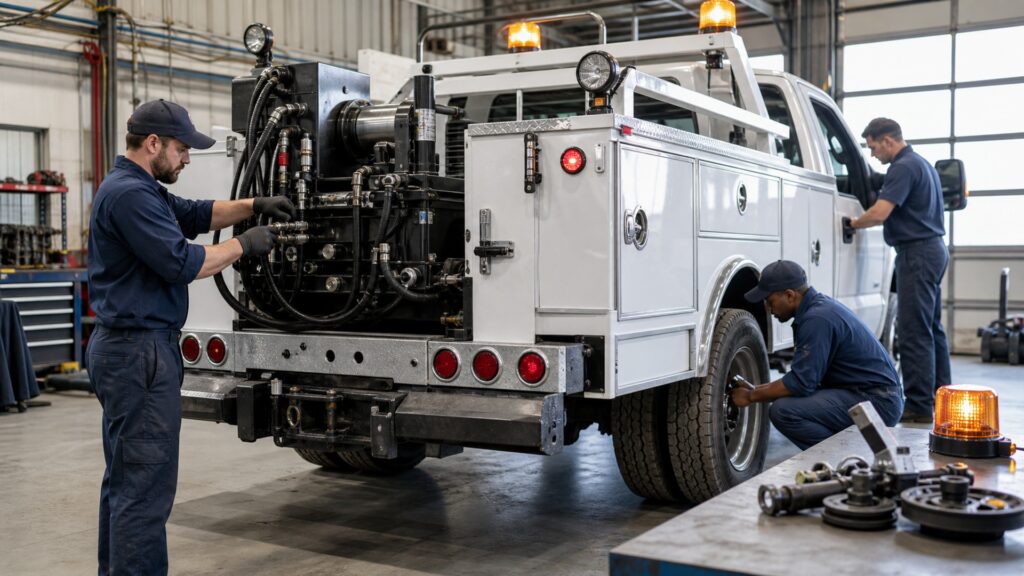
work trucks explainer hero image for Review Streets
What You'll Learn

Maintain the Truck and the Work It Performs

Build a practical connection between duty, inspection, service, and availability.

  • Distinguish chassis maintenance from upfit maintenance.
  • Recognize use that mileage alone misses.
  • Turn driver observations into actionable defect records.
  • Plan service around the whole vehicle.
  • Verify that a repaired truck can perform its assignment.

Tip: Keep the chassis, body, and equipment maintenance documents together under the same vehicle record.

Definitions

The Building Blocks of Work-Truck Maintenance

A complete plan follows the asset from daily use to verified repair.

Chassis maintenance

Chassis maintenance concerns the underlying road vehicle and its systems.

  • Example: service of brakes, steering, tires, or propulsion components
  • Check: the vehicle-specific service schedule
  • Limit: it does not automatically cover installed vocational equipment

Upfit maintenance

Upfit maintenance concerns the added body and task equipment.

  • Example: inspection of a liftgate or service-body latches
  • Check: the equipment maker's instructions
  • Limit: a truck dealer visit may not include every upfit

Operating hours

Operating hours measure time a system runs rather than distance traveled.

  • Example: an engine operating while the truck remains parked
  • Check: the hour information relevant to the service schedule
  • Limit: there is no universal hours-to-mileage conversion

Preventive service

Preventive service is planned care performed before a known service requirement becomes overdue.

  • Example: a scheduled inspection or specified fluid service
  • Check: time, distance, hours, or other stated criteria
  • Limit: the interval must come from the applicable instructions

Defect closure

Defect closure records how a reported problem was assessed and resolved.

  • Example: a failed latch repaired and functionally checked
  • Check: the repair action and confirmation
  • Limit: a booked appointment is not a completed repair

Availability

Availability is the ability to put a suitable working vehicle into service when needed.

  • Example: a truck and its essential equipment ready for the assignment
  • Check: the whole job capability
  • Limit: an engine that starts does not prove readiness

Tip: Separate what is due, what is defective, and what has been verified after repair.

Use Profile

Mileage Can Miss a Large Part of the Working Day

A stationary truck may accumulate engine or equipment hours without adding road distance. Frequent low-speed work, dust, and repeated loaded trips can also differ from the assumptions of an ordinary service schedule. Read the special-use provisions for the exact vehicle and equipment. Ford manuals, for example, identify extensive idling and dusty operation as conditions requiring particular maintenance attention.

  • Record relevant hours as well as mileage.
  • Identify recurring environmental exposure.
  • Use the schedule for the actual powertrain and use.

Do not apply a conversion or interval taken from another truck. The manufacturer's instructions determine which service measure applies. Ford special-use maintenance example.

Two Systems

The Upfit Needs Its Own Service Plan

A body or attachment can have wear points and service requirements independent of the chassis. Hinges, compartment doors, electrical connections, lifting equipment, and hydraulic systems where fitted should appear in the appropriate equipment plan. Assign responsibility for each system so that it is not omitted because one workshop assumes another will handle it.

  • List every installed body and major attachment.
  • Retain serial numbers and service documents.
  • Confirm who services each component.

A technician arriving for an engine service may never test the equipment that earns the truck's living unless it is part of the booked work.

Observation

Make Defect Reports Specific Enough to Act On

A useful report states what happened, when it occurred, and which function was affected. For example, a compartment that will not latch after loading is more actionable than a note saying the body is noisy. Drivers and operators should use their required checks and training, then send defects through a clear assessment process. A safety-critical defect requires the applicable removal-from-service response.

  • Identify the component and symptom.
  • Record conditions and recurrence.
  • Track assessment and repair status.

Daily observation supports professional inspection; it does not authorize an operator to improvise a repair or continue using unsafe equipment.

Service Planning

Combine Visits Without Losing Individual Requirements

Coordinating chassis and body work can reduce repeated downtime, but each item still has its own due criteria. Plan parts, workshop capability, and alternative job coverage before the appointment. Include time to unload or make equipment accessible if the service provider needs it. Keep records detailed enough to distinguish an inspection from a replacement or repair.

  • Book the correct workshop capabilities.
  • Confirm required parts and access.
  • Record what was actually completed.

One calendar entry can coordinate a visit, but it should not hide overdue equipment work behind a completed chassis service.

Return to Work

Verify the Function That Failed

After repair, confirm that the affected system performs its intended function using the prescribed test and qualified personnel where needed. Check that the paperwork identifies the truck and equipment correctly. Recurring defects deserve further investigation rather than repeated temporary fixes. Track lost assignments as well as repair expense to understand the practical effect of downtime.

  • Review repair findings and remaining restrictions.
  • Confirm the required functional checks.
  • Watch for recurrence after return to service.

The maintenance loop closes when the vehicle is fit for its next assignment, with unresolved limitations clearly communicated—not simply when it leaves the workshop.

Quick Reality Check

A Truck That Drives Versus a Truck Ready for Work

Readiness includes both road systems and essential task equipment.

An Incomplete Maintenance Picture

The engine service is current but body and equipment records are missing.

Defects are reported without ownership, repair status, or verification.

A More Useful Maintenance Picture

Applicable chassis and equipment schedules reflect actual use.

Reported problems lead to documented assessment, repair, and readiness checks.

Common Myths

Misconceptions About Work-Truck Maintenance

Avoid shortcuts that leave important systems outside the plan.

Low mileage always means light use

Stationary operation and repeated work cycles can add demands without much road distance.

The standard vehicle service covers the whole upfit

Bodies and equipment may have separate instructions and service providers.

A defect is resolved once a repair is scheduled

Closure requires the appropriate repair and verification, not just an appointment.

Tip: Use the actual truck, duty, and equipment documents to set the plan.

FAQ

Questions About Maintaining a Work Truck

Practical answers for keeping the complete vehicle ready.

Should I use mileage or hours?

Use the criteria specified for the particular vehicle and equipment; different tasks may have different triggers.

Who should service a liftgate or other specialized attachment?

Use a provider qualified for that equipment and follow its manufacturer's service and inspection requirements.

Can maintenance visits be combined?

Yes, if the provider has the necessary capability and no individual requirement is delayed beyond its due point.

What belongs in the maintenance record?

Vehicle and equipment identification, use readings, defects, inspections, service actions, repair findings, and required verification.

Bottom Line

Work-truck maintenance protects job capability by covering the chassis, body, equipment, and the way all of them are used.

A complete plan links the right service criteria with clear defect reporting and verified return to work.

Next Steps

Go Deeper or Compare Your Options

Use these Review Streets paths to compare related categories and practical next decisions.