
Work-truck body
A work-truck body is the load-carrying or vocational structure fitted behind the cab.
- Example: a flatbed, service body, or dump body
- Check: the body function required by the job
- Limit: work truck is broader than an open pickup bed
Use a work truck instead of a cargo van when the job benefits from a particular truck body, open loading access, or equipment that the selected van cannot accommodate well. A flatbed receiving bulky materials, a dump body moving loose loads, and a service body giving technicians exterior tool access solve different problems from an enclosed van carrying protected stock.
Neither label guarantees enough capacity or a better working day. A van can also carry specialized equipment, while some work trucks have enclosed bodies. Compare the completed vehicles with the same crew, tools, material, route, and loading method. The right choice is the one that performs the recurring job within its limits with fewer awkward transfers and compromises.
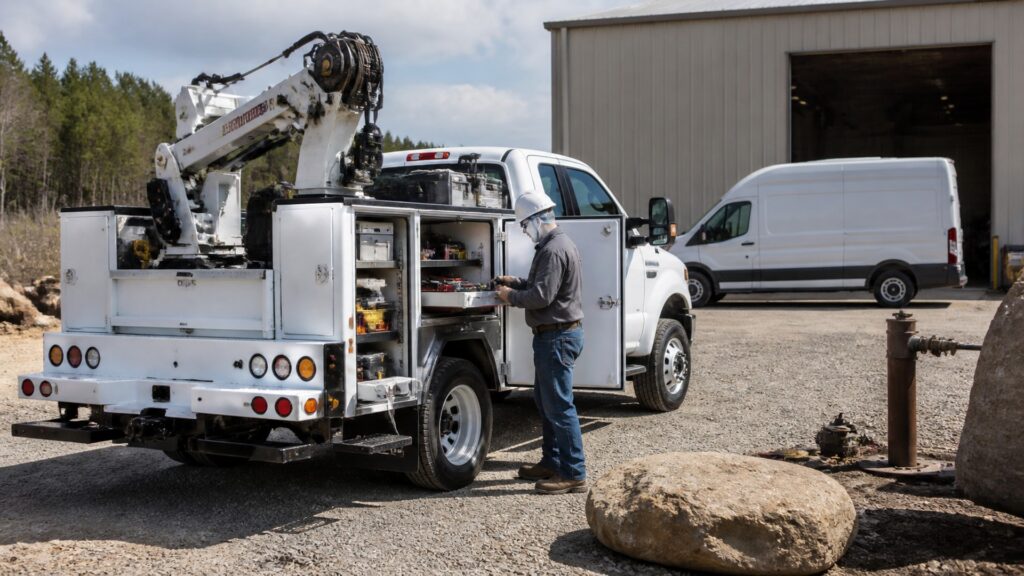
Compare loading access, protection, equipment, and daily operating demands.
Tip: Describe a complete working day before comparing vehicle specifications.
These terms connect vehicle design with the work it must perform.
A work-truck body is the load-carrying or vocational structure fitted behind the cab.
A cargo enclosure surrounds the load space with a roof and walls.
Loading access is the route by which material enters and leaves the vehicle.
An upfit is equipment or a body installed to adapt the vehicle to a task.
The job-ready load includes everything carried for the actual assignment.
The duty cycle is the recurring pattern of travel and work.
Tip: Compare the finished working configuration rather than an empty base vehicle.
An open flatbed can be useful when materials are placed from the side or above with appropriate loading equipment. A dump body performs a different unloading task from carrying boxes through van doors. The advantage comes from the specific body and loading method, not from a general belief that trucks carry everything better. Examine where the vehicle can stand and where the load must go.
If a regular load cannot pass through a van opening or must be handled several extra times, a suitable truck body may remove a recurring bottleneck.
A van can keep tools and stock inside one enclosed space, with shelving and access arranged around the service task. That may suit an installer carrying many small parts or a delivery operation handling weather-sensitive goods. A service truck can offer enclosed compartments too, so compare the actual storage arrangement rather than assuming every truck exposes its tools.
The question is whether protected interior volume or direct exterior access better supports the material you retrieve repeatedly.
Some assignments depend on a crane, dump mechanism, compressor, or other installed equipment. Start with the equipment duty and the vehicle maker's body or conversion guidance, then have the upfitter confirm integration. Vans are also adapted for work, and a truck chassis is not automatically compatible with every attachment. The exact body, mounting arrangement, and installed systems must work together.
Manufacturer body-equipment manuals are useful starting documents; select the one for the actual vehicle and market rather than transferring assumptions from another model. Ford body-equipment manuals.
The finished body, racks, equipment, occupants, and cargo all affect the loaded vehicle. Trailer tongue load also counts against the towing vehicle's load allowance. Check total and individual axle ratings, not just a headline payload or tow figure. Obtain a weight assessment for the completed configuration, with the load placed as it will be carried.
Ford's towing guidance distinguishes payload, axle, and combination limits; use the corresponding documentation for whichever vehicle you select. Ford towing and payload guidance.
The trip includes parking, reaching tools, loading, unloading, and returning unused material. A larger truck that helps once at a loading yard may be awkward at every customer location. Conversely, an enclosed van may require repeated unloading to reach equipment that a service body presents directly. Walk through several representative stops with the intended crew.
Choose the configuration that solves the repeated task. If an unusual load occurs rarely, assess a realistic separate arrangement before accepting a daily compromise.
Use the job requirements to choose between actual vehicles.
A flatbed, dump body, or suitable equipment installation is essential to the work.
Open loading or exterior service compartments simplify repeated tasks.
Protected interior storage and organized access to smaller items dominate the day.
The load fits the openings and the completed vehicle meets capacity and route requirements.
Broad category claims can hide the wrong body choice.
Ratings and installed equipment vary; compare completed vehicles.
Vans can have extensive job-specific equipment and storage.
Body dimensions, loading equipment, securement, and weight limits still apply.
Tip: The useful comparison is between two job-ready configurations.
Answers for planning a practical vehicle comparison.
It can be, but specialized bodies and equipment may be equally important.
Enclosed compartments can provide protection; inspect their layout, sealing, and security for the actual equipment.
Only if towing is a core requirement, and then use the exact loaded configuration and all applicable ratings.
A list of crew, tools, materials, equipment duties, loading methods, and typical routes, with representative weights and dimensions.
Choose the work truck when its specific body or equipment makes the recurring job easier and the completed vehicle meets every applicable limit.
Choose the van when enclosed, organized storage and suitable access do more useful work for your operation.
Use these Review Streets paths to compare related categories and practical next decisions.
Keep the chassis and vocational equipment ready.
Separate job capability from vehicle management.
Choose a retailer
Prices checked regularly. We may earn a commission at no cost to you.