
Shoe-Fit Need
A problem involving sock thickness, seams, heel hold, or toe room inside footwear.
- It points toward athletic socks.
- Shoes still matter.
- No comfort guarantee follows.
Use athletic socks instead of compression apparel when the issue is ordinary shoe-interface support: toe seams, heel pocket, cushion thickness, sock height, arch band feel, moisture behavior, or foot coverage inside the shoe.
Compression sleeves, pressure-rated garments, calf coverage, recovery claims, and medical-use language belong to a different decision unless the product is specifically a compression sock with both roles.
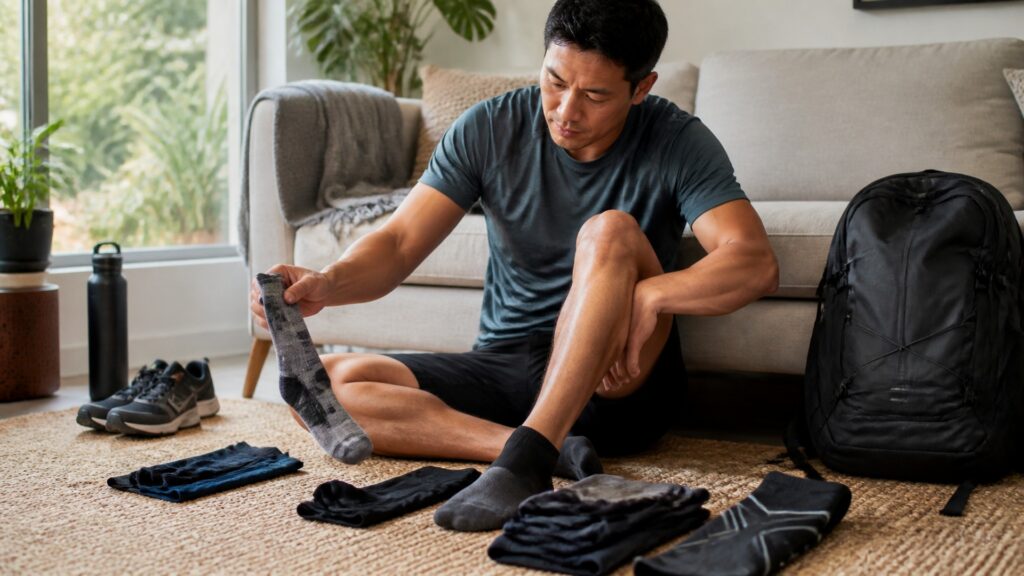
This decision explains when foot-and-shoe needs should lead before pressure-focused garments.
Tip: Choose athletic socks for shoe-interface needs; treat pressure claims as a separate compression question.
These definitions connect the main idea to the variables, limits, and practical signals readers need to compare options.
A problem involving sock thickness, seams, heel hold, or toe room inside footwear.
A sock focused mainly on foot coverage, cushion, moisture behavior, and shoe fit.
A need centered on pressure over a limb or body area.
A product specification or claim about garment tightness.
A product that covers the foot while also using compression design.
How much of the foot and ankle the sock covers.
Tip: Use these terms to separate foot coverage from pressure-focused apparel.
Toe seam feel, heel hold, cushion thickness, arch band tension, moisture yarn, and shoe volume are ordinary sock questions.
The sock-first decision starts in the shoe.
Compression garments are organized around applying pressure to a body area, not just covering the foot inside a shoe.
Pressure is a separate category driver.
A compression sock can be both a sock and compression apparel, so readers should identify whether shoe fit or pressure is the main reason for buying.
Overlap does not remove the boundary.
Recovery, circulation, swelling, or medical claims should not be assumed from athletic sock features.
Claims require more than category wording.
If the reason for the garment is pressure profile, calf coverage, sleeve use, or a clinician-directed need, compression apparel is the better category to evaluate.
The decision names when not to choose ordinary socks.
This decision explains when ordinary athletic socks should be chosen before compression apparel.
It separates shoe-interface needs from pressure-focused garment needs.
It handles compression-sock overlap without medical claims.
It does not make recovery, circulation, or medical claims.
It does not decide personal suitability.
Common shortcuts and misunderstandings can make the topic seem simpler than it is.
Compression apparel is defined by pressure design, not simple snugness.
Cushion changes shoe volume; pressure rating belongs to compression garments.
Toe seams, heel hold, and shoe fit still matter.
Such claims need evidence and context.
Tip: Treat strong claims as starting points for comparison, not final answers.
Concise answers to common questions readers may have after the main explanation.
When the problem is shoe fit, seams, cushion, heel hold, moisture, or foot coverage.
When the goal is pressure profile, limb coverage, or a medically directed compression need.
Yes, they can overlap foot coverage and pressure design.
No. Compression requires pressure-focused design or labeling.
No. Medical compression questions need qualified guidance.
Use athletic socks instead of compression apparel when the real issue is foot-and-shoe fit.
Use compression apparel when pressure profile or limb coverage is the actual reason for the garment.
Use these Review Streets paths to connect the explainer to related categories, comparisons, and next decisions.
Use this for the shoe-interface mechanics behind sock-first choices.
Read this for pressure-focused apparel logic.
Browse socks after confirming the issue is shoe-interface support.
Choose a retailer
Prices checked regularly. We may earn a commission at no cost to you.