When to Use Cargo Vans Instead of Commercial Electric Vehicles

An electric cargo van is both a cargo van and a commercial electric vehicle. The practical choice is therefore whether a gasoline or diesel cargo van should continue serving an assignment, or whether a suitable electric cargo vehicle can take over. Keep the cargo requirement fixed while comparing the complete operating arrangements.

Retaining a conventional van can make sense when a required body or equipment package is unavailable on the electric candidate, usable charging does not fit the work, or the transition would leave an unresolved service gap. Those are specific constraints to assess and revisit, not proof that conventional vans are always preferable for cargo work.

By: Review Streets Research Lab
Updated: October 6, 2026
Explainer · 8-12 min read
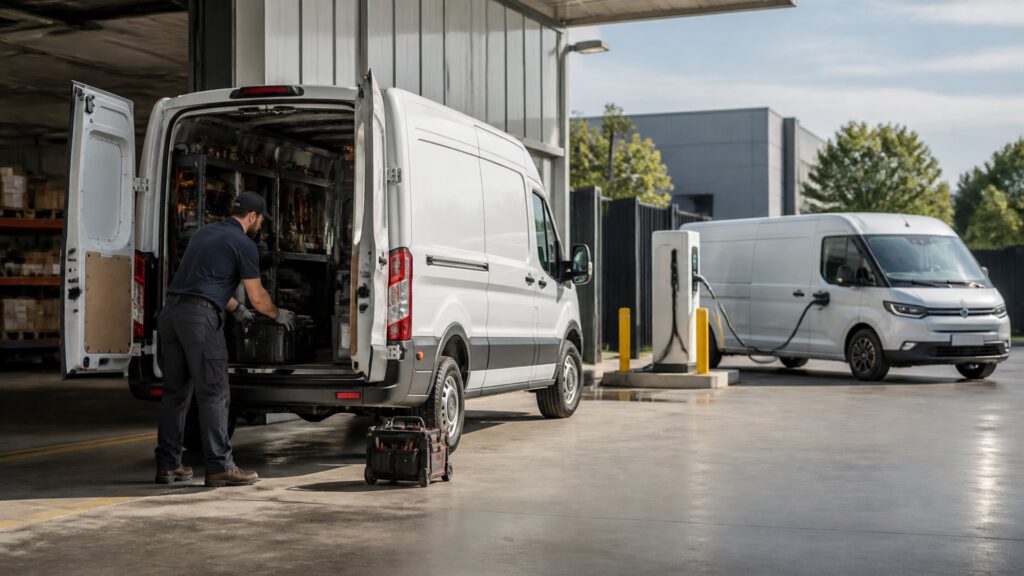
cargo vans explainer hero image for Review Streets
What You'll Learn

Protect the Cargo Service During a Vehicle Change

Identify what must keep working and which replacement requirements remain unresolved.

  • Why cargo van and commercial EV are overlapping descriptions
  • How specialist equipment can determine replacement suitability
  • When changing routes and parking locations complicate charging
  • How an interim vehicle can protect service continuity
  • What should trigger a fresh review of a retained van

Tip: State the actual reason for retaining the vehicle. A named constraint is easier to solve than a general preference for one powertrain.

Definitions

Terms for a Cargo-Van Retention Decision

Focus on the job and its practical dependencies.

Cargo requirement

A cargo requirement states what must be carried and how it must be handled.

  • Example: bulky equipment loaded through a side door at repeated stops
  • Check: dimensions, mass, access, and restraint needs
  • Limit: a vehicle name does not define the load

Working configuration

A working configuration is the vehicle with its required permanent equipment installed.

  • Example: a van carrying fitted shelves and powered equipment
  • Check: the completed layout and loading limits
  • Limit: an empty demonstrator may not represent the usable vehicle

Schedule flexibility

Schedule flexibility is the scope to change timing without failing the service requirement.

  • Example: whether a charging stop can fit between booked visits
  • Check: actual commitments and allowable delays
  • Limit: an unplanned gap should not be assumed to exist

Energy access

Energy access is the usable fueling or charging arrangement supporting the route.

  • Example: a compatible charging location available at the required stop
  • Check: location, timing, vehicle compatibility, and reliability
  • Limit: a map location alone does not prove usable access

Service continuity

Service continuity is the ability to keep meeting transport obligations while vehicles or support arrangements change.

  • Example: retaining a suitable van until its replacement and charger are ready
  • Check: the required assignments and interim capacity
  • Limit: new equipment delivery does not automatically complete a transition

Review trigger

A review trigger is a defined change that calls for reconsidering the vehicle decision.

  • Example: commissioning the depot charging installation
  • Check: the constraint that justified retention
  • Limit: a temporary reason should not become an unexplained permanent rule

Tip: Distinguish a permanent mission requirement from a temporary installation or delivery delay.

Cargo mission

Start with the Load That Has to Reach the Customer

Describe the objects, tools, people, and handling tasks before comparing propulsion. A van may need a particular doorway, interior length, secure equipment arrangement, or loading sequence. Check the completed load against the relevant limits. If an electric candidate cannot meet those requirements, its other benefits cannot make it a direct substitute for that assignment.

  • Measure the load and its loading path.
  • Include occupants and installed equipment.
  • Check relevant total and axle limits.

Ford’s loading guidance supports evaluating the actual vehicle and load. A larger-looking compartment does not establish a greater allowable mass.

Reference: Ford vehicle loading guidance.

Equipment availability

Keep a Proven Working Body Until a Suitable Replacement Exists

A specialist service interior may be central to the job. Before replacing it, confirm that the required equipment can be installed and supported on the proposed vehicle. Do not assume shelves, powered systems, or attachments transfer because the bodies look similar. Retaining the existing van can be practical while a compatible replacement package is assessed or supplied.

  • Identify equipment essential to the service.
  • Confirm fitment on the exact receiving vehicle.
  • Include installation and acceptance time in the changeover.

For example, a technician’s van without its required tools and supported power arrangement is not an equivalent replacement merely because it can reach the same address.

Uncertain work

Check Charging Against the Actual Pattern of Travel

Some assignments change late in the day or finish at different locations. That does not automatically rule out an EV, but it makes energy access and contingencies important to assess. If a suitable electric candidate cannot yet be supported within those conditions, an appropriate conventional van may remain useful. Base the conclusion on the assignment rather than a blanket distance rule.

  • Review changes and exceptions that occur in practice.
  • Confirm usable energy access where the vehicle actually stops.
  • Assess an acceptable response to delayed or additional work.

DOE fleet EV guidance includes routes, dwell periods, and charging opportunities. Similar daily mileage can conceal very different operating arrangements.

Reference: DOE fleet EV operating assessment.

Transition

Avoid Removing Capacity Before the Replacement Service Is Ready

A vehicle order, equipment installation, charging project, and driver preparation may finish at different times. Plan the handover so the required cargo work remains covered. A temporary retained van or suitable alternative can bridge a genuine gap. Include the cost and duration of that interim arrangement in the decision rather than leaving it as an informal workaround.

  • Identify the milestones needed for working service.
  • Keep suitable interim capacity where required.
  • Confirm the final handover and responsibility.

DOE infrastructure planning includes site work, utility coordination, and commissioning-related steps. A vehicle arriving first does not mean all of those dependencies are complete.

Reference: Charging infrastructure development guidance.

Reassessment

Revisit the Decision When Its Constraint Changes

Document why the conventional van was retained and what new evidence would change the conclusion. A commissioned charging site, a supported equipment package, or a more predictable route may justify a new comparison. Evaluate equivalent cargo service, support, and costs rather than treating sunk effort as a reason never to reconsider. The right decision can differ between assignments within one business.

  • Record the constraint and its review trigger.
  • Compare candidates over the same work and period.
  • Test the revised arrangement before withdrawing essential cover.

An electric cargo van becomes a viable alternative when its body, equipment, energy access, and support can meet the required work; the cargo-van category itself does not favor one propulsion system.

Quick Reality Check

A Reason to Retain and a Reason to Reconsider

Keep the decision connected to evidence that can change.

Retention may be justified by

An unresolved body, equipment, energy-access, or service-support requirement.

A temporary gap before the replacement operating arrangement is ready.

Reassessment may follow

A compatible completed vehicle and usable charging becoming available.

Evidence that the actual cargo assignment can be served dependably.

Common Myths

Misconceptions About Cargo Vans and Electric Alternatives

Avoid turning a specific limitation into a universal claim.

Cargo vans and commercial EVs cannot be the same vehicle

An electric cargo van belongs to both categories.

Unpredictable work always excludes electric vehicles

Assess the actual candidate, energy access, and acceptable contingency.

Every existing upfit transfers directly to an electric replacement

Fitment must be established for the receiving vehicle.

A temporary charging delay settles the choice forever

Review the decision when the constraint changes.

Tip: A defensible retention decision names the service requirement and the unresolved replacement issue.

FAQ

Questions About Retaining a Conventional Cargo Van

Answers for maintaining service while considering alternatives.

When is retaining the existing van reasonable?

When it remains suitable and an important replacement requirement is unresolved, subject to applicable operating requirements.

Can an electric cargo van still meet a demanding cargo job?

Potentially. Check the exact body, load limits, equipment, route, and energy support rather than assuming the answer from propulsion alone.

What if charging installation is delayed?

Reassess the service plan and provide appropriate interim capacity; do not assume a delivered EV has a usable energy arrangement.

Should costs include transition overlap?

Yes. Compare the complete supported service, including necessary interim vehicles, equipment, infrastructure, and support over a consistent period.

What should be recorded with the decision?

The required cargo service, the constraint justifying retention, and the evidence or milestone that will trigger review.

Bottom Line

Retain a suitable conventional cargo van when a specific capability or support gap prevents an electric replacement from delivering the required service.

Keep the reason explicit and reassess when the constraint changes. Electric cargo vans can meet the same body category when the complete arrangement is suitable.

Next Steps

Go Deeper or Compare Your Options

Use these Review Streets paths to compare related categories and practical next decisions.