When to Use Commercial Electric Vehicles Instead of Cargo Vans

An electric cargo van belongs to both categories: it is a commercial electric vehicle and a cargo van. The useful decision is whether to replace a gasoline or diesel cargo van with a battery-electric vehicle that can perform the same work. Electric propulsion does not remove the need for the right cargo body, loading access, or carrying allowance.

A battery-electric option makes sense when the completed vehicle can handle the load and route, charging fits the working schedule, and service support is ready. If one of those conditions is unresolved, a suitable conventional van may remain the practical choice for that assignment while other routes move to electric power.

By: Review Streets Research Lab
Updated: October 6, 2026
Explainer · 8-12 min read
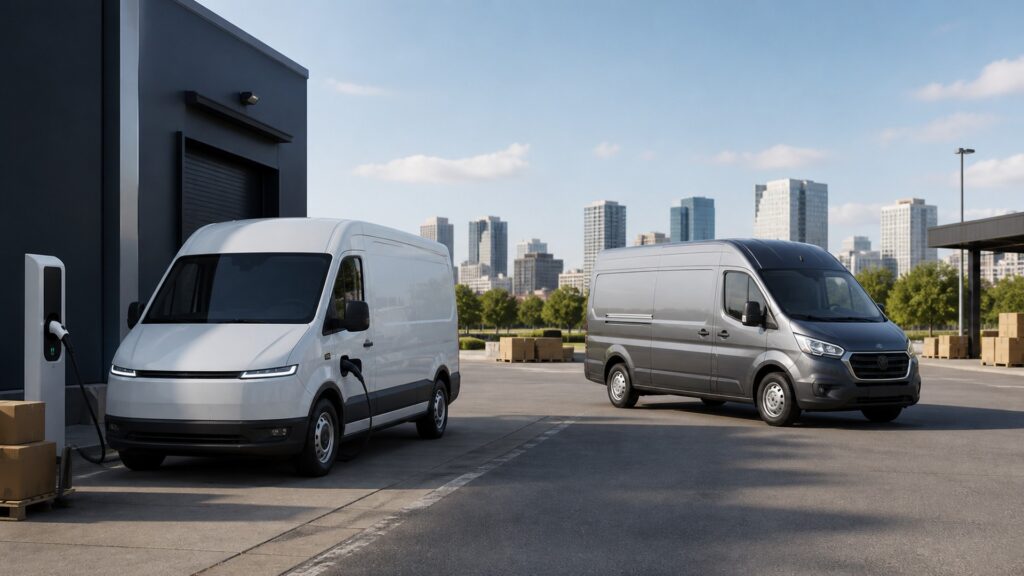
commercial electric vehicles explainer hero image for Review Streets
What You'll Learn

Compare the Cargo Job Before the Power Source

Choose between complete working arrangements, including the time between trips.

  • Why an electric vehicle can also be a cargo van
  • How body and equipment requirements narrow the candidates
  • Why the loaded route matters more than a headline range
  • What makes a charging window usable
  • When to keep a conventional option or introduce a mixed fleet

Tip: Use a representative delivery or service day, with its actual goods, tools, stops, and return time.

Definitions

Terms for Comparing Cargo Transport Options

Separate carrying capability from energy supply and support.

Cargo configuration

Cargo configuration is the installed arrangement used to carry goods or working equipment.

  • Example: a van with shelving and a partition
  • Check: door access, usable space, and equipment compatibility
  • Limit: an empty-vehicle volume figure may not describe the working interior

Battery-electric drive

Battery-electric drive uses energy stored in a traction battery to power the vehicle’s electric motor or motors.

  • Example: an electric delivery van charged at its depot
  • Check: the exact drive and charging specifications
  • Limit: electric propulsion does not identify a particular body style

Loaded route

A loaded route is the assignment assessed with its intended occupants, goods, and equipment aboard.

  • Example: a parcel run with its normal delivery load
  • Check: the route’s relevant loads, terrain, and conditions
  • Limit: an empty demonstration may not represent the job

Charging window

A charging window is the period when a vehicle can access suitable charging before its next required use.

  • Example: time at a compatible depot charger after unloading
  • Check: access and delivered energy before departure
  • Limit: time parked elsewhere is not automatically charging time

Support readiness

Support readiness means the people and services needed to keep the vehicle working are available.

  • Example: a named service provider and a charging-fault contact
  • Check: training, coverage, and response arrangements
  • Limit: vehicle delivery alone does not establish support

Comparable service cost

Comparable service cost measures the expenses of delivering equivalent transport work over a defined period.

  • Example: vehicle, energy, support, and infrastructure expenses for the same routes
  • Check: consistent workload and cost boundaries
  • Limit: fuel or electricity price alone is an incomplete comparison

Tip: Reject a physically unsuitable candidate before comparing its energy costs.

Load first

Keep the Cargo Requirements Intact

List the goods, tools, occupants, and installed equipment needed for the job. Check usable dimensions and loading access on the candidate vehicle, then assess the relevant weight limits. A shorter electric vehicle is not a substitute for a larger cargo van if it requires additional trips that the schedule cannot absorb. Conversely, unused space in the current van may not be a requirement for its replacement.

  • Compare the working interior, not only exterior size.
  • Include installed equipment in the load assessment.
  • Check how the load enters and leaves the vehicle.

Ford’s loading guidance distinguishes the vehicle’s weight ratings from the space available inside. Both remain relevant after a change of propulsion.

Reference: Ford vehicle loading guidance.

Route evidence

Assess the Electric Candidate on the Work It Must Do

Use representative operating information to assess the loaded journey, including relevant weather, terrain, and auxiliary equipment. A repeatable return-to-base route gives a clear starting point because its travel and parking periods can be observed. Treat additional stops and unusual days explicitly. The question is whether the candidate can serve the assignment with a workable contingency, not whether it once completed an easy test trip.

  • Use the intended load and equipment.
  • Include conditions that materially affect the assignment.
  • Plan what happens when the route changes.

The Department of Energy’s fleet EV guidance recommends evaluating duty requirements and charging opportunities when selecting a vehicle.

Reference: Department of Energy fleet EV selection.

Charging access

Make the Time Between Departures Part of the Choice

An electric van returning to a depot can replenish energy while other work stops, provided usable charging is available for long enough. Verify the vehicle and charger combination, site readiness, access arrangements, and departure needs. A van taken home by a driver needs a different energy plan from one parked at an equipped depot. Do not assume that a charger shown on a map will always fit the vehicle or its timing.

  • Confirm the actual charging location and access.
  • Account for shared equipment and competing departures.
  • Align vehicle delivery with operational charging.

Infrastructure planning includes utility coordination, installation, commissioning, and ongoing responsibility. A charger on order is not an available charging window.

Reference: Charging infrastructure planning.

Where Each Fits

Choose Electric Assignments That Are Supported Now

Consider two illustrative jobs. A local delivery run returns to a prepared depot each evening and has demonstrated energy needs within the candidate’s capability. It may be a good electric assignment. A service van sent unpredictably to distant sites without a workable charging plan may need a suitable conventional option for now. The distinction comes from the complete service requirements, not a universal distance threshold.

  • Select assignments with demonstrated capability.
  • Name unresolved requirements on other routes.
  • Reassess retained conventional work when circumstances change.

A mixed fleet can support both situations, although each propulsion type still needs its own operating and maintenance arrangements.

Whole service

Compare Costs and Interruptions on the Same Basis

Evaluate the same workload over a comparable period. Include the vehicle, required equipment, energy, servicing, infrastructure, and any replacement transport or route changes. Use actual tariff and service information for the candidates rather than assuming a guaranteed saving. A limited deployment can reveal whether charging access or vehicle support creates interruptions that were missing from the initial comparison.

  • Use equivalent jobs and time periods.
  • Include the necessary infrastructure and support.
  • Record service interruptions during a trial.

The strongest case for a replacement explains both how it completes the work and what it costs to keep that service dependable.

Quick Reality Check

Electric Cargo Capability and Charging Capability

Both need to support the same working day.

What the vehicle must provide

Usable space, load allowance, and equipment for the cargo job.

A suitable drive and energy capability under relevant conditions.

What the operation must provide

Usable charging between required departures.

Drivers, service support, and a response to interruptions.

Common Myths

Misconceptions About Electric Vehicles and Cargo Vans

Body type and propulsion are separate characteristics.

Choosing electric means giving up a cargo-van body

Electric cargo vans combine enclosed cargo accommodation with battery-electric propulsion.

Advertised range alone proves route suitability

Assess the actual vehicle, load, equipment, and conditions.

Any parked period is a charging opportunity

Suitable equipment and access must be available during that period.

Lower energy cost guarantees lower overall cost

Compare the complete service, including infrastructure and support.

Tip: A fair comparison preserves the required cargo service on both sides.

FAQ

Questions About Replacing a Conventional Cargo Van

Answers for a practical electric-vehicle decision.

When is an electric cargo van a promising candidate?

When its body and loaded capability suit the job and the operation can provide the charging and support it needs.

Must every route switch at once?

No. Different routes and parking arrangements can justify different vehicle choices.

Can existing shelving be transferred?

Only after checking the receiving vehicle, equipment compatibility, mounting requirements, and completed load.

What if the driver takes the vehicle home?

Confirm an appropriate energy arrangement for that parking pattern rather than assuming depot charging will cover it.

What should a trial demonstrate?

That the actual cargo service can be completed repeatedly, with understood costs, support needs, and responses to changed conditions.

Bottom Line

Choose a commercial electric vehicle when it preserves the required cargo capability and fits a dependable energy and support arrangement.

Retain suitable conventional capacity where a specific requirement remains unresolved, and revisit the decision as that requirement changes.

Next Steps

Go Deeper or Compare Your Options

Use these Review Streets paths to compare related categories and practical next decisions.