When to Use Coilovers Instead of Lowering Springs

Use coilovers instead of lowering springs when the vehicle needs controlled ride-height adjustment, matched dampers, corner-weight balancing, or repeatable setup changes for different tires, surfaces, loads, or competition rules. A quality package can coordinate spring rate, usable travel, damping range, mounts, and serviceability rather than changing height alone.

Lowering springs remain sensible for a modest fixed drop when compatible dampers, adequate travel, acceptable alignment, and lower cost matter more than adjustment. Either choice changes suspension position, geometry, bump-stop engagement, headlamp aim, sensor calibration, and tire clearance. Decide from measured travel and use requirements, then align, corner-check, and road-test the finished vehicle.

By: Review Streets Research Lab
Updated: August 31, 2026
Explainer · 8-12 min read
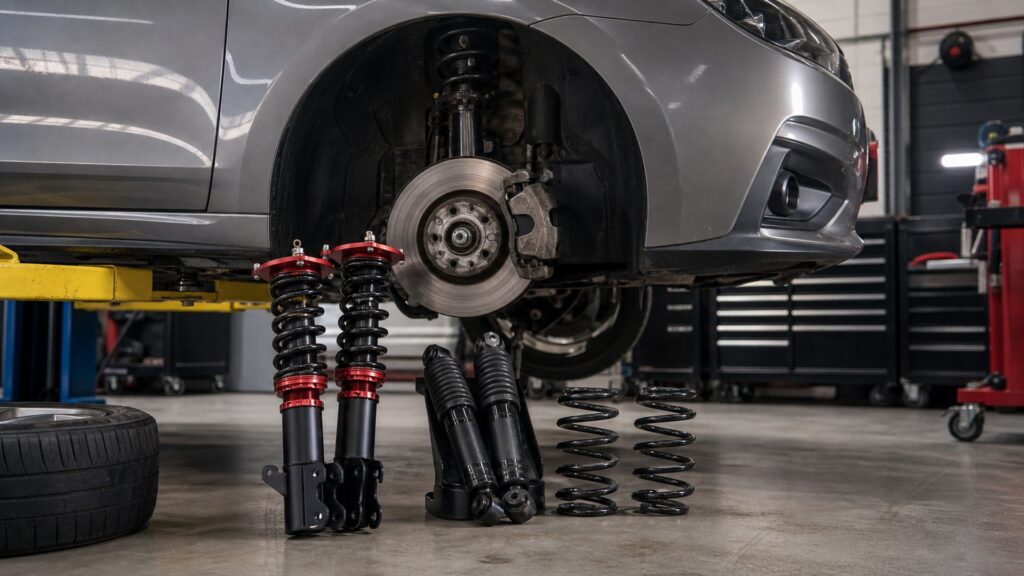
coilovers instead of lowering springs explainer hero image for Review Streets
What You'll Learn

Trace the Operating Chain behind Coilovers Instead of Lowering Springs

For Coilovers Instead of Lowering Springs, follow physical inputs, control decisions, limiting conditions, and verification evidence to determine whether the claimed result is useful.

  • When Adjustment Solves a Real Setup Problem
  • Why Lowering Changes Available Wheel Movement
  • How Rate and Damping Must Control the Same Motion
  • What Height Adjustment Changes beyond Appearance
  • Why Better Hardware Still Requires Maintenance
  • Where coilovers instead of lowering springs measurement separates improvement from impression

Tip: Record the coilovers instead of lowering springs configuration and a repeatable baseline before changing it; uncontrolled comparisons cannot identify which mechanism caused the result.

Definitions

Key Concepts That Define Coilovers Instead of Lowering Springs

These six terms locate the controlling variables inside coilovers instead of lowering springs.

Coilover

Spring and damper assembly arranged concentrically, often with adjustable height.

  • Coilover has a configuration-specific meaning within coilovers instead of lowering springs
  • Features and adjustment ranges vary
  • Verify coilover directly on the vehicle before deciding

Lowering Spring

Replacement spring designed to reduce static ride height on a compatible suspension.

  • Lowering Spring has a configuration-specific meaning within coilovers instead of lowering springs
  • Its rate must suit the damper
  • Verify lowering spring directly on the vehicle before deciding

Damper Travel

Available compression and extension movement around static position.

  • Damper Travel has a configuration-specific meaning within coilovers instead of lowering springs
  • Lowering reallocates that travel
  • Verify damper travel directly on the vehicle before deciding

Corner Weight

Static load carried at each wheel on level scales.

  • Corner Weight has a configuration-specific meaning within coilovers instead of lowering springs
  • Cross-weight changes influence paired turns
  • Verify corner weight directly on the vehicle before deciding

Spring Preload

Compression retained in a spring at full suspension extension.

  • Spring Preload has a configuration-specific meaning within coilovers instead of lowering springs
  • It differs from vehicle-supported load
  • Verify spring preload directly on the vehicle before deciding

Motion Ratio

Relationship between wheel movement and spring or damper movement.

  • Motion Ratio has a configuration-specific meaning within coilovers instead of lowering springs
  • It converts component rate to wheel rate
  • Verify motion ratio directly on the vehicle before deciding

Tip: Apply coilovers instead of lowering springs concepts with exact service data, calibrated instruments, and a recorded complete configuration.

Decision Threshold

When Adjustment Solves a Real Setup Problem

Coilovers earn their complexity when documented height, damping, spring, or corner-weight changes support a defined task. Cosmetic height alone rarely needs multiple adjustment variables and their maintenance burden.

  • Define street or track duty
  • List adjustments actually required
  • Set a minimum clearance
  • Budget for scales and alignment

Adjustment is valuable only when the driver measures and uses it.

Travel and Bump Stops

Why Lowering Changes Available Wheel Movement

Reducing static height can consume compression travel and alter extension reserve. Shortened bodies, correctly positioned perches, compatible bump stops, and suitable rates help retain a working envelope rather than merely preventing tire contact.

  • Measure travel before purchase
  • Inspect full-lock clearance
  • Retain bump-stop progression
  • Check full droop retention

A low stance that rides continuously on bump stops has not gained useful suspension control.

Spring-Damper Match

How Rate and Damping Must Control the Same Motion

Stiffer springs store and release energy differently, while dampers control movement velocity. Stock dampers may lack travel or force for lowering springs; adjustable coilovers still need settings within a useful range.

  • Use verified rate data
  • Match damper stroke
  • Start near the recommended setting
  • Change one axle or click group

An adjustment knob cannot rescue an incompatible spring or exhausted damper.

Geometry and Corner Weight

What Height Adjustment Changes beyond Appearance

Ride height moves control arms, tie rods, roll centers, camber, toe, driveshaft angles, and sensor references. Independent perches can balance diagonal load, but arbitrary corner heights can twist the chassis setup.

  • Align at final height
  • Scale with normal driver load
  • Check bump steer where relevant
  • Re-aim dependent sensors

Corner balancing is a measured load exercise, not four unrelated fender-gap adjustments.

Ownership and Service

Why Better Hardware Still Requires Maintenance

Threaded bodies, spherical mounts, exposed adjusters, seals, and high damper temperatures need cleaning, inspection, corrosion protection, and periodic rebuilding. Noise and ride penalties may be unacceptable on a daily vehicle.

  • Verify rebuild support
  • Protect threads from contamination
  • Torque mounts after settling
  • Record baseline settings

Long-term value includes service access, winter exposure, noise tolerance, and replacement parts.

Quick Reality Check

What Coilovers Instead of Lowering Springs Can Change—and What It Cannot Prove

For Coilovers Instead of Lowering Springs, isolate the operative mechanism from conclusions still requiring complete-vehicle testing.

Evidence of a Coherent Result

Choose coilovers when measured adjustability, matched damping, retained travel, corner-weight work, and serviceable tuning justify their complexity for a defined use.

A credible coilovers instead of lowering springs result repeats after temperature stabilization while its connected safeguards remain functional.

Claims Requiring More Evidence

Coilovers cannot compensate for unsuitable tires, poor alignment, damaged bushings, lost geometry, inadequate clearance, or settings chosen only for appearance.

Within coilovers instead of lowering springs, sound, sensation, a peak number, or a product label cannot establish durability, legality, or improvement throughout the operating range.

Common Myths

Misconceptions About Coilovers Instead of Lowering Springs

Common coilovers instead of lowering springs myths confuse a visible feature with complete-vehicle behavior.

Coilovers always handle better than lowering springs

Component quality, rates, damping, travel, geometry, tires, alignment, and settings determine grip. A mismatched inexpensive coilover can ride on bump stops or lose tire contact where matched springs and dampers remain controlled.

More damping clicks make the suspension stiffer

Adjusters change particular damping circuits and velocity ranges, not spring rate. Excess force can prevent the wheel following rough pavement, reduce grip, and create harshness while another part of the damping curve remains unchanged.

Spring preload raises the spring rate

For a linear spring that remains seated, preload changes the force required to begin movement and may affect droop or height, but it does not alter the spring's force-per-distance rate. Progressive systems behave differently.

Ride height can be set by matching fender gaps

Body panels and vehicle load are not precision chassis references. Use manufacturer datum points, travel, clearance, scales, and alignment measurements; visually equal gaps can produce unequal corner loads or poor suspension position.

Tip: Test each coilovers instead of lowering springs claim under controlled conditions; then inspect the heat, force, flow, and control demands created specifically by coilovers instead of lowering springs.

FAQ

Frequently Asked Questions About Coilovers Instead of Lowering Springs

The following answers resolve practical decisions specific to coilovers instead of lowering springs.

When are lowering springs the better choice?

They suit a modest fixed height change when tested with compatible dampers, adequate travel, acceptable alignment, and the intended load. They cost less, simplify setup, and may preserve quieter mounts and easier maintenance.

Do coilovers require corner balancing?

Not for basic operation, but scales are useful when independent height changes or competition goals demand diagonal-load control. The vehicle should be loaded as driven, on level equipment, with alignment coordinated afterward.

Will coilovers make a daily driver uncomfortable?

They can, depending on spring rate, damper calibration, mounts, tire sidewall, travel, roads, and settings. Street-oriented packages with rubber isolation and usable stroke can remain compliant; race hardware may transmit noise and impact.

How low can a vehicle safely be lowered?

The limit occurs before interference, exhausted compression or droop, unacceptable alignment, damaged axles, poor bump steer, reduced ground clearance, sensor error, or illegal lamp height. Measure those constraints rather than selecting a universal drop.

What must be checked after installation?

Torque, spring seating, perch locks, hose and wire clearance, tire contact, full steering sweep, travel, ride height, corner load where relevant, alignment, headlamp aim, driver-assistance sensors, and road behavior all require verification.

Bottom Line

Choose coilovers when measured adjustability, matched damping, retained travel, corner-weight work, and serviceable tuning justify their complexity for a defined use.

Coilovers cannot compensate for unsuitable tires, poor alignment, damaged bushings, lost geometry, inadequate clearance, or settings chosen only for appearance.

Next Steps

Continue from Coilovers Instead of Lowering Springs to Its Dependent Systems

Use these adjacent mechanisms to plan, validate, and troubleshoot the complete coilovers instead of lowering springs decision.