What You'll Learn
Trace the Operating Chain behind Suspension Tuning
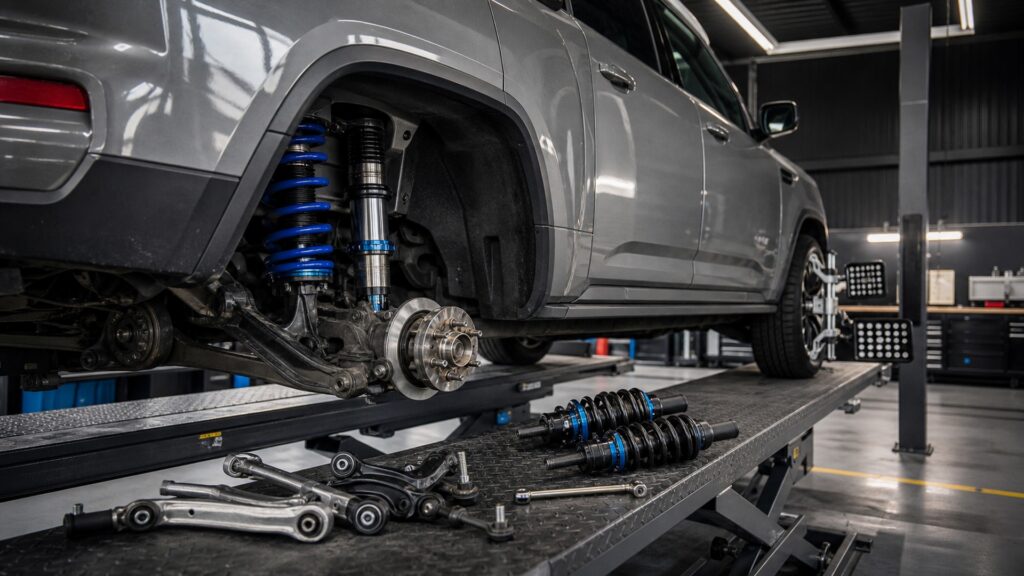
For Suspension Tuning, follow physical inputs, control decisions, limiting conditions, and verification evidence to determine whether the claimed result is useful. Diagnose the exact phase—brake release, turn-in, mid-corner, power application, crest, or rough-surface recovery—before selecting an adjustment. Tire temperatures, damper travel traces, steering input, corner weights, and left-right ride data distinguish alignment, support, motion-control, and balance problems that feel similar from the seat. Build a setup sheet with cold and hot pressures, fuel load, driver mass, weather, click positions, bar holes, perch measurements, and alignment values. After each run, describe one observable symptom and the precise location where it began. That record prevents memory and expectation from turning several simultaneous changes into an unsupported conclusion. Use zip ties or displacement sensors to identify peak damper movement, chalk to observe shoulder use, and a level scale pad to remove floor slope from corner-weight readings. Inspect whether a diagonal curb strike, passenger load, fuel burn, or aerodynamic compression changes the symptom. On the road, include patched pavement, drainage crowns, expansion joints, and emergency lane-change behavior; on a circuit, compare matched laps rather than the quickest isolated lap. Recheck fastener torque, bushing position, tire wear, and ride height after settling. These observations reveal whether an apparent improvement consumed safety margin, created asymmetric response, or worked only on one unusually smooth section. Finally, separate heave, pitch, roll, and single-wheel events because each excites a different combination of springs, anti-roll bars, dampers, bushings, and chassis structure. A change that settles pitch under braking can reduce compliance when one wheel crosses a pothole, while added rear roll stiffness can sharpen rotation but reduce traction over an uneven exit. Evaluate steering effort, returnability, brake stability, wheel hop, and electronic-stability intervention alongside lap time or subjective balance. The useful setting is the repeatable compromise that preserves control when the surface, load, and maneuver differ from the ideal test case.