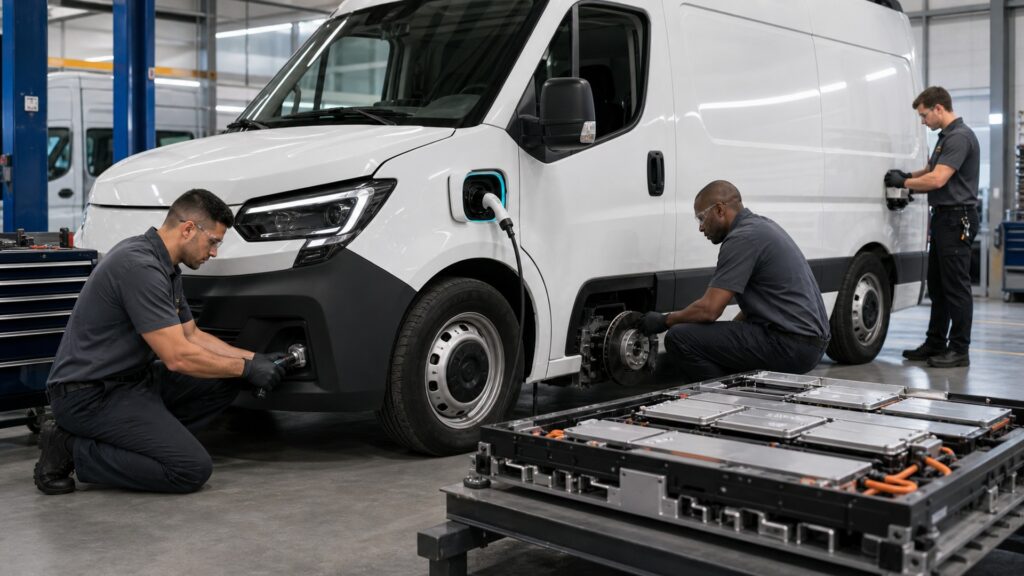
Battery-electric commercial vehicles remove many engine-related service tasks, but they do not remove maintenance responsibility. Tires, friction brakes, steering, suspension, body equipment, and the vehicle’s electrical and thermal systems still need the care specified for that vehicle. Charging equipment adds another support dependency to the transport service.
Maintenance therefore has two connected goals: keep the vehicle in appropriate condition and keep its energy supply usable. A sound vehicle can miss work because its assigned charger is unavailable, while a fully charged battery does not establish that the vehicle’s brakes, tires, or reported faults are acceptable.