
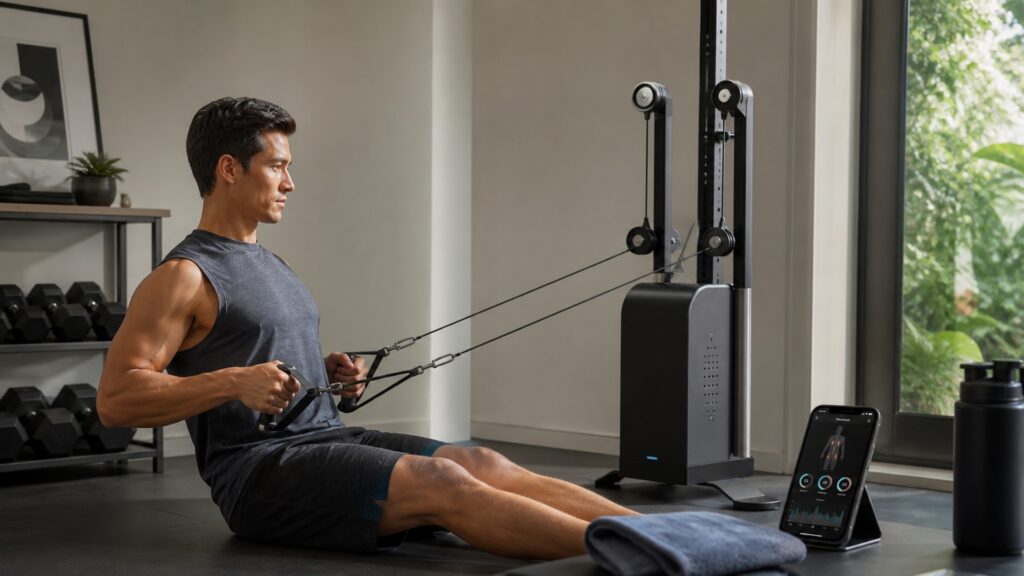
When to Use Connected Gym Equipment Instead of Fitness Training Apps

Connected gym equipment makes more sense than a training app when the workout depends on the machine itself: resistance changes, form feedback, rep tracking, guided pacing, or a built-in training surface. A fitness app can tell you what to do. Connected equipment can sometimes change how the exercise feels while you are doing it.

Use connected gym equipment when you want the hardware, software, and feedback loop to work together. Choose the app-first route when you mainly need portable programming, lower cost, or flexibility with equipment you already own.

By: Review Streets Research Lab
Updated: September 21, 2026
Explainer · 8-12 min read
connected gym equipment explainer hero image for Review Streets
What You'll Learn

When Connected Gym Equipment Is The Better Fit

A practical way to decide whether integrated hardware is worth choosing over portable app-based coaching.

  • When built-in resistance, speed, incline, or output tracking changes the workout
  • Why automatic performance capture can matter more than a larger workout library
  • Where a dedicated training station reduces setup friction
  • How subscriptions and hardware lock-in change the value calculation
  • When a fitness app is still the simpler and smarter choice
  • Which claims deserve caution before buying into a hardware ecosystem

Tip: Start with the workout problem. If the machine solves that problem during the session, connected equipment has a stronger case.

Definitions

Key Concepts Behind The Hardware-First Choice

These terms explain why connected equipment and training apps solve different parts of the fitness decision.

Hardware-Guided Feedback

Hardware-guided feedback means the machine can respond to what is happening during the workout, not just show instructions on a screen.

  • Example: a bike adjusting resistance during intervals
  • Check: look for feedback tied to the actual machine movement
  • Limit: feedback is useful only when it supports the workout you plan to do

Automatic Tracking

Automatic tracking records performance with less manual logging, which can make progress easier to review over time.

  • Example: a rower saving pace, distance, and output after each session
  • Check: confirm which metrics are captured without extra typing
  • Limit: the data matters only if you use it to guide future training

Dedicated Training Station

A dedicated training station combines equipment, display, controls, and coaching in one place.

  • Example: a connected treadmill with guided classes and pace controls
  • Check: decide whether one fixed station makes training easier to start
  • Limit: a fixed station is less flexible than app-based training across locations

Workout Flow

Workout flow is the path from choosing a session to finishing it without unnecessary setup or decision-making.

  • Example: selecting a strength class and having the machine set the resistance
  • Check: count how many steps it takes to begin a normal workout
  • Limit: a smooth flow still has to match your goals and available space

Subscription Dependence

Subscription dependence is the share of the equipment's value tied to paid classes, programs, or platform features.

  • Example: a machine that loses most guided workouts without a membership
  • Check: review what still works if you cancel the service
  • Limit: ongoing cost can outweigh convenience for occasional users

App Flexibility

App flexibility is the ability to use coaching across different spaces, equipment, and routines.

  • Example: following a dumbbell plan at home and a machine workout at the gym
  • Check: compare where you train most often
  • Limit: flexibility does not replace machine-specific feedback

Tip: The better choice is the one that solves the workout barrier you actually face, not the one with the longest feature list.

Decision Point

Start With What The Workout Needs

Connected equipment is strongest when the workout depends on controlled resistance, machine settings, or automatic metrics. If the session works just as well with ordinary equipment and a phone, the app may be enough.

  • Choose hardware when machine behavior affects the training effect.
  • Choose an app when the main need is programming or instruction.
  • Be skeptical of hardware that adds cost without changing the workout.

The hardware should earn its place by making the session clearer, easier to repeat, or easier to measure.

Tracking

Look At What Gets Recorded Automatically

Manual logs are easy to skip. Connected equipment can help when it captures pace, output, resistance, reps, or completion without turning the workout into paperwork.

  • Check whether the system records the metrics you care about.
  • Look for history that makes the next workout easier to plan.
  • Ignore metrics that look impressive but do not affect your decisions.

Useful tracking reduces friction and supports progression. Decorative tracking only adds noise.

Training Environment

Decide Whether One Station Helps Or Hurts

A dedicated machine can make training feel more automatic because everything is ready in one place. That same fixed setup can be a weakness if you train in several locations or use varied equipment.

  • One station helps when consistency is the hardest part.
  • Portable coaching helps when your training location changes.
  • Space and placement matter because unused equipment creates no benefit.

Connected equipment works best when the home setup makes workouts easier to start.

Cost And Lock-In

Check The Full Commitment

The price is not just the machine. Many connected systems work best with subscriptions, proprietary accessories, delivery, installation, or a long-term platform relationship.

  • Review monthly costs as part of the purchase decision.
  • Find out what remains useful without the subscription.
  • Avoid paying for a closed system if you mainly need flexible programming.

The investment makes sense only when the added structure gets used often enough to justify it.

Practical Fit

Use The Simpler Option When It Solves The Problem

A fitness app can be the better choice when you already have equipment, train at a gym, travel often, or want to test a training style before buying a machine.

  • Apps are easier to try, pause, replace, and combine.
  • Connected equipment is better when integration matters during the workout.
  • The right choice should reduce friction rather than add another obligation.

If portable coaching solves the need, a machine may be unnecessary. If the machine changes the session, connected equipment deserves a closer look.

Quick Reality Check

Where Connected Equipment Wins And Where Apps Stay Better

The real comparison is integrated hardware versus flexible coaching.

Connected Equipment Wins When

The machine controls resistance, speed, incline, or feedback during the workout.

Automatic tracking and a dedicated station make you train more consistently.

Fitness Apps Stay Better When

You need lower cost, portability, or workouts that work across different spaces.

You already have access to equipment and mainly need a plan to follow.

Common Myths

Misconceptions About Connected Equipment Versus Apps

The expensive option is not always the more useful option.

Connected equipment is always more advanced

It may have deeper integration, but an app can be the better tool when flexibility and lower commitment matter more.

A fitness app cannot support serious training

Many apps provide strong programming, logging, and progression when the user already has the right equipment.

Automatic tracking guarantees better results

Tracking helps only when it leads to better decisions and consistent training.

The subscription is a minor detail

For many systems, the subscription is central to the experience and should be evaluated as part of the total cost.

Tip: Judge the tool by the workout it improves, not by how much technology it contains.

FAQ

Frequently Asked Questions About Choosing Connected Equipment

Short answers for deciding between an integrated machine and app-based coaching.

Should beginners choose connected equipment or an app?

Beginners should choose the option that removes the biggest barrier. Connected equipment can help with setup and guidance. An app can be better when cost or space makes hardware feel premature.

When is connected equipment worth paying for?

It is worth considering when the machine's feedback, controls, and tracking meaningfully improve the workouts you will do often.

Can a fitness app replace connected equipment?

Sometimes. An app can replace connected equipment when the main need is programming, demos, and logging. It cannot fully replace machine-controlled resistance or built-in hardware metrics.

What should I check before buying connected equipment?

Check the subscription cost, what works without the subscription, space needs, available workouts, and whether the machine supports your preferred training style.

What is the practical takeaway?

Choose connected equipment when the hardware improves the session. Choose a fitness app when portable coaching solves the problem with less cost and commitment.

Bottom Line

Connected gym equipment is the better choice when the machine itself improves the workout.

A fitness training app is usually smarter when you mainly need flexible programming, lower cost, and guidance that follows you beyond one dedicated station.

Next Steps

Go Deeper or Compare Your Options

Use these Review Streets paths to compare related categories and practical next decisions.

Quick Summary

Connected Equipment Or App

  • Connected equipment can change resistance, pacing, tracking, or feedback during a session.
  • Fitness apps are usually cheaper, more portable, and easier to test.
  • Subscription dependence matters because it can define the long-term value.
  • The better choice is the one that removes your real training barrier.