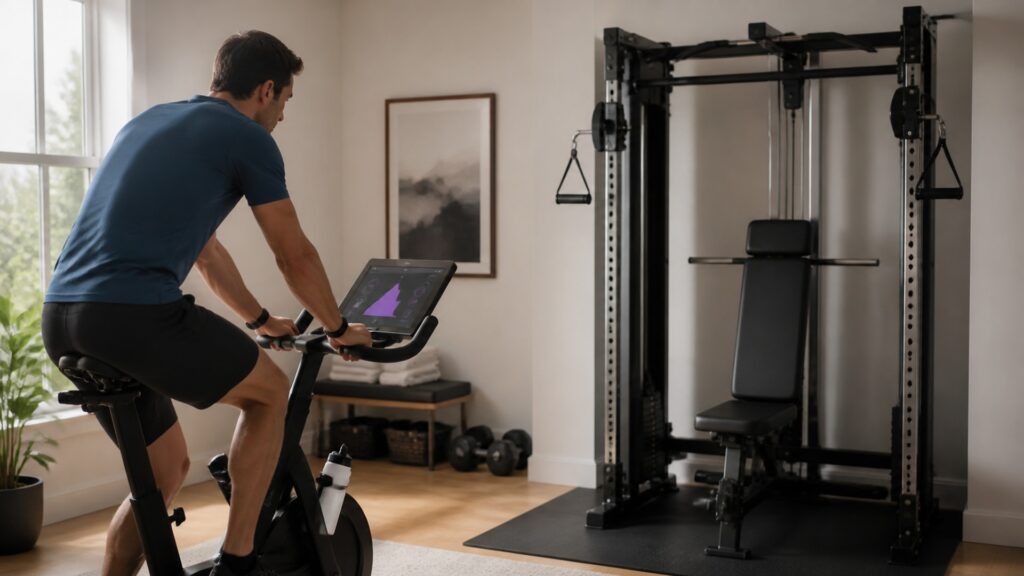
Choosing Between A Dedicated Machine And A Training Hub
The decision comes down to workout focus, available room, setup effort, and how much variety the user expects from one purchase.
- When a connected bike, treadmill, rower, elliptical, or strength machine is the more practical choice
- When a smart home gym is better for multi-purpose training and household use
- How floor space, wall space, accessories, and subscriptions change the decision
- Why machine-specific feedback can be more useful than broad workout variety
- What to check before committing to either setup
- How to avoid buying a large system for a training problem that a simpler machine could solve
Key Decision Points Behind The Choice
Choosing between these categories is less about which one is more advanced and more about whether the hardware fits the intended routine.
Dedicated Machine Fit
Dedicated machine fit means the main workout is tied to one piece of equipment that performs a narrow job well.
- Useful for cycling, running, rowing, elliptical training, or machine-based strength
- Easier to evaluate because the workout path and footprint are usually obvious
- Strongest when the buyer already knows the primary activity they want to repeat
For example, someone who wants coached cycling intervals will usually get more value from a connected bike than from a broad smart gym system that treats cycling as only one class type.
Training Variety
Training variety is the range of sessions the setup can support without needing several separate machines.
- Useful for strength circuits, mobility work, bodyweight classes, and mixed routines
- Stronger when multiple people in the household train differently
- Often depends on accessories, open floor space, and class-library depth
For example, a household with one person doing strength classes and another doing mobility sessions may benefit from a smart home gym with broader programming.
Space Commitment
Space commitment includes the physical footprint, wall clearance, accessory storage, and the room needed to move safely.
- Connected machines often have a fixed footprint that is easy to measure
- Smart home gyms may look slimmer but still need open movement space
- Benches, mats, dumbbells, handles, and cables can make the real footprint larger
For example, a wall-mounted smart gym may need less floor space while idle but more usable clearance during lunges, presses, or floor work.
Subscription Dependence
Subscription dependence describes how much of the product's value requires an active membership.
- Some connected machines still allow manual workouts without a subscription
- Some smart home gyms lose major class, tracking, or programming features without one
- Household profiles, saved progress, and premium classes may add recurring cost
For example, a treadmill with manual speed and incline controls remains useful even if the class subscription lapses, while a guided smart gym may feel much less complete without its platform.
Hardware Depth
Hardware depth is how well the equipment supports the physical workout it is built for.
- Dedicated machines can optimize pedals, decks, belts, rails, seats, handles, or resistance systems
- Broad smart gyms may trade machine depth for versatility
- The best choice depends on whether depth or variety matters more
For example, a serious rowing routine may be better served by a connected rower than by a general smart gym with rowing-style classes but no dedicated rowing hardware.
When Connected Gym Equipment Is The Better Fit
Connected gym equipment is usually the better choice when the main training habit is already clear. A runner may want treadmill speed, incline, deck feel, and interval programming. A cyclist may want cadence, resistance, seat fit, and ride metrics. A rower may care about stroke feel, split pace, and resistance smoothness.
In those cases, the software is valuable because it is connected to a machine that already performs the workout well. The class library, leaderboard, and progress data should deepen the main activity rather than distract from weak hardware.
When Smart Home Gyms Make More Sense
Smart home gyms are stronger when the buyer wants one central setup for varied training. They can combine strength sessions, guided classes, mobility work, bodyweight exercises, and household profiles in a way that a single bike or treadmill cannot.
That versatility comes with practical tradeoffs. The buyer may need a dedicated wall, open floor area, accessory storage, reliable connectivity, and a subscription. A smart home gym can be powerful, but it should solve a broad training need rather than simply look more complete on paper.
Subscription And Ownership Tradeoffs
Both categories can depend on software, but the dependency feels different. A connected machine may still support a basic manual workout. A smart home gym may rely more heavily on the platform for instruction, movement libraries, progress tracking, and recommendations.
Before choosing either option, check what works offline or without a membership, how many user profiles are included, whether accessories cost extra, and whether the product still supports a clear workout when the screen or app is unavailable.
Where The Choice Helps And Where It Stops
What The Comparison Clarifies
The comparison clarifies whether the buyer needs a focused machine or a broader training environment. That single distinction can prevent overbuying and underbuying.
For example, a dedicated connected bike may be perfect for someone building a cycling habit, while a smart home gym may be better for a family that wants guided strength, mobility, and conditioning in one room.
What It Does Not Decide
The category choice does not automatically identify the best product. Fit, durability, noise, warranty, platform quality, subscription value, and room layout still need to be checked at the product level.
A smart home gym can be the wrong purchase if the household only uses treadmill workouts, and a connected treadmill can be the wrong purchase if the real need is strength variety.
Misconceptions About Connected Equipment And Smart Home Gyms
A Smart Home Gym Is Always The Upgrade
Not always. A focused connected machine can be the better purchase when the main workout is cycling, running, rowing, or another machine-based activity.
Connected Gym Equipment Is Too Narrow
Narrow can be useful. A dedicated machine often gives clearer feedback and a better physical experience for its main workout.
Smart Home Gyms Replace All Other Equipment
Some support many workouts, but they may still need dumbbells, benches, mats, handles, or separate cardio equipment.
The Bigger Platform Is Always Better Value
Value depends on use. A large class library is only valuable if the household actually uses the supported workout types.
Frequently Asked Questions About Choosing Between Them
When should I choose connected gym equipment?
Choose it when one machine-based workout is the priority and the product's hardware, software, and tracking all support that workout well.
When should I choose a smart home gym?
Choose a smart home gym when variety, guided strength, shared household use, and a central training station matter more than one dedicated machine.
Which is easier to fit in a room?
It depends on the product. A connected machine has a clear footprint, while a smart home gym may require wall space, open movement space, and accessory storage.
Can someone use both?
Yes. A connected bike, treadmill, or rower can handle focused cardio while a smart home gym handles strength, mobility, and mixed classes.
What is the easiest mistake to make?
The easiest mistake is buying for the most impressive feature list instead of the workout that will happen most often.