
Working Bicycle Baseline
A bike that already fits the rider and route well enough for the intended use.
- It makes apparel-first thinking reasonable.
- Brakes and shifting should be functional.
- Maintenance still matters.
Use cycling apparel instead of bicycles when the bicycle already fits the route, shifts predictably, brakes appropriately, and rolls on suitable tires, but the remaining problem is clothing.
Bib shorts, rain jackets, gloves, jersey pockets, thermal layers, shoe covers, sun sleeves, and commute-friendly clothing address body-side issues a new bicycle usually cannot solve.
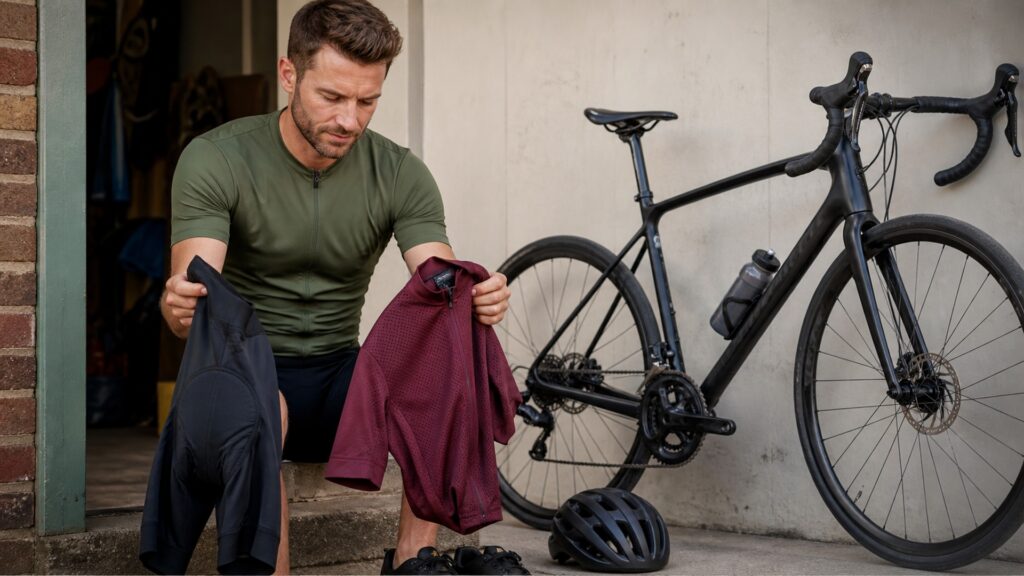
This decision boundary keeps apparel needs separate from bicycle-platform problems.
Tip: If the problem moves with the rider rather than the frame, consider apparel first.
These definitions connect the main idea to the variables, limits, and practical signals readers need to compare options.
A bike that already fits the rider and route well enough for the intended use.
A mismatch between conditions and clothing coverage.
A clothing-side issue at the saddle, hands, feet, or skin.
A reason to carry small items in pockets or garment spaces.
A problem that belongs to the bicycle rather than clothing.
The question of whether the problem follows the rider's body rather than the bike frame.
Tip: Use these terms to decide whether the problem follows the rider's body or the bicycle frame.
The apparel-first decision starts when the bike already suits the route and does not have obvious fit, brake, shifting, or tire problems.
A sound bike baseline lets clothing become the main issue.
Rain, cold, heat, sun, saddle contact, glove feel, and shoe coverage are clothing-side problems because they sit on the body.
Body-side needs belong to apparel.
Replacing the bicycle can miss the point when the actual issue is wet clothing, cold hands, no jersey pockets, or sun exposure.
The decision avoids changing the machine for a clothing gap.
If the bike is the source of the problem, apparel should not be asked to solve it.
The apparel-first path has a hard boundary.
Choosing apparel first can solve a narrow problem, but it does not guarantee comfort, safety, performance, or health outcomes.
The recommendation remains limited to product roles.
This decision explains when clothing should be addressed before replacing or changing the bicycle.
It separates weather, contact, pockets, and body coverage from bike fit and mechanics.
It protects bicycle-first exceptions when the platform is wrong.
It does not provide medical advice or universal purchasing orders.
It does not guarantee comfort, safety, or results.
Common shortcuts and misunderstandings can make the topic seem simpler than it is.
If the problem is rain, cold, pockets, or hand contact, apparel may be the closer answer.
Shifting and drivetrain problems belong to the bicycle.
Conditions can make apparel function practically important.
The bike baseline must still be checked.
Tip: Treat strong claims as starting points for comparison, not final answers.
Concise answers to common questions readers may have after the main explanation.
When the bike already fits the route and the remaining problem is weather, contact, pockets, or body coverage.
When fit, brakes, shifting, tires, or gearing are the real limitation.
They can change contact feel, but they do not change frame geometry or saddle position.
No. It means the problem belongs to clothing rather than the bicycle.
No. It compares product roles only.
Use cycling apparel instead of a bicycle when the bike already works and the problem sits on the rider: weather, contact, pockets, or coverage.
Choose the bicycle side when the machine itself cannot meet the route or fit demands.
Use these Review Streets paths to connect the explainer to related categories, comparisons, and next decisions.
Use this for clothing mechanisms behind apparel-first choices.
Read this to identify bike-side exceptions.
Browse apparel after confirming the issue is body-side.
Choose a retailer
Prices checked regularly. We may earn a commission at no cost to you.