
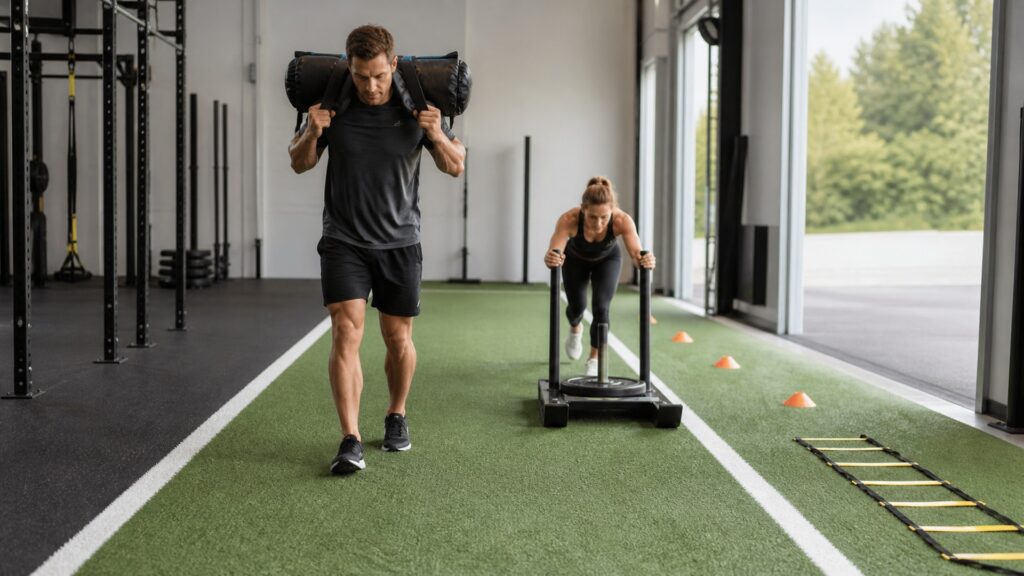
When to Use Functional Training Equipment Instead of Agility Training Equipment

Use functional training equipment instead of agility training equipment when the workout needs load, resistance, carries, throws, pulls, or strength-based movement work. Agility equipment is built more around footwork, direction changes, reaction, spacing, and coordination drills.

The categories can overlap in athletic programs, but they solve different problems. Functional training equipment is usually the better fit when the missing piece is resistance. Agility training equipment is the better fit when the missing piece is speed, foot placement, and movement timing.

By: Review Streets Research Lab
Updated: October 5, 2026
Explainer · 8-12 min read
functional training equipment explainer hero image for Review Streets
What You'll Learn

When Functional Equipment Is The Better Choice

A practical decision path for choosing loaded movement tools instead of ladders, cones, hurdles, and other agility-focused gear.

  • Why external load points toward functional training equipment
  • Where agility tools are better for footwork and direction changes
  • How space, speed, and safety affect the choice
  • When the two categories work together
  • What to buy first for home, gym, or team training

Tip: Choose the category by the adaptation you need, not by which gear looks more athletic.

Definitions

Key Concepts Behind Functional Training Equipment Instead of Agility Training Equipment

These concepts clarify the practical signals readers should check before choosing equipment or planning workouts.

External Resistance

External resistance is load supplied by equipment rather than by speed or body movement alone.

  • Example: kettlebells, bands, sandbags, or medicine balls
  • Check: decide whether the workout needs added resistance
  • Limit: resistance may not improve footwork timing

Agility Pattern

An agility pattern is a drill built around foot placement, direction change, acceleration, deceleration, or reaction.

  • Example: cone shuttles or ladder footwork
  • Check: see whether timing and spacing are the main goal
  • Limit: agility drills do not usually build heavy strength

Loaded Movement

Loaded movement combines resistance with a movement pattern.

  • Example: sled pushes, loaded carries, or band-resisted steps
  • Check: keep load from ruining mechanics
  • Limit: too much load can slow the drill beyond its purpose

Footwork Cue

A footwork cue is a marker that tells the user where or when to step.

  • Example: cones or ladder rungs
  • Check: use cues when precision matters
  • Limit: cues alone do not create strength adaptation

Training Priority

Training priority is the main adaptation the session is trying to improve.

  • Example: strength endurance versus change-of-direction skill
  • Check: name the priority before choosing equipment
  • Limit: mixed goals can make equipment choices fuzzy

Combined Setup

A combined setup uses both categories when load and agility each have a clear role.

  • Example: strength work with kettlebells followed by cone drills
  • Check: separate the purpose of each tool
  • Limit: combining tools can add complexity quickly

Tip: The best equipment choice is the one that matches the training job, available space, and user's current ability.

Best Fit

Choose Functional Equipment When Resistance Is Missing

Functional training equipment makes sense when the workout needs load, tension, pulling, carrying, bracing, or throwing. These tools change the physical demand in ways agility markers cannot.

  • Use kettlebells, bands, sandbags, sleds, or medicine balls for resistance.
  • Choose loads that match the movement goal.
  • Avoid adding load to drills that should stay fast and precise.

Functional equipment is strongest when resistance is the point.

Agility Fit

Choose Agility Equipment When Movement Timing Is The Goal

Agility ladders, cones, hurdles, and markers are better when the session is about foot placement, spacing, acceleration, deceleration, or reacting to cues.

  • Use markers to guide movement paths.
  • Keep drills crisp instead of heavy.
  • Choose agility gear when coordination is the missing skill.

Agility tools organize movement rather than loading it heavily.

Overlap

The Categories Can Work Together

Many programs use both categories. Functional tools can build strength and control, while agility tools can organize fast movement and direction changes.

  • Separate strength work from speed work when needed.
  • Use load only when it improves the drill.
  • Keep the session goal clear.

Together, the tools work best when each one has a distinct job.

Space

Space Can Decide The Practical Choice

Agility drills often need open lanes, while functional tools may need safe lifting, carrying, throwing, or anchoring space. The available area can make one category easier to use than the other.

  • Measure drill lanes, not just storage space.
  • Check surfaces for traction and impact.
  • Use compact options when training at home.

The right choice has to fit the room as well as the goal.

Buying Check

Buy For The Adaptation You Need First

The simplest choice is to start with the missing adaptation. Buy functional equipment when strength, resistance, or loaded movement is lacking. Buy agility gear when direction change, footwork, or reaction practice is lacking.

  • Name the main training priority.
  • Pick the equipment that directly supports it.
  • Add the other category only when it solves a second need.

Clear priorities prevent overbuying.

Quick Reality Check

Where Functional Equipment Wins And Where Agility Gear Wins

The decision depends on whether the workout needs resistance or movement organization.

Functional Equipment Wins When

The workout needs load, tension, carries, throws, pulls, or bracing.

The user needs strength or conditioning tools that change physical demand.

Agility Equipment Wins When

The workout needs footwork cues, spacing, reaction, acceleration, or direction changes.

The user needs faster movement practice without heavy resistance.

Common Myths

Misconceptions About Functional Equipment Versus Agility Gear

The two categories are related but not interchangeable.

Functional equipment covers agility by default

Loaded tools can support athletic training, but they do not replace footwork cues and direction-change drills.

Agility equipment builds complete fitness on its own

Agility gear organizes movement, but it usually needs strength and conditioning support elsewhere.

Adding load makes every agility drill better

Too much load can slow the drill and change its purpose.

You have to choose one category forever

Many programs use both when each has a clear role.

Tip: Treat strong claims as reasons to inspect the workout fit more closely.

FAQ

Frequently Asked Questions About Functional Equipment And Agility Gear

Short answers for practical training and buying decisions.

When should I choose functional training equipment?

Choose it when the workout needs resistance, loaded carries, throws, pulls, bracing, or strength-based movement.

When should I choose agility training equipment?

Choose it when the workout needs footwork, spacing, reaction, acceleration, deceleration, or direction-change practice.

Can I use both?

Yes. Use each category for a clear job instead of blending them into one unfocused circuit.

Which is better for small spaces?

It depends on the drills. Some functional tools are compact, while many agility drills need open lanes.

What is the practical takeaway?

Use functional equipment for load and resistance. Use agility gear for speed, footwork, spacing, and timing.

Bottom Line

Use functional training equipment when resistance is the missing piece and agility equipment when movement timing is the missing piece.

The categories work well together only when each tool has a clear job.

Next Steps

Go Deeper or Compare Your Options

Use these Review Streets paths to compare related categories and practical next decisions.