
Dedicated Navigator
A device whose primary operating chain acquires position, uses installed maps, calculates routes, and presents guidance.
- It may include other features
- It can remain independent of audio
- Mounting is still installation
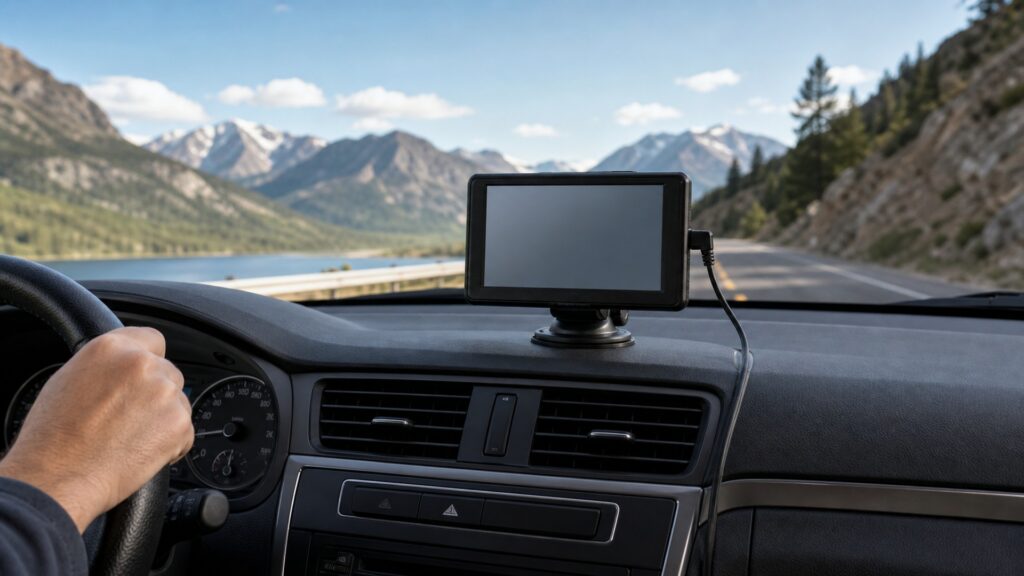
Use a dedicated GPS navigation device when the vehicle's audio receiver already meets source, control, and sound requirements but route guidance is missing, unsupported, inconvenient, or poorly matched to the trip. A portable navigator can add onboard maps, a focused interface, or a supported vehicle profile without replacing the audio hub.
Choose a stereo head-unit replacement when navigation is only one part of a larger verified need involving media sources, calls, projection, audio processing, cameras, controls, or an integrated dashboard display. The decision is not portable versus modern. It is limited installation scope versus deliberate system integration, with mounting, power, maps, prompt routing, retained functions, and final proof counted honestly.
The decision begins with the missing navigation capability, then expands only when audio, vehicle integration, or display requirements genuinely require a receiver change.
Tip: List route, map, audio, vehicle-control, camera, and installation needs separately; do not let one desired feature silently authorize an unrelated receiver replacement.
These definitions distinguish the dedicated-navigation case from the broader dashboard-integration case.
A device whose primary operating chain acquires position, uses installed maps, calculates routes, and presents guidance.
Road and search data stored locally so supported positioning and route calculation can continue without a live cellular connection.
A supported routing model using attributes such as vehicle size, weight, towing, road class, or activity constraints.
Original vehicle functions tied to the installed receiver, including controls, cameras, warnings, amplifiers, antennas, settings, or network messages.
The number and consequence of physical, electrical, data, software, and human interfaces changed by a proposed solution.
Moving one configured navigation device among vehicles while preserving maps, saved places, routes, or user familiarity where supported.
Tip: Use the requirement list to prevent scope from growing around features that are merely convenient.
If radio, calls, media, controls, amplification, and speakers already work, a dedicated navigator addresses position, maps, routing, and maneuvers directly. This avoids replacing a receiver merely to obtain one information service.
Narrow scope is valuable when it still covers the complete navigation requirement.
Some trips need stored regional maps, multi-stop workflows, motorcycle or RV hardware, or supported size and restriction profiles. The exact product must genuinely support those attributes; a generic car mode does not become specialized through labeling.
A dedicated product is justified by verified capability, not by the GPS badge alone.
Factory receivers may own chimes, cameras, steering controls, climate display, antenna power, amplifier communication, settings, and network gateways. Adding navigation alongside them can preserve known behavior when the dashboard replacement path is uncertain or disproportionate.
Avoided disruption counts only if the added device creates no new safety or reliability problem.
An integrated receiver makes sense when outdated source support, calls, projection, camera interfaces, display behavior, processing, or controls also need change and compatible hardware can retain required vehicle functions. Navigation alone should not hide those obligations.
Broader replacement is appropriate when broader needs are real and testable.
A portable device needs a safe mount, power lead, heat management, storage, updates, and removal routine. A replacement receiver needs trim work, wiring, programming, adapters, calibration, and restoration planning. The lower purchase price may not mean lower lifecycle burden.
The better choice minimizes unsupported interfaces across its intended service life.
A portable navigator still interacts with sightlines, power, prompts, heat, and the driver; an in-dash receiver can still lack the needed maps, profiles, or offline behavior.
The existing receiver performs well and the need is clearly position, maps, routing, or a specialized travel workflow.
A safe mount and stable power path are available.
Navigation accompanies real audio, display, camera, call, control, or source limitations that one compatible receiver can solve coherently.
Required factory functions can be retained and verified.
These myths substitute assumptions about age, portability, or screen integration for a requirements-based decision.
A receiver may offer cleaner integration, but replacement can add vehicle-interface risk and still lack specialized maps, profiles, or offline behavior. Choose it only when the broader audio and integration requirements justify the expanded scope.
Its mount can obstruct the road or restraints, the cable can interfere with controls, the outlet may remain live, and parked heat can damage the device. Placement, power, prompts, updates, and storage require deliberate planning.
Local storage removes a cellular dependency, not the need for maintenance. Roads, addresses, restrictions, interchanges, points of interest, and routing software change. Verify update support, available storage, coverage region, and map age.
A supported profile can filter known mapped attributes, but inaccurate inputs, missing restrictions, temporary closures, and data errors remain possible. Check critical clearances and obey official signs, permits, and route rules regardless of guidance.
Tip: Compare complete installed systems rather than boxes.
These answers cover older cars, phone projection, factory functions, specialized routing, and acceptance of the final choice.
Yes, when a safe mount and power source are available and onboard maps, a focused interface, larger guidance view, or independent reception meet the travel need. Confirm updates, heat limits, prompt audibility, and current map coverage.
Usually not unless the current receiver also fails important source, call, display, camera, control, or audio requirements. A compatible add-on display, phone mount, or dedicated navigator may solve the narrower need with less vehicle disruption.
Depending on the vehicle, removal can affect warnings, chimes, cameras, climate information, steering controls, antennas, amplifiers, settings, microphones, vehicle menus, network messages, and sleep behavior. Inventory and test the exact interfaces before committing.
A dedicated unit is compelling when it verifiably supports the intended region, offline operation, vehicle dimensions, weight, towing, road class, multi-stop workflow, weather resistance, gloves, or transfer among vehicles better than the installed receiver.
For either path, verify reception, maps, profile, route calculation, prompts, daylight and night visibility, controls, recalculation, startup, shutdown, and failure indication. For receiver replacement, also test every source, channel, camera, warning, and retained function.
Use a GPS navigation device instead of replacing the stereo head unit when route guidance is the specific gap, the existing audio hub works, and a safe independent installation meets map, profile, power, and prompt needs.
Choose a head-unit solution when verified navigation, audio, display, camera, and vehicle-integration requirements genuinely converge. Compare lifecycle scope and acceptance evidence, not packaging or novelty.
These explainers develop the dedicated navigation mechanism, installed compatibility, and feature-state tests needed to specify either solution responsibly.
Trace how a dedicated device converts satellite timing and map data into route guidance.
Understand the receiver functions and vehicle interfaces put at risk by an unnecessary head-unit replacement.
Turn acquisition, mapping, routing, prompts, recalculation, and fallback into acceptance tests.
Choose a retailer
Prices checked regularly. We may earn a commission at no cost to you.