When to Use Heavy Duty Pickup Trucks Instead of Electric Pickup Trucks

Choose a gasoline or diesel heavy-duty pickup over a battery-electric pickup when the specific HD truck meets a load, hitch, or operating requirement that the electric candidate cannot. That may be substantial payload or pin weight, an approved fifth-wheel arrangement, or a long towing route without workable charging stops. The decision should come from the complete trip and the exact trucks being compared.

Heavy-duty and electric describe different things: one concerns the vehicle's work capability, while the other concerns propulsion. Electric drive does not inherently make a truck light-duty, and strong electric acceleration does not establish carrying capacity. A battery-electric pickup can be an excellent fit when its ratings, loaded range, and charging arrangements suit the assignment.

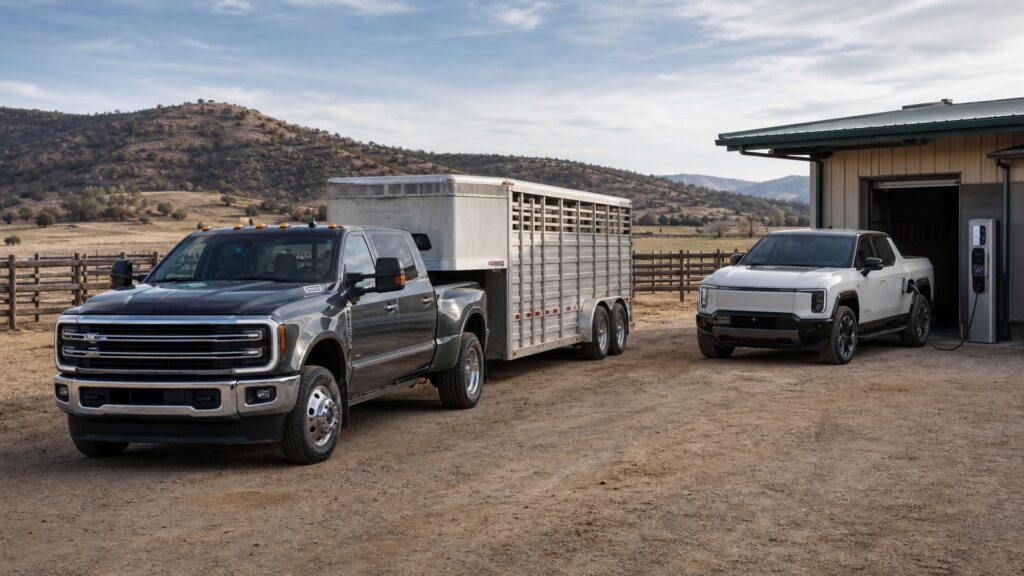
By: Review Streets Research Lab
Updated: October 5, 2026
Explainer · 8-12 min read
heavy duty pickup trucks explainer hero image for Review Streets
What You'll Learn

Decide by Load, Route, and Replenishment

Compare a conventional HD pickup with a battery-electric candidate without confusing duty class and power source.

  • Check carrying and hitch requirements before debating propulsion
  • Use towing range rather than unloaded range
  • Evaluate charging access with the trailer attached
  • Compare a predictable local duty with long variable trips
  • Treat energy cost and time as route-specific questions

Tip: Plan the return leg as carefully as the outbound trip, especially when destination charging is uncertain.

Definitions

Six Terms for Comparing HD and Battery-Electric Use

Weight capability and energy planning are separate checks, and both must pass.

Duty class

Duty class describes the type of load-carrying work a vehicle is designed and rated to support.

  • Example: an HD pickup selected for substantial hitch load
  • Check: compare the actual vehicle and axle ratings
  • Limit: duty class is not defined by whether the wheels are driven electrically

Battery-electric pickup

A battery-electric pickup uses stored battery energy to power electric traction motors.

  • Example: a pickup recharged at a home or depot charger
  • Check: confirm the particular model's range and towing equipment
  • Limit: battery-electric operation differs from a hybrid or range-extender design

Loaded range

Loaded range is the distance available under the actual cargo, trailer, speed, terrain, and weather conditions.

  • Example: an enclosed trailer consuming more energy than unloaded driving
  • Check: plan with realistic towing consumption and a reserve
  • Limit: an unloaded range figure is not a towing guarantee

Charging access

Charging access includes compatibility, availability, power, and the physical ability to reach the charger.

  • Example: a site with enough space for the truck and trailer
  • Check: check connector requirements and the layout of planned stops
  • Limit: a charger shown on a map may not suit an attached trailer

Dwell time

Dwell time is time the vehicle is already parked during its normal assignment.

  • Example: a work truck parked overnight at its depot
  • Check: compare available charging time with energy needed for the next shift
  • Limit: the charge equipment must replenish enough energy within that window

Route reserve

Route reserve is energy deliberately retained for uncertainty and changes to the trip.

  • Example: allowing for a detour or an unavailable charging stop
  • Check: plan alternatives rather than relying on arrival near empty
  • Limit: no universal reserve percentage fits every route and condition

Tip: A vehicle must meet both the load requirement and the energy plan; strength in one does not compensate for failure in the other.

Load Requirements

Let the Ratings Set the First Boundary

Start with loaded trailer weight, occupants, equipment, and tongue or pin load. If the electric candidate cannot meet a required rating or does not support the intended hitch arrangement, charging convenience cannot resolve that mismatch. Conversely, an HD badge should not end the calculation: the chosen HD build must pass the same checks.

  • Compare specific configurations, not brand-wide maximums.
  • Confirm hitch type and installation approval.
  • Include cargo and hitch hardware in the carrying allowance.

Use the capable vehicle for the actual load, regardless of how impressive the other one feels during acceleration.

Energy Use

Towing Changes the Range Calculation

A trailer adds weight and aerodynamic resistance. Both combustion and electric trucks use more energy under towing loads, but the practical consequences depend on replenishment opportunities. A tall enclosed trailer, road speed, headwind, grade, and temperature can all make an unloaded range estimate unsuitable for trip planning.

  • Use information relevant to your trailer and conditions.
  • Avoid applying one fixed range-loss percentage to every trip.
  • Include the return journey and a practical reserve.

A truck can have ample rated towing capacity while still needing an inconvenient energy stop on a particular route.

Long Trips

Charging Layout Can Matter as Much as Charging Power

A compatible fast charger is useful only if the vehicle can reach it and the stop fits the schedule. Check space for the trailer, turning room, operating access, and backup locations. Some layouts may require uncoupling; others allow a more convenient stop. Advertised peak charging power is not the average rate throughout a session.

  • Inspect planned station layouts and current access information.
  • Allow for charging time that varies with battery and site conditions.
  • Make a fallback plan for a busy or unavailable station.

A conventional HD truck may be the more practical choice where the route has suitable fuel access but no workable charging plan.

Local Work

Predictable Routes Can Favor Battery-Electric Operation

An electric pickup that meets the load requirements may fit a repeatable local route especially well when it returns to dependable charging. Overnight replenishment can occur while the truck would be parked anyway. Verify the actual electrical installation and charging window rather than assuming an ordinary outlet will recover a demanding day's energy use.

  • Compare the daily energy requirement with installed charging capability.
  • Check parking access and any shared-charger scheduling.
  • Include equipment power use when the truck supplies external electricity.

Short local towing with reliable depot charging is a different assignment from a variable long-distance haul.

Ownership

Compare the Complete Cost and Time Commitment

Fuel prices, electricity tariffs, public charging prices, service requirements, and utilization all affect ownership cost. An electric option can have operational advantages without being the best fit for every route; a combustion HD truck can provide needed capability while carrying costs and maintenance that the work must justify. Obtain figures for the actual vehicles and locations.

  • Include charging installation and the rates you would actually pay.
  • Price scheduled service, tires, insurance, and required equipment.
  • Consider downtime and route flexibility alongside energy cost.

The better choice is the truck that meets the load and schedule with a workable ownership plan.

Quick Reality Check

When Each Choice Makes Sense

Propulsion is one part of suitability, not a substitute for checking the complete job.

Conventional HD Fits When

The load or approved hitch requirements exceed those of the electric candidate.

Necessary routes and schedules lack a dependable, practical charging plan but have suitable fuel access.

Battery-Electric Fits When

The specific vehicle meets every load requirement and its loaded range covers the assignment with appropriate reserves.

Home, depot, destination, or public charging is compatible with both the schedule and vehicle layout.

Common Myths

Misconceptions About HD Versus Electric Pickups

Keep the powertrain question separate from the workload question.

Electric trucks cannot tow.

Many are rated to tow. The relevant questions are the specific limits, loaded range, and charging plan.

Instant torque means unlimited towing ability.

Acceleration does not establish axle, tire, hitch, vehicle, or combined-weight capability.

Every towing trip cuts electric range by the same amount.

Trailer shape, speed, terrain, weather, and vehicle configuration change the result.

An electric pickup always needs public charging during work.

A suitable local route may be replenished entirely while parked at home or a depot.

Tip: Reassess the comparison when either the workload or available charging changes.

FAQ

Questions About Choosing HD Instead of Electric

Answers for comparing actual candidates and routes.

Are heavy-duty and electric mutually exclusive?

No. Duty class and propulsion are different attributes. Compare the ratings and equipment of the vehicles available to you.

When does a conventional HD truck make the clearest sense?

When it satisfies a required load or hitch arrangement the electric candidate cannot, or when the necessary route lacks a workable charging plan.

Should I use advertised range for towing?

Treat it as background, not a towing estimate. Use loaded conditions, trailer characteristics, and an appropriate reserve.

Can I rely on a manufacturer's fast-charging headline?

It is not a guaranteed stop duration. Actual charging depends on vehicle state, charger capability, temperature, and other conditions.

What if my normal trips are short but I occasionally tow far?

Evaluate both duties. A separate vehicle, rental, or transport arrangement for rare trips may be practical, but confirm availability and towing permissions.

Bottom Line

Use a conventional HD pickup when it solves a verified load or route requirement that the battery-electric alternative does not.

Keep electric candidates in the comparison when their actual capability and charging arrangements fit the work.

Next Steps

Go Deeper or Compare Your Options

Use these Review Streets paths to compare related categories and practical next decisions.

Manufacturer references: Ford electric-vehicle range guidance; Chevrolet Silverado EV specifications and charging information; Ford towing information and model-year guides. Use the manual and ratings for your own model year and configuration.