Why Heavy Duty Pickup Trucks Operating Function Matters

A heavy-duty pickup is useful when its everyday operation matches the work it has to do. Carrying a service body, towing an equipment trailer, and moving a crew through tight sites place different demands on the same truck. Its operating function is the job it performs repeatedly, including loading, driving, stopping, unloading, and getting ready for the next trip.

A high advertised tow rating does not answer all those questions. The right configuration must have enough capacity after equipment and people are aboard, fit the route, and let the operator complete the job without awkward access or avoidable downtime. Function matters because a truck can be powerful yet poorly suited to its actual assignment.

By: Review Streets Research Lab
Updated: October 5, 2026
Explainer · 8-12 min read
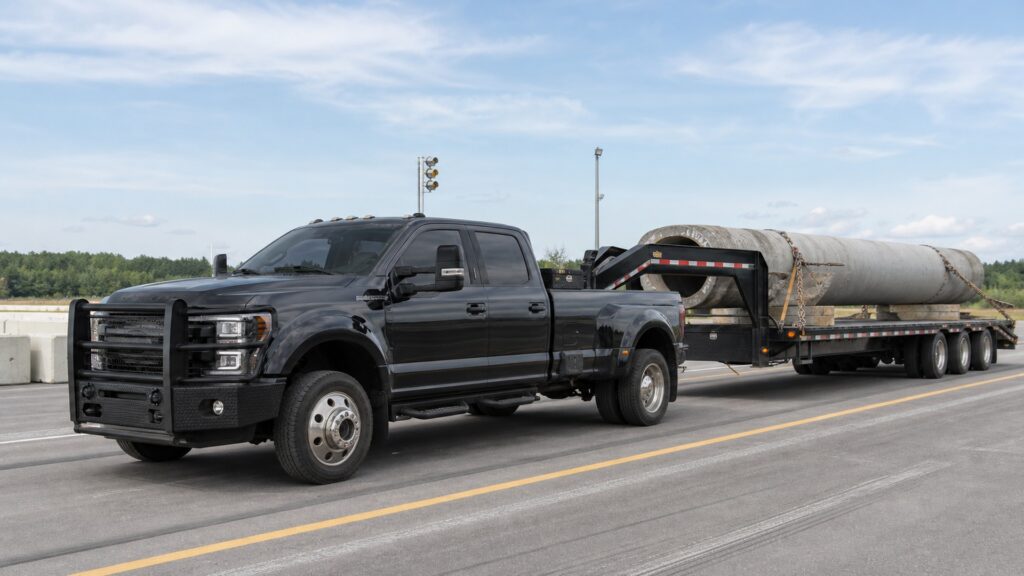
heavy duty pickup trucks explainer hero image for Review Streets
What You'll Learn

Match the HD Pickup to a Real Working Day

Evaluate the complete job rather than one impressive specification.

  • Separate carrying, towing, and mixed duties
  • Account for equipment that stays on the truck
  • Understand loaded operation on hills and at low speed
  • Check access, maneuvering, and unloading
  • Plan service and energy stops around the work

Tip: Describe one ordinary workday and one demanding workday before choosing equipment.

Definitions

Six Ways to Describe the Truck's Job

These terms turn a general need for a work truck into a specific operating requirement.

Duty cycle

Duty cycle is the pattern of load, distance, terrain, speed, and operating time the truck experiences.

  • Example: daily equipment towing over hills followed by unloaded travel
  • Check: record how often and how long each task occurs
  • Limit: an occasional heavy trip still has to meet every rating

Standing load

A standing load is equipment carried routinely before the day's changing cargo is added.

  • Example: tools, a rack, a bed cover, and permanently installed equipment
  • Check: weigh the equipped truck rather than assuming it is empty
  • Limit: standing loads reduce the capacity left for people and materials

Combined duty

Combined duty means hauling on the truck while also towing a trailer.

  • Example: a crew and supplies in the pickup with a machine trailer behind it
  • Check: count hitch load alongside occupants and bed cargo
  • Limit: maximum towing and maximum payload cannot simply be added

Low-speed control

Low-speed control is the ability to position the loaded vehicle smoothly during close maneuvers.

  • Example: backing a trailer into a loading area
  • Check: check visibility, gearing, and available clearance
  • Limit: cameras cannot confirm every blind area is empty

Load access

Load access is how easily cargo can be secured, reached, and removed.

  • Example: retrieving tools without climbing over other equipment
  • Check: try the bed, steps, tailgate, and storage arrangement
  • Limit: a larger bed can still be inconvenient to reach

Availability

Availability is the time the truck is ready for the job rather than occupied by maintenance, repairs, or replenishment.

  • Example: scheduled service completed before a week of deliveries
  • Check: include service visits and fuel or charging stops in planning
  • Limit: a capacity rating says nothing about an individual truck's condition

Tip: Distinguish the capacity required for a task from the time and effort needed to perform it.

Assignment

Start With What the Truck Carries and What It Pulls

A maintenance crew carrying tools all day may need payload more than headline towing capacity. An equipment hauler may be constrained by trailer and hitch limits. A mixed assignment can reach the truck's carrying allowance once people, installed gear, and tongue or pin load are combined, even when the trailer is within the tow rating.

  • List occupants, installed equipment, cargo, and hitch load separately.
  • Use loaded trailer weight rather than an empty specification.
  • Check the exact truck's vehicle, axle, and combination limits.

The first binding limit identifies the problem the configuration must solve.

Working Conditions

A Repeated Climb Is Different From a Flat Delivery Route

Terrain and sustained load affect how the powertrain and cooling systems work. A truck that accelerates briskly on a short test drive may spend a long loaded climb in a lower gear. That can be normal operation, but warning messages or abnormal temperatures are not something to dismiss because the truck has an HD badge.

  • Describe the grades, traffic, and climate on the actual route.
  • Use the manufacturer's instructions for tow/haul and descent aids.
  • Investigate unusual temperatures, vibration, or shifting behavior.

Select around the route the truck must repeat, not just a short unloaded drive.

Handling

Work Includes the Last Fifty Feet

Loading docks, farm entrances, garages, and crowded jobsites can make vehicle length and turning clearance decisive. A longer bed may solve a cargo problem while complicating a tight turn. Trailer backing adds another articulation point, and the driver's view can change after toolboxes, racks, or a trailer are fitted.

  • Measure entrances and overhead obstructions.
  • Plan a place to turn around and unload.
  • Use a spotter when appropriate and stop if visual contact is lost.

A truck that fits the highway job but cannot reach the unloading point is not a complete solution.

Load Access

Arrange the Load Around How It Will Be Used

Tool storage and bed equipment should support the sequence of the job. Frequently used items need safe access, while all loads still need suitable placement and securement. Putting everything at the tailgate for convenience can create an undesirable weight distribution; burying essential tools may force repeated unloading.

  • Separate items needed at every stop from occasional supplies.
  • Keep rated tie-down points accessible.
  • Check the loaded axle weights after substantial equipment changes.

For example, a service truck may benefit more from reachable, secure storage than from unused bed volume.

Reliability

Build the Schedule Around the Truck's Actual Use

Maintenance, inspection, and energy replenishment are part of operating the vehicle. Extensive idling, dusty sites, and frequent towing can affect the applicable service schedule. Keep records of the workload and recurring symptoms so that service decisions reflect use rather than mileage alone.

  • Consult the exact model and engine maintenance schedule.
  • Allow time to inspect both truck and trailer before departure.
  • Arrange service before periods when the truck cannot be spared.

Operational fit is the ability to complete the whole assignment reliably within the truck's limits.

Quick Reality Check

Where Operating Fit Shows Up

A useful truck supports both the load and the sequence of the work.

Signs of a Good Match

The equipped truck meets all ratings and handles the normal route and access points.

People can reach, secure, and unload equipment without repeatedly rearranging the job.

Signs to Reconsider

The truck only passes the weight calculation when normal gear or passengers are omitted.

Parking, access, service needs, or incompatible equipment repeatedly disrupt the assignment.

Common Myths

Misconceptions About HD Operating Function

Capability and usefulness are related, but they are not the same measurement.

The highest tow rating makes the best work truck.

A payload-heavy or access-constrained job may need a different configuration.

A short unloaded test drive proves suitability.

It cannot establish behavior, capacity, or access for the complete working setup.

Installed equipment is separate from the load.

It stays with the truck and uses carrying capacity on every trip.

The same setup suits every job.

Crew transport, towing, material hauling, and service work place different demands on storage and vehicle configuration.

Tip: Review the equipped vehicle whenever its regular assignment changes.

FAQ

Questions About Using an HD Pickup for Work

Practical ways to define the assignment before choosing a truck.

What does operating function mean here?

It means the recurring job and the steps needed to perform it: carrying, towing, maneuvering, loading, and staying ready for work.

Which information should I collect first?

Record actual people and equipment, loaded trailer requirements, route conditions, access measurements, and how often the work occurs.

Does more horsepower fix a poor match?

It may change acceleration, but it does not fix insufficient payload, incompatible hitch equipment, poor access, or neglected maintenance.

Why consider empty driving?

The truck still has to serve travel between jobs. Ride, parking, visibility, and ownership costs matter when the load is absent.

When should I reassess the setup?

Recheck after adding equipment, changing trailers, increasing crew size, or taking on a different route or workload.

Bottom Line

Operating function matters because an HD pickup must complete an entire working day, not merely achieve a towing number.

Match its configuration, access, controls, and service plan to the loads and tasks it will repeatedly handle.

Next Steps

Go Deeper or Compare Your Options

Use these Review Streets paths to compare related categories and practical next decisions.

Manufacturer references: Ford towing information and model-year guides; Ford Super Duty owner and maintenance manual. Use the manual and ratings for your own model year and configuration.