
Indoor Session
A ride-like pedaling setup done in a fixed indoor location.
- It can use the rider's bicycle.
- It removes ordinary outdoor travel.
- It does not guarantee training results.
Use indoor bike trainers instead of bicycles when the immediate need is controlled indoor pedaling, not outdoor transport, route handling, or a different bicycle platform.
A trainer can hold a compatible bike through an axle, cassette, roller, or frame interface and create resistance indoors. It should not be treated as a full substitute for outdoor riding.
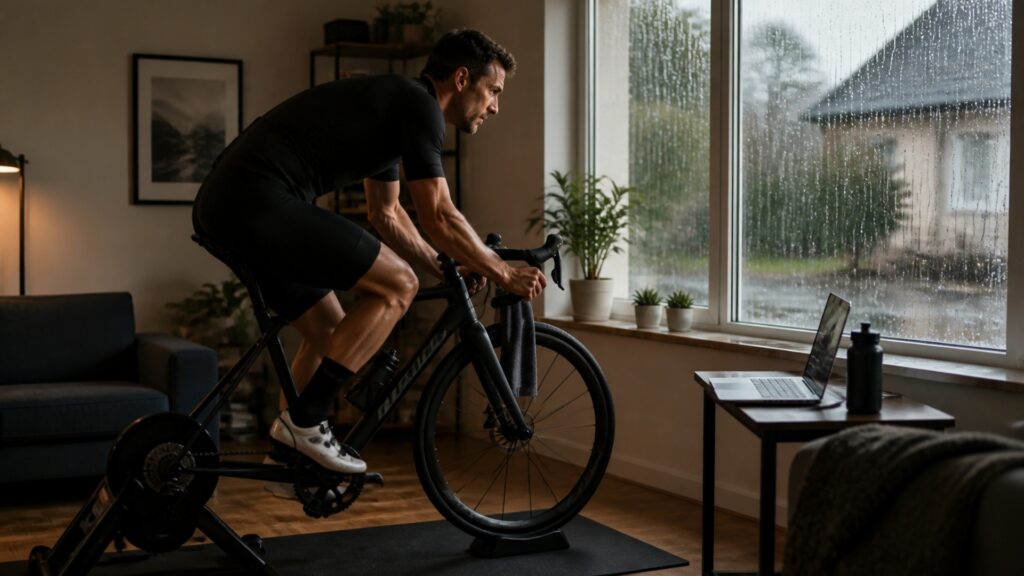
This decision boundary separates controlled trainer sessions from bicycle-side route and handling needs.
Tip: Choose the trainer when the job is indoor resistance and repeatability; choose the bicycle when the job is outdoor travel or handling.
These definitions connect the main idea to the variables, limits, and practical signals readers need to compare options.
A ride-like pedaling setup done in a fixed indoor location.
The connection point used by some trainers to hold the bike.
The trainer-mounted gear cluster used when the bicycle's rear wheel is removed for indoor use.
A trainer roller that contacts the rear tire.
An electronic resistance mode that follows a target load during indoor trainer sessions.
A requirement for transport, handling practice, terrain, or outside riding conditions.
Tip: Use these terms to separate the indoor-station decision from outdoor bicycle needs.
Weather, darkness, schedule limits, household logistics, or repeatable indoor work can make the trainer the correct category.
Indoor need is the trainer-side reason.
A trainer does not become another bicycle. It supports the existing bike and creates resistance through a wheel-on, direct-drive, or smart-controlled path.
The trainer is an indoor load device.
A trainer choice can depend on mats, fans, power outlets, floor protection, storage, and nearby living space.
Indoor setup is part of the decision.
If the need is transportation, terrain practice, steering, braking, bike fit, or route capability, the bicycle side remains central.
The trainer-first answer has a boundary.
A trainer can support a session, but it cannot guarantee endurance, weight change, recovery, safety, or personal suitability.
The decision stays with product function.
This decision explains when indoor trainer function should lead over bicycle-side needs.
It separates indoor resistance and setup from outdoor route function.
It keeps compatibility, room, and trainer type visible.
It does not guarantee training outcomes.
It does not replace bicycle fit or outdoor riding judgment.
Common shortcuts and misunderstandings can make the topic seem simpler than it is.
A trainer supports a bike indoors; it does not replace outdoor bicycle function.
It avoids some route conditions but also removes outdoor handling and transport.
ERG mode controls resistance; coaching decisions are separate.
Axle, cassette, tire, and frame compatibility can matter.
Tip: Treat strong claims as starting points for comparison, not final answers.
Concise answers to common questions readers may have after the main explanation.
When the need is controlled indoor pedaling rather than transport, outdoor handling, or a different bike platform.
It can replace some pedaling sessions, but it does not recreate every outdoor task.
The trainer has to fit the bike's axle, cassette, tire, or frame requirements.
When the problem is fit, route capability, braking, steering, terrain, or transport.
No. It only explains the equipment decision.
Use indoor bike trainers instead of bicycles when indoor resistance, repeatability, and home setup are the real need.
Use the bicycle side when the problem is outdoor route function, transport, fit, or handling.
Use these Review Streets paths to connect the explainer to related categories, comparisons, and next decisions.
Use this for trainer attachment and resistance mechanics.
Read this to match trainer features to interval, base, warmup, or shared-room roles.
Browse trainer options after confirming indoor pedaling is the need.
Choose a retailer
Prices checked regularly. We may earn a commission at no cost to you.