
Indoor Interval Role
A trainer use case built around repeated work and rest blocks.
- ERG mode and load response may matter.
- Timing matters.
- It is not a prescribed plan.
Indoor bike trainer workout role matters because the same trainer can be judged very differently as an interval tool, winter base-ride station, quick warmup spin, race-simulation setup, bike-fit check, or shared-room solution.
ERG blocks, smart app routes, trainer mats, fan setup, apartment noise, storage fold, and compatibility all matter only after the indoor role is named.
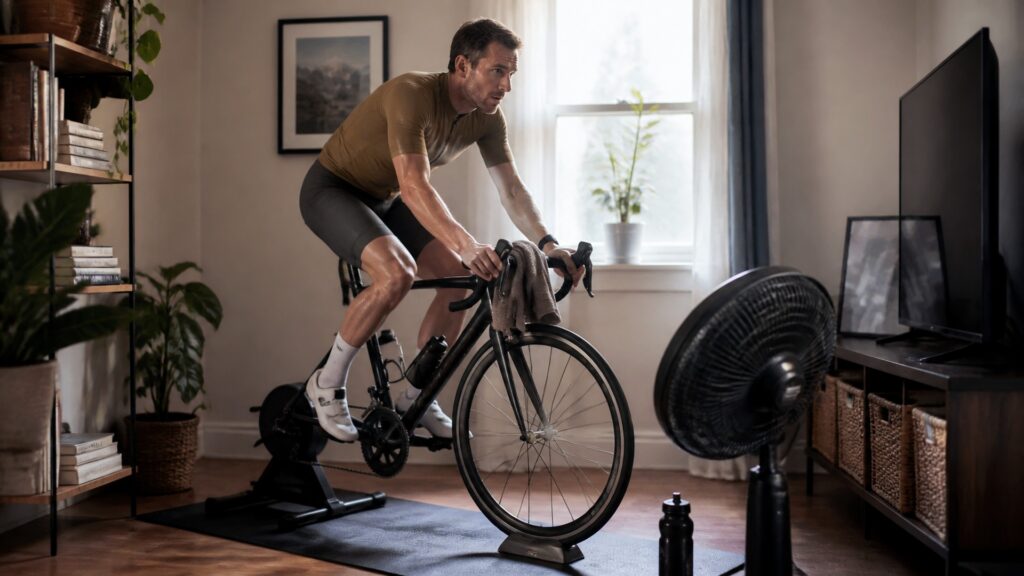
This explains why trainer features should be evaluated through the intended indoor use.
Tip: Name the indoor role first: interval, base ride, warmup, simulation, fit check, shared room, or temporary storage.
These definitions connect the main idea to the variables, limits, and practical signals readers need to compare options.
A trainer use case built around repeated work and rest blocks.
A longer steady indoor ride use case.
A short trainer use before another ride or activity.
Use of apps or trainer load to mimic route demands.
Trainer use in a room shared with other people or purposes.
The ability to move, fold, or store trainer equipment.
Tip: Use these terms to match trainer traits to intervals, base rides, warmups, simulations, and shared-room use.
A trainer should be judged by the indoor role it needs to play, not by a generic list of impressive controls.
Role turns specs into priorities.
Short intervals and long steady rides use the trainer differently, so resistance response, cooling, noise, and setup time should not be treated as one issue.
Session type gives the role a specific shape.
Race simulation or virtual route use depends on app support, resistance changes, device pairing, power, and display placement.
Simulation is a distinct trainer role.
An apartment, shared room, garage, or temporary setup can make noise, floor mats, storage fold, and fan placement central.
The room is part of the workout role.
A trainer can match the intended role without guaranteeing speed, endurance, weight change, safety, or recovery.
The role describes fit for use, not outcomes.
Workout-role analysis explains which trainer traits matter for a named indoor use.
It separates intervals, base rides, warmups, simulations, fit checks, and shared-room use.
It prevents generic trainer rankings from replacing role fit.
It does not guarantee training results.
It does not prescribe workouts or medical choices.
Common shortcuts and misunderstandings can make the topic seem simpler than it is.
A simple trainer may fit warmups or occasional rides better than a complex setup.
They stress response, cooling, noise, and duration differently.
Smart routes can change load but do not recreate all outdoor handling.
Temporary or shared spaces can make storage central.
Tip: Treat strong claims as starting points for comparison, not final answers.
Concise answers to common questions readers may have after the main explanation.
It is the indoor job the trainer must support, such as intervals, base rides, warmups, simulation, or shared-room use.
It decides whether resistance response, noise, fan setup, app control, or storage should matter most.
No. It can help structured intervals, but some roles do not need it.
No. It supports sessions; outcomes depend on broader context.
They can, because noise, floor protection, storage, and space become more important.
Indoor bike trainer workout role matters because trainer features only make sense after the indoor job is named.
Intervals, base rides, warmups, simulations, fit checks, and shared rooms all stress the setup differently.
Use these Review Streets paths to connect the explainer to related categories, comparisons, and next decisions.
Use this for trainer controls behind role-specific sessions.
Read this for the hardware that supports each trainer role.
Browse trainer options after naming the indoor role.
Choose a retailer
Prices checked regularly. We may earn a commission at no cost to you.