
Magnetic Resistance
Magnetic resistance uses magnets near a flywheel to change rowing effort.
- Example: raising resistance with a dial or console setting
- Check: try low, middle, and high settings
- Limit: it may feel less dynamic than air resistance
Use a magnetic rower instead of a front drive elliptical when seated rowing, lower-noise resistance, controlled stroke work, and compact home rowing matter more than standing elliptical stride. The rower centers the workout on a coordinated pull from a sliding seat.
A front drive elliptical is better when the user wants upright standing motion with moving pedals and handles. The magnetic rower is better when the user wants quiet rowing, steady cardio, or controlled intervals and has room for the rail.
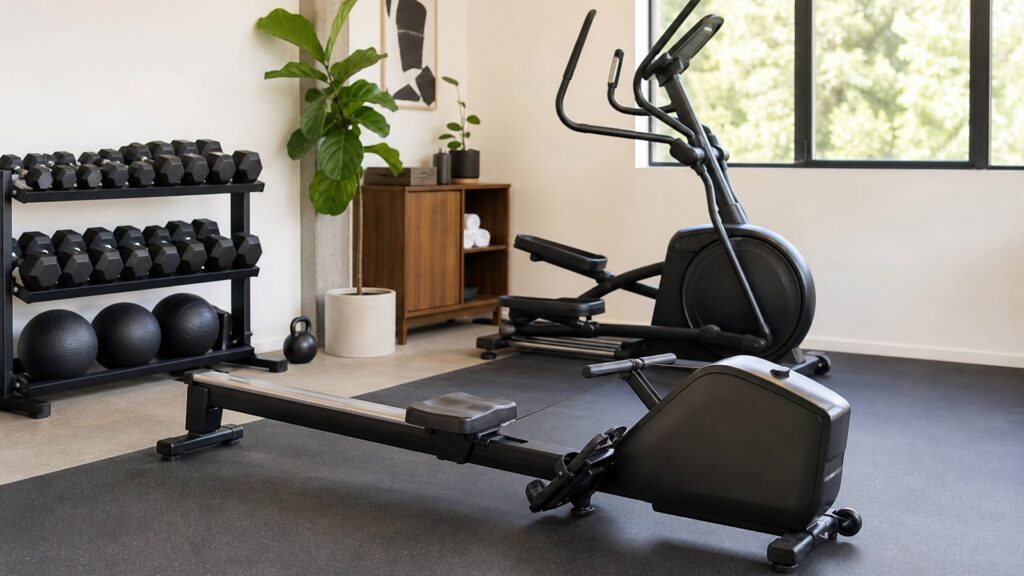
A practical decision path for choosing controlled rowing over standing elliptical stride.
Tip: Set the machine to the user first, then judge the workout at the pace and effort the user will repeat.
These concepts connect equipment design to comfort, effort, setup, and workout use.
Magnetic resistance uses magnets near a flywheel to change rowing effort.
Stroke sequence is the order of leg drive, body swing, arm pull, and recovery.
Rail feel is how smoothly the seat moves during the drive and recovery.
Monitor feedback shows rowing data such as time, distance, strokes, resistance, or calories.
Noise profile is how much sound the rower makes during use.
Workout role is the job the rower fills in a routine.
Tip: The right machine is the one whose motion, controls, and setup fit the routine.
A magnetic rower is built around seated rowing. The user pushes with the legs, swings the body, and pulls the handle rather than standing on pedals.
Rowing motion is the reason to choose the rower.
Magnetic rowers use set resistance levels. That can suit users who want predictable effort changes without fan noise.
Controlled resistance supports repeatable rowing.
A front drive elliptical may be better when the user wants upright motion, moving handles, and no rowing stroke learning curve.
The elliptical wins when standing motion is the goal.
A magnetic rower may be quieter than a fan rower, but it still needs rail length and safe storage space.
Home fit is part of the choice.
The best choice depends on whether the user wants rowing sessions or elliptical stride sessions. Both can support cardio when fit is right.
Repeatable use should decide the purchase.
The choice depends on preferred motion and home fit.
The user wants seated rowing with controlled resistance.
Lower-noise rowing, steady cardio, or controlled intervals are priorities.
The user wants standing low-impact stride work.
Moving handles and upright motion matter.
Both support cardio, but they create different workouts.
Rowing stroke and elliptical stride use different movement patterns.
Resistance and technique can still make rowing demanding.
Stride, handle reach, and balance still matter.
Rail length, storage, ceiling clearance, and use zone all matter.
Tip: Test the actual fit, motion, and resistance before trusting category claims.
Short answers for practical equipment decisions.
Choose it when seated rowing, lower noise, and controlled resistance are priorities.
Choose it when standing stride motion and moving handles matter more.
The magnetic rower usually has more stroke technique demand.
Test stroke comfort, rail length, noise, stride comfort, and balance.
Use a magnetic rower when controlled rowing fits the user better than standing elliptical stride work.
Use a magnetic rower instead of a front drive elliptical when seated rowing, controlled resistance, and quieter home cardio are the main goals.
Choose the front drive elliptical when standing stride motion is the better fit.
Use these Review Streets paths to compare related categories and practical next decisions.
Review the broader rowing-machine category.
Compare another rowing resistance style.
Explore more cardio equipment options.
Choose a retailer
Prices checked regularly. We may earn a commission at no cost to you.