
Diagnostic Objective
A specific vehicle question that can be narrowed with module records, live values, supported commands, and physical measurements.
- It identifies needed access
- It limits random scanning
- It ends with confirmation
Use an OBD diagnostic tool when the next useful step is to interrogate the vehicle. A scanner can collect fault context, identify responding modules, compare live measurements, and support a controlled test of a repair hypothesis. That is the right path for warning lamps, communication problems, readiness questions, or electronically monitored symptoms.
Use a car audio system when the target is the listening chain: source switching, call and prompt handling, signal processing, amplifier feeds, speaker output, or cabin noise performance. An OBD tool may reveal related voltage or module faults, but it cannot create better sound. If the symptom crosses both areas, diagnose shared power and network effects before purchasing either replacement.
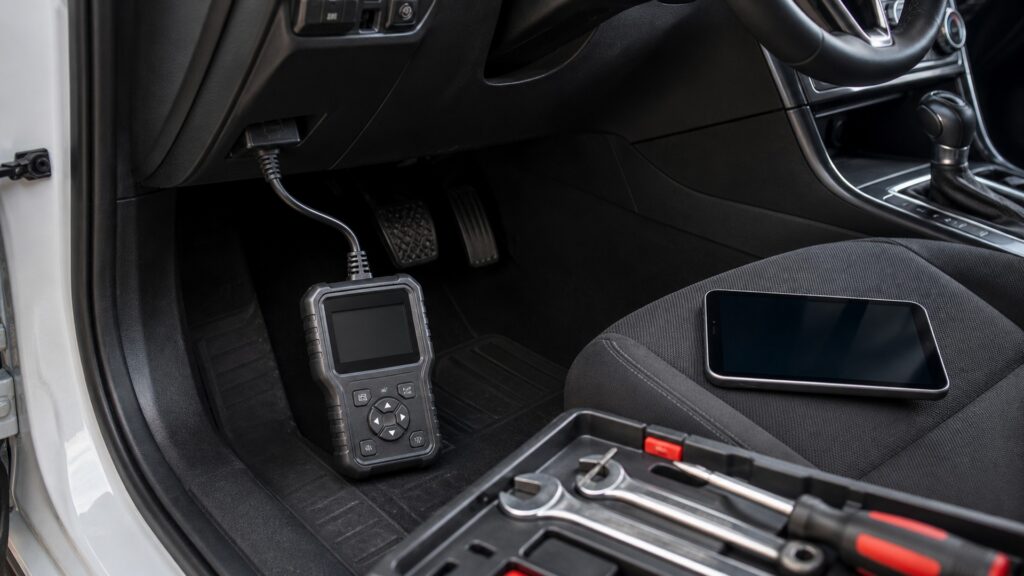
Selection becomes easier when the desired result is written as either service evidence or an audible improvement.
Tip: Pause at the first uncertain handoff between controller state and acoustic output; that boundary is where measurements prevent an irrelevant upgrade.
These terms turn a vague complaint into a decision with observable endpoints.
A specific vehicle question that can be narrowed with module records, live values, supported commands, and physical measurements.
The code status, freeze frame, readiness, vehicle state, and history surrounding an electronically detected condition.
A proposed physical or logical cause that predicts what a targeted test should reveal.
A defined listening or control result involving sources, processing, levels, channels, speakers, calls, prompts, or noise.
Power, ground, network communication, configuration, or an interface used by diagnostic and audio-related modules.
A planned observation that determines whether to continue diagnosing, repair a demonstrated fault, or evaluate an audio upgrade.
Tip: Record the symptom and required proof before comparing product features.
A warning lamp, no-communication event, implausible sensor value, or monitor-status question points toward diagnostic access. Weak bass, noisy playback, missing source control, or channel imbalance points toward the audio chain after basic electrical checks.
Good triage keeps product selection downstream of the actual problem.
Confirm the exact vehicle, required controllers, generic or enhanced data, graphing rate, reporting, security access, and any low-risk active tests. A code reader may be enough for one task and inadequate for another.
The smallest tool that answers the defined question can be the best fit.
Identify the sources, call behavior, equalization, crossovers, preamp or amplified channels, speaker load, retained chimes, and control integration. Evaluate the complete signal route instead of concentrating on screen size.
An audio purchase succeeds when the listening objective improves without losing required behavior.
Low voltage, poor ground, connector damage, configuration loss, amplifier communication, or an installation interface can produce both module faults and audible symptoms. Capture a full scan and electrical baseline before replacing the scanner, receiver, amplifier, or speakers.
Cross-category symptoms reward diagnosis before shopping.
For OBD, demonstrate vehicle identification, needed module access, saved evidence, and the required function. For audio, demonstrate the intended sources, controls, channels, calls, alerts, startup, shutdown, and noise performance in the actual vehicle.
A purchase decision closes only when its promised result is reproduced.
Restarts, pops, lost amplifier communication, missing chimes, or noise that follows charging state may originate in shared power, ground, networks, or integration rather than the receiver alone.
A scan and voltage baseline can reveal system-wide evidence before parts are disturbed.
Isolation can distinguish a receiver fault from an upstream dependency.
A healthy electrical baseline does not improve inadequate sources, processing, amplification, or speakers.
Desired features and sound quality remain valid audio objectives once faults are separated.
These myths encourage category-based buying before the symptom has been assigned to a testable path.
Noise, resets, missing chimes, or silent channels can begin with power, ground, networks, configuration, factory amplifiers, or wiring. Establish the failed stage through scanning and electrical checks before selecting replacement audio hardware.
Generic OBD access focuses on regulated emissions information. Audio, body, gateway, and infotainment modules may require enhanced coverage, manufacturer definitions, topology, or service procedures that a basic reader does not provide.
Unmonitored analog faults, loose terminals, grounding noise, damaged speakers, intermittent wiring, software behavior, or unsupported modules may leave no accessible code. Use signal tracing, voltage tests, inspection, and repeatable listening checks alongside scans.
More features cannot repair unstable voltage, poor ground, damaged communication wiring, incompatible interfaces, lost coding, or a failing factory amplifier. Diagnose and correct the demonstrated dependency before evaluating the receiver's audio performance.
Tip: Let the next required measurement decide the branch.
These answers help decide whether the next dollar belongs in service access or the listening chain.
Record when it occurs, scan relevant modules, inspect power and ground under load, review installation connections, and compare other electrical symptoms. Replace audio equipment only after the failing supply, network, software, or hardware stage is identified.
It may suffice when the exact need is supported generic emissions codes, readiness, freeze frame, or selected live data. Confirm the vehicle, required records, report options, and limitations before depending on it for diagnosis.
Upgrade when the electrical and integration baseline is healthy and the defined objective is better sources, controls, processing, channel outputs, amplification, or speakers. Use reference material and measured settings to verify the change.
It can reveal supported module faults, voltage, configuration, or communication status, but it does not measure frequency response, distortion, acoustic noise, speaker behavior, or listener preference. Those require dedicated electrical and acoustic evaluation.
Choose separate specifications: controller and function coverage for the scanner; sources, processing, outputs, and retention for the audio system. Test shared power, networks, startup, shutdown, and sleep after both are installed.
Use OBD diagnostic tools instead of car audio systems when the unresolved need is controller evidence, module communication, fault context, live measurement, or a supported service test.
Use car audio equipment when the goal is source control and acoustic output. Where symptoms overlap, diagnose shared electrical and network dependencies first, then verify each purchase against its own written checkpoint.
The related explainers show how scan evidence is produced, how the sound chain operates, and how their boundary affects product selection.
Trace the diagnostic request, response, decoding, context, and confirmation path.
Follow the complete car audio systems mechanism and its own acceptance evidence.
Check connector, protocol, module, function, power, and workflow compatibility.
Choose a retailer
Prices checked regularly. We may earn a commission at no cost to you.