
Protocol Coverage
The communication standards and variants a tool can establish with supported vehicles and modules.
- Connector shape is insufficient
- Model year matters
- Gateways can route traffic
OBD tool fitment is wider than whether a plug enters the data link connector. The tool must support the vehicle's communication method, identify the intended modules, interpret the requested data correctly, and provide the exact service functions the job requires. Generic emissions coverage cannot promise access to every chassis, body, restraint, or manufacturer routine.
The installation also has a physical and electrical side. Connector condition, cable angle, driver foot clearance, battery voltage, adapter security, software licensing, internet requirements, and protected gateway access can decide whether a test completes safely. Fitment therefore belongs to a vehicle, model year, function, operating state, and service environment—not to connector shape alone.
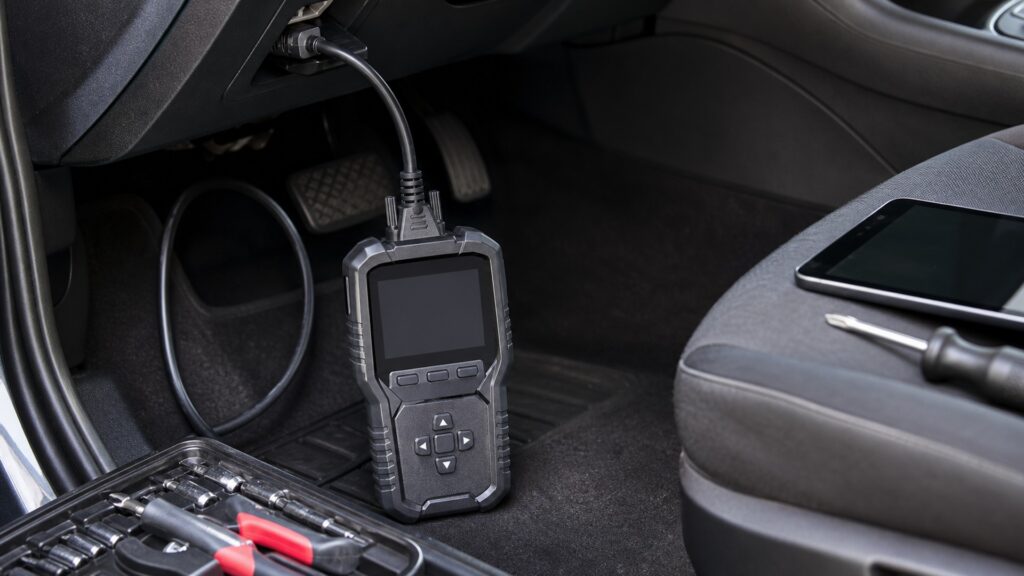
A valid match connects physical access, protocol support, data definitions, functions, authorization, power, and safe working space.
Tip: Name the exact module and operation before checking compatibility; 'works with OBD-II' is too broad for most repair decisions.
These terms expose the boundaries hidden by a familiar sixteen-position connector.
The communication standards and variants a tool can establish with supported vehicles and modules.
The controllers a tool can discover, address, read, or command on a specified vehicle.
Manufacturer- or vehicle-specific parameters, tests, code details, or service functions beyond basic standardized emissions information.
A vehicle access control that may restrict diagnostic requests or commands until an approved tool, account, and authorization process succeeds.
The occupied path and bend space of the connector, adapter, lead, and tool during intended vehicle operation or service.
A regulated external power arrangement specified for tests, programming, or long sessions that could otherwise pull vehicle voltage outside the required range.
Tip: Confirm each boundary from current tool and vehicle documentation before purchase or connection.
Inspect the vehicle socket, keying, retention, terminal alignment, and mounting before insertion. Add the adapter body and cable bend to the clearance check so knees, pedals, trim, and steering movement cannot load the connection.
A safe mechanical fit preserves both access and the vehicle connector.
A compatible shell may carry different networks and routing arrangements. The tool needs current software for the model, year, engine, region, and installed modules, plus authorized access where a protected gateway limits functions.
Communication fit is a documented vehicle-tool pairing.
Reading generic codes, graphing manufacturer parameters, performing actuator tests, resetting adaptations, calibrating components, and programming modules are different capabilities. Buy for the named job rather than the largest marketing number.
A tool fits only if it performs the intended operation correctly.
Small readers may draw from the connector, while long scans, active tests, or programming can require controlled battery support. Weak batteries, cranking transitions, sleep timers, and unsuitable chargers can interrupt communication or corrupt a procedure.
Electrical fit protects the vehicle as well as the tool.
Coverage can depend on software versions, subscriptions, operating systems, cables, internet, accounts, and service information. Screens must remain readable and controls manageable without encouraging interaction during unsafe vehicle movement.
A task-based trial reveals practical fit that a compatibility badge cannot.
Standardized emissions access creates a useful common floor, while other modules, tests, data definitions, security, programming, and reset functions remain vehicle- and tool-dependent.
A defined connector and common emissions requests support broad basic access.
Generic code, readiness, and selected parameter functions can travel across many compliant vehicles.
Body, chassis, restraint, hybrid, EV, coding, calibration, and manufacturer routines require explicit support.
Software age or expired access can remove practical capability from otherwise sound hardware.
These myths substitute connector familiarity or a broad label for a complete fit analysis.
The standardized connector provides a physical interface, not universal logical access. Protocols, gateways, module addressing, manufacturer definitions, software coverage, licenses, and authorization determine which controllers and functions a particular tool can actually reach.
Basic regulatory access may be shared, but model year, fuel type, market, network architecture, installed equipment, and the repair task change useful coverage. Confirm the exact vehicle identification and desired operation before relying on a claim.
They remove a long lead, not the adapter body, connector side load, knee clearance, power draw, radio pairing, app compatibility, sleep behavior, privacy, or security exposure. The complete installed envelope still needs evaluation.
Subscription language does not guarantee new vehicle coverage, protected gateway access, operating-system support, server availability, correct definitions, or replacement hardware. Review the current terms, update history, and export options for the expected service life.
Tip: Demand proof for the named vehicle and task.
These answers focus the compatibility check on the exact vehicle, operation, and working environment.
Use make, model, model year, engine or powertrain, region, trim, and installed systems, plus the exact module and function required. A VIN-based lookup helps, but the published function list still needs review.
It can expose relevant emissions codes, status, readiness, freeze frame, and selected live data on supported vehicles. Diagnosis may still require manufacturer information, enhanced parameters, bidirectional tests, wiring checks, or another tool for the actual cause.
It matters when the vehicle restricts diagnostic commands or service functions behind authenticated access. Confirm supported brands, account setup, fees, internet needs, technician authorization, and whether read-only behavior differs before scheduling the repair.
A protruding adapter or tight bend can be struck by a leg, interfere with pedals or trim, strain the socket, or disconnect during logging. Check the intended seating, steering, and service positions before use.
Connect under safe conditions, identify the vehicle automatically and manually, scan every required module, compare known values, save a report, perform one supported low-risk function, and confirm disconnection leaves no faults or damage.
OBD diagnostic-tool fitment combines connector condition, cable clearance, protocol and module coverage, enhanced functions, gateway authorization, stable power, software support, and usable service information.
Specify the vehicle and task first. Then verify every dependency through current documentation and a controlled trial, because physical mating proves much less than complete diagnostic compatibility.
These explainers show what the fitted tool exchanges, how each function should behave, and which safeguards govern access.
Follow connector access through protocol requests, decoding, evidence capture, and confirmation.
Define connection, scans, graphing, active tests, reports, and recovery as testable states.
Review electrical, motion, cybersecurity, and connector risks before granting diagnostic access.
Choose a retailer
Prices checked regularly. We may earn a commission at no cost to you.