
Real-Time Warning
A detector indication intended to be recognized during the observed signal event.
- Latency affects usefulness
- Classification contains uncertainty
- Response must remain lawful
Choose a radar detector when lawful operation is established and the missing outcome is a real-time warning about supported radio, laser, or location events. The selection should follow route conditions, required bands, direction, nuisance rejection, database needs, and an installation that keeps alerts understandable without distracting the driver.
Choose a car audio system when the unresolved problem is acoustic: poor source handling, weak processing, insufficient amplifier output, damaged speakers, noise, or missing cabin integration. Audio hardware cannot improve radar reception, and a detector cannot improve music. When both products reset, whine, or drain the battery, investigate their shared electrical environment before assuming either category needs replacement.
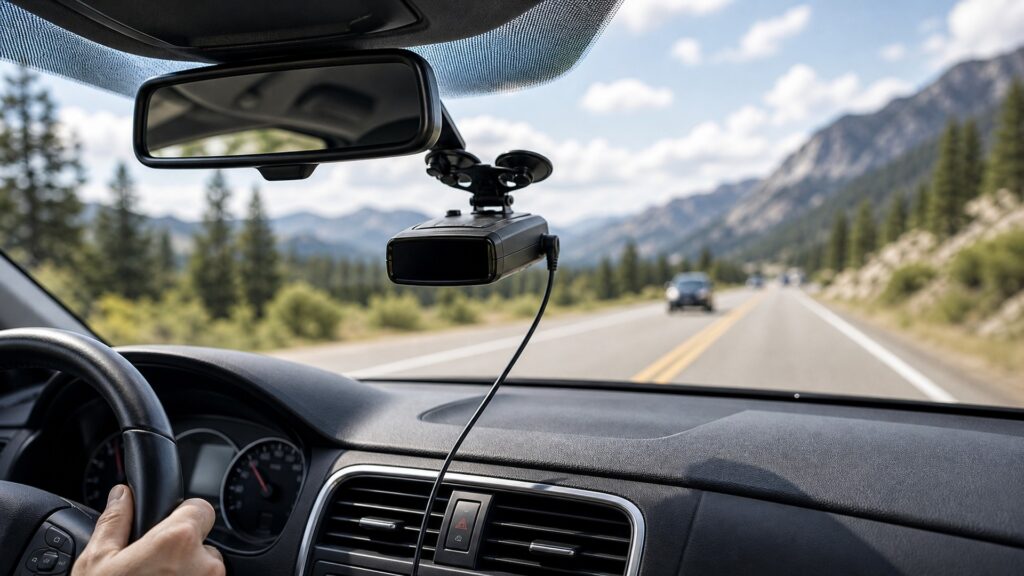
The detector creates a brief situational warning; the audio system creates sustained, controlled acoustic output.
Tip: Write the missing output and its test. 'Recognize configured signals' points to a detector; 'reproduce sources cleanly' points to the audio chain.
These definitions support a decision without treating all cabin electronics as substitutes.
A detector indication intended to be recognized during the observed signal event.
Filtering that reduces alerts from recurring or non-priority emitters while attempting to preserve relevant observations.
An estimate of where received energy is strongest relative to the detector's antenna channels.
A verified deficiency in source, processing, gain, amplification, wiring, loudspeaker, or cabin response.
The route from selected media through decoding, processing, amplification, wiring, speakers, and cabin acoustics.
The observation demonstrating which category owns the unresolved need before money or installation scope is committed.
Tip: Use the failed stage, not the most visible component, to control scope.
A detector is relevant when a driver needs supported band, laser, direction, or location alerts on regular routes and can install the receiver legally. Evaluate sensitivity and filtering together; maximum alert count is not the objective.
The detector decision begins with permission and a specific information need.
Audio upgrades address media access, signal processing, preamp and amplifier capability, loudspeaker behavior, controls, calls, and cabin response. Locate the limiting stage before choosing a system-wide replacement.
An acoustic objective needs an acoustic acceptance test.
Detector false alerts, receiver whine, resets, or parked drain can stem from adapters, grounding, charging noise, or an always-live outlet. Change one connection at a time and compare current and voltage behavior.
A cross-system symptom is evidence to diagnose, not permission to guess a category.
The detector may use its own speaker while the audio system handles music, or alerts may enter a supported audio input. Either arrangement must protect sightlines, priority, latency, and normal listening recovery.
Minimal integration often produces the cleanest boundary.
A lawful acceptance route should expose known sources, modes, direction, mute, and interference. An audio session should expose source consistency, noise, frequency balance, channel output, controls, and retained functions.
The chosen product should close the original gap without borrowing proof from the other system.
A charger or ground problem can trigger detector interference and audio whine together, making two products appear defective when their shared supply is the real cause.
A detector alone can add lawful signal awareness when the existing audio chain is adequate.
An audio repair or upgrade alone can correct verified acoustic limitations without adding detection hardware.
Two independent unmet outcomes justify two specifications and two acceptance tests.
Shared electrical and installation dependencies must be corrected before either result can be judged.
These myths push buyers toward a visible product instead of the stage that produces the missing result.
It may make a routed alert louder or clearer, but it cannot improve antenna exposure, receiver sensitivity, band coverage, filtering, direction, GPS context, or laser reception. Those functions belong upstream inside the detector.
Product age does not connect the two needs. Choose a detector only for lawful, defined signal awareness; replace or upgrade audio only when source, processing, amplification, speaker, control, or integration performance is inadequate.
A sensitive receiver that cannot reject recurring non-priority signals may train the driver to ignore it. Judge coverage, classification, direction, filtering, transparency, and route behavior together rather than counting every tone.
Whine can follow grounding, cable routing, adapters, alternator ripple, gain structure, or shared accessory power. Isolate the noise path and measure the supply before replacing an otherwise functional receiver, amplifier, or detector.
Tip: Require category-specific evidence before expanding scope.
These answers turn mixed dashboard complaints into a practical selection sequence.
Start with battery, charging, outlet, ground, adapter, wiring, and sleep-state diagnosis because both products share electricity. Record voltage during crank and operation, isolate accessories, and correct the common fault before judging either category.
Name lawful jurisdictions, vehicle class, regular road types, desired bands, direction, laser expectations, nuisance environment, GPS or database needs, mounting constraints, audio behavior, update support, and a representative route test.
Clearly name sources, phone behavior, controls, processing, preamp or amplified channels, speaker loads, target listening result, retained chimes and cameras, noise limits, installation interfaces, and reference tracks for before-and-after comparison.
Use integration only when compatibility, latency, volume, ducking, calls, warning priority, reconnection, and fallback are demonstrably better than the detector's own speaker alone. Extra routing is not automatically an improvement.
Write one sentence for each unresolved outcome, identify the system that physically produces it, test the current chain at that stage, and purchase only where objective or repeatable evidence shows a remaining gap.
Use a radar detector instead of a car audio system when lawful, real-time signal awareness is the missing outcome and the vehicle can support suitable reception, filtering, mounting, and alert presentation.
Use car audio equipment for verified source-to-speaker limitations. Diagnose shared power, ground, noise, and sleep behavior first whenever symptoms cross both categories.
These explainers show how each system creates its distinct output and where shared dependencies can affect the result.
Understand antenna capture, band analysis, rejection, direction, context, and alert presentation.
Understand source selection, processing, amplification, speakers, and cabin output.
Compare both systems at their shared speaker, power, and failure boundaries.
Choose a retailer
Prices checked regularly. We may earn a commission at no cost to you.