
Fluid Access
Fluid access is how easily the runner can drink during the run.
- Example: sipping from a soft flask without stopping
- Check: test access at running pace
- Limit: easy access still needs stable fit
Use running hydration gear instead of general running accessories when fluid access is the main problem the run needs to solve. A bottle, flask, reservoir, belt, or vest makes sense when heat, duration, distance, or limited refill access makes drinking during the run important.
General running accessories are the better choice when the run mainly needs storage, visibility, weather coverage, phone access, or comfort. Hydration gear should enter the setup when carried fluid is necessary, not just because the runner has room to carry it.
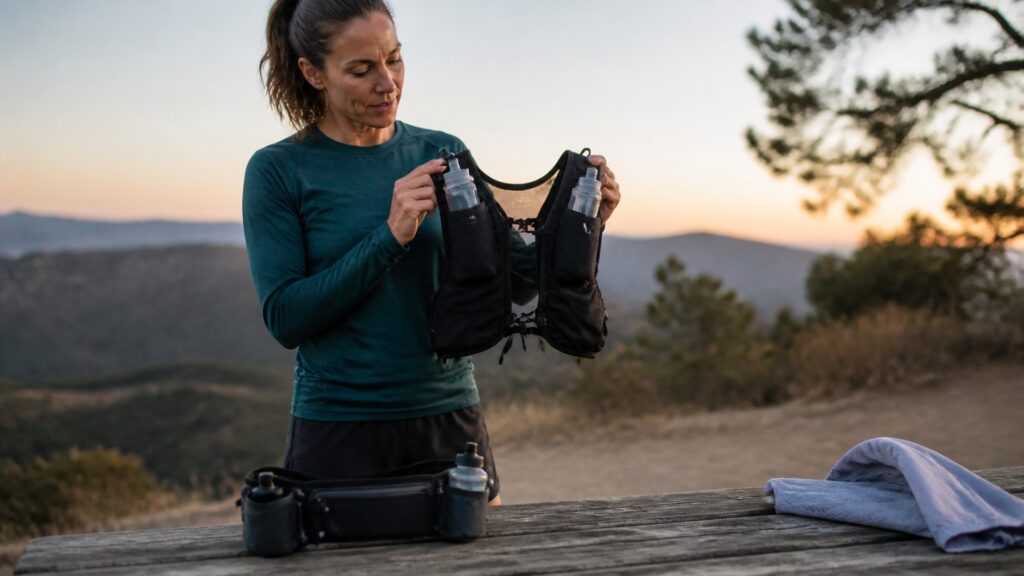
A decision path for choosing hydration-specific gear over broader running accessories.
Tip: Choose hydration gear when drinking access is the limiting factor.
These concepts help separate fluid-carrying needs from general running support.
Fluid access is how easily the runner can drink during the run.
Capacity match is how well carried fluid fits distance, heat, and refill options.
A general accessory role solves non-fluid needs such as visibility, storage, weather, or phone access.
Bounce control is how well bottles, belts, flasks, or reservoirs stay stable.
Route planning is deciding whether the runner must carry fluid or can refill along the way.
Heat load is the warmth added by wearing or carrying hydration gear.
Tip: Hydration gear is useful when fluid access is worth the extra weight and fit demands.
Hydration gear earns its place when the runner needs fluid between stops. Heat, distance, effort, and route access all affect that decision.
Fluid access is the clearest reason to choose hydration gear.
Many runs need a light, phone holder, key pocket, hat, gloves, or reflective item more than a bottle. Those problems should not be solved with hydration gear by default.
The gear should match the actual support need.
If the run is short, mild, or close to reliable water access, hydration gear can add more friction than value.
Not carrying fluid can be the cleaner choice when access is already solved.
Fluid adds movement and weight. A hydration setup has to stay comfortable as containers empty, pace changes, and sweat builds.
A hydration system that distracts from running is not doing its job.
The best setup may be a bottle, belt, vest, or no hydration gear at all. The decision should come from the run, not the category label.
Hydration gear should solve a clear fluid problem.
The choice depends on whether fluid access or broader support is the main need.
Heat, distance, duration, or refill gaps make drinking during the run important.
The runner needs bottles, flasks, reservoirs, belts, or a vest.
The main need is visibility, storage, weather coverage, phone access, or comfort.
The route already solves fluid access.
Hydration gear is specific support, not the answer to every running need.
It can carry items, but it may be too bulky or warm when fluid is not needed.
Short or supported routes may not need hydration gear.
Extra capacity can add weight, bounce, and heat.
Visibility, weather, phone access, and storage can matter more on some routes.
Tip: Use hydration gear only when fluid access is the main gap.
Short answers for choosing the right support.
Choose hydration gear when you need fluid during the run and cannot rely on easy refill access.
Use general accessories when the main need is visibility, storage, weather, phone access, or comfort.
Yes. Long, hot, dark, or remote routes may need hydration gear plus other accessories.
Test loaded fit, bounce, drinking access, and whether the setup feels too hot or bulky.
Use hydration gear when carried fluid solves the run's main problem.
Use running hydration gear when fluid access is the main problem.
Use general running accessories when the run mainly needs visibility, storage, weather coverage, or small-item access.
Use these Review Streets paths to compare related categories and practical next decisions.
Review how hydration gear supports training demands.
Compare the reverse decision.
Explore related running gear categories.
Choose a retailer
Prices checked regularly. We may earn a commission at no cost to you.