
Fluid Access
Fluid access is how easily the runner can drink during the run.
- Example: sipping from a flask without stopping
- Check: test access at running pace
- Limit: easy access still needs stable fit
Use running hydration gear instead of running safety gear when the main problem is fluid access. A bottle, belt, flask, reservoir, or vest helps when heat, distance, duration, or limited refill access makes drinking during the run important.
Running safety gear is still the better choice when visibility, traffic awareness, lighting, identification, or emergency readiness is the main concern. The decision depends on what would make the run harder or riskier if left unsolved.
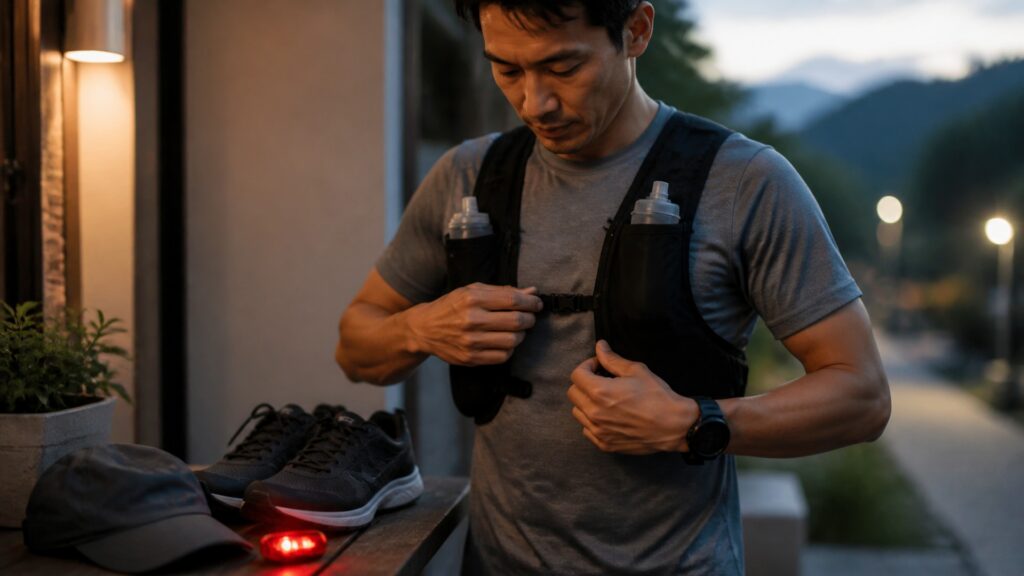
A decision path for choosing hydration gear when the run needs drinking access more than safety-specific equipment.
Tip: Choose hydration gear for fluid access. Choose safety gear for visibility, awareness, and emergency readiness.
These concepts show when fluid carrying is the main job.
Fluid access is how easily the runner can drink during the run.
Capacity match is how well carried fluid fits distance, heat, and refill options.
Bounce control is how well bottles, belts, flasks, or reservoirs stay stable.
Heat load is the warmth added by wearing or carrying hydration gear.
Route planning is deciding whether the runner must carry fluid or can refill along the way.
Reach pattern is how the runner grabs, drinks, replaces, or adjusts hydration gear while moving.
Tip: The right gear solves the run's most important unsolved problem.
Longer runs, hot days, remote routes, and hard sessions can make fluid access central to finishing the workout well.
Hydration gear is strongest when the run would suffer without drink access.
Lights, reflective items, ID, and route-safety tools solve a different problem. They help the runner see, be seen, or respond if something goes wrong.
Safety gear should not be displaced when visibility or emergency access matters most.
A long run before sunrise may need hydration and safety gear. The runner should not treat the categories as rivals when the route asks for both.
Use both when the route creates both problems.
Hydration gear adds weight, warmth, and bounce. If water is easy to access and the run is short, safety or comfort gear may be the smarter choice.
Prepared means appropriately equipped, not overloaded.
The same runner may need safety gear one day and hydration gear the next. Conditions, timing, distance, and refill access should decide the setup.
The better choice is the one that answers the route.
The choice depends on whether fluid access or route safety is the bigger need.
Heat, distance, duration, or refill gaps make drinking during the run important.
The runner needs bottles, flasks, reservoirs, belts, or a vest.
Low light, traffic, isolation, or emergency readiness is the bigger concern.
The runner needs lights, reflectors, ID, or visibility-focused gear.
The categories solve different problems and sometimes need to work together.
Long routes may also need visibility, ID, phone access, or route safety planning.
Traffic, weather, isolation, and low visibility can matter at other times too.
Too much fluid can add weight, heat, and bounce without solving the route's main issue.
Some runs need both hydration and safety support.
Tip: Start with the route's actual risk and friction points.
Short answers for choosing the right run support.
Choose hydration gear when heat, distance, duration, or refill access makes drinking during the run important.
Choose safety gear when visibility, lighting, traffic, route awareness, or emergency access is the main concern.
Yes. Many routes need both, especially long low-light or remote runs.
Check distance, heat, refill access, light, traffic, and how isolated the route is.
Use hydration gear for fluid access and safety gear for visibility, awareness, and emergency readiness.
Use running hydration gear when fluid access is the run's main limiter.
Use running safety gear when seeing, being seen, or emergency readiness matters more.
Use these Review Streets paths to compare related categories and practical next decisions.
Review how hydration gear supports training demands.
Compare broader running accessories with hydration-specific gear.
Explore related running gear categories.
Choose a retailer
Prices checked regularly. We may earn a commission at no cost to you.