
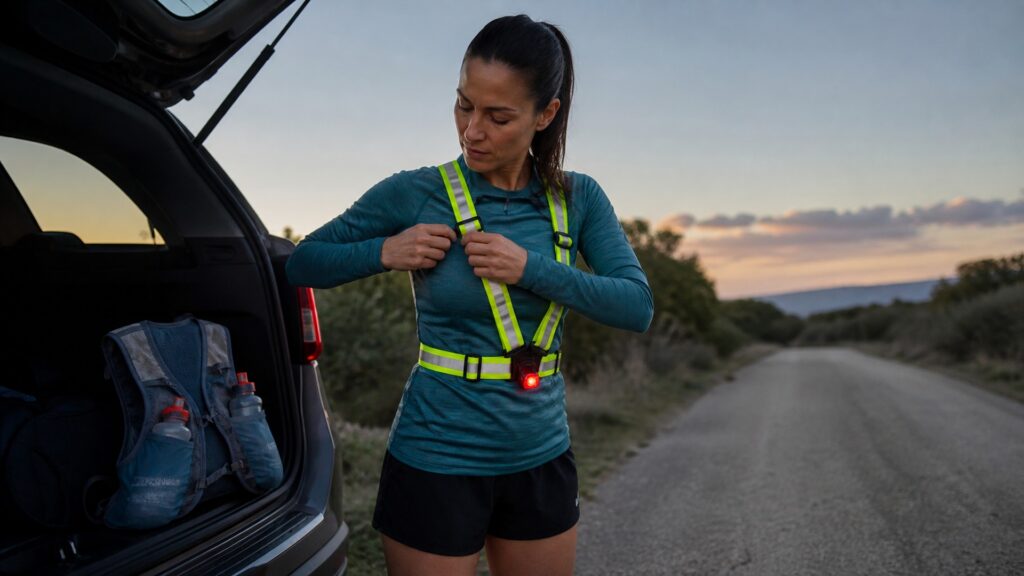
When to Use Running Safety Gear Instead of Running Hydration Gear

Use running safety gear instead of running hydration gear when the main issue is visibility, awareness, emergency access, or route risk rather than fluid access. A light, reflective vest, ID, phone holder, or weather-visible layer may matter more than a bottle on dark, busy, isolated, or unpredictable routes.

Hydration gear is still the better choice when heat, distance, duration, or limited refill access makes drinking during the run the main problem. Some runs need both, but the first question is which risk is most immediate.

By: Review Streets Research Lab
Updated: September 30, 2026
Explainer · 8-12 min read
running safety gear explainer hero image for Review Streets
What You'll Learn

When Route Safety Matters More Than Fluid Carrying

A decision path for choosing lights, reflectors, ID, and route-safety support over hydration-specific gear.

  • When visibility and route risk should come first
  • How safety gear differs from bottles and vests
  • Where hydration gear still matters more
  • Why some runs need both categories
  • How to avoid carrying the wrong support

Tip: Choose safety gear for route risk. Choose hydration gear for fluid access.

Definitions

Key Concepts For Choosing Safety Gear

These concepts help separate safety needs from hydration needs.

Visibility Support

Visibility support helps the runner see or be seen in low-light or complex route conditions.

  • Example: wearing reflective pieces or a light on an early run
  • Check: view the runner from front, side, and back
  • Limit: visibility gear does not remove traffic risk

Route Awareness

Route awareness is how well the runner can notice traffic, footing, people, weather, and exits.

  • Example: keeping lighting and phone access simple on a dark route
  • Check: avoid gear that steals attention
  • Limit: gear cannot replace judgment

Emergency Access

Emergency access is the ability to reach ID, phone, medication, or help when needed.

  • Example: keeping a phone and ID in a reachable pocket
  • Check: make essentials accessible without unpacking everything
  • Limit: not every route needs the same kit

Fit And Stability

Fit and stability describe whether safety gear stays put without rubbing, bouncing, or blocking movement.

  • Example: a lighted vest that does not shift during arm swing
  • Check: test at running pace
  • Limit: secure gear still needs comfort

Weather Readiness

Weather readiness is choosing gear that supports safety in rain, heat, cold, wind, or glare.

  • Example: using a brim, light shell, or high-visibility layer
  • Check: match gear to effort and conditions
  • Limit: too much gear can overheat the runner

Safety Role

Safety role is the specific risk a piece of gear is meant to reduce.

  • Example: a rear light for road visibility or ID for emergency contact
  • Check: name the risk before adding the item
  • Limit: one item rarely covers every risk

Tip: The right choice answers the route's most important unsolved risk.

Visibility

Use Safety Gear When Being Seen Is The Limiter

Low light, traffic, rain, shade, and crossings can make visibility the main priority. Hydration gear will not solve that problem unless safety features are also visible.

  • Use reflectors where others need to see you.
  • Use lights when darkness affects footing.
  • Place safety gear where it stays uncovered.

Visibility should come first when the route demands it.

Emergency Access

Use Safety Gear When Help Or ID Access Matters

Some routes make phone, ID, medication, or emergency contact access more important than carried fluid.

  • Keep essentials reachable.
  • Use secure pockets or holders.
  • Consider isolation, timing, and personal needs.

Emergency access matters most when help would not be immediate.

Hydration

Use Hydration Gear When Fluid Is The Bigger Need

Heat, distance, and limited refill access can make drinking access the bigger problem. In those cases, hydration gear should not be skipped just because safety gear is useful.

  • Check heat and duration.
  • Plan around refill points.
  • Carry enough for unsupported segments.

Hydration gear wins when fluid access limits the run.

Both

Combine Categories When The Route Requires Both

A long early-morning route may require fluid, lights, reflectors, and phone access. The categories should work together rather than compete.

  • Keep reflectors visible around vests or packs.
  • Avoid overloading the setup.
  • Test combined gear before relying on it.

Some runs are safer with both fluid and visibility support.

Decision

Pick The Gear That Reduces The Main Risk

The best choice starts with the route: light, traffic, temperature, distance, isolation, and refill access.

  • Start with what could go wrong on the route.
  • Choose safety gear for visibility and emergency readiness.
  • Choose hydration gear for drinking access.

The route should decide the gear priority.

Quick Reality Check

When Safety Gear Wins And When Hydration Gear Wins

The choice depends on whether route risk or fluid access is the main issue.

Safety Gear Wins When

Low light, traffic, isolation, footing, or emergency access is the bigger concern.

The runner needs lights, reflectors, ID, phone access, or visibility-focused gear.

Hydration Gear Wins When

Heat, distance, duration, or refill gaps make drinking during the run important.

The runner needs bottles, flasks, reservoirs, belts, or a vest.

Common Myths

Misconceptions About Safety Gear Versus Hydration Gear

The categories solve different problems and often work together.

Hydration gear is enough for any long run

Long runs can also need visibility, ID, phone access, and route-safety planning.

Safety gear is only for night

Traffic, weather, isolation, and low visibility can matter during daylight too.

You have to choose one

Some runs need both hydration and safety support.

More gear always means safer

Too much gear can add heat, bounce, and distraction.

Tip: Choose the gear that reduces the run's main risk.

FAQ

Frequently Asked Questions About Safety Gear And Hydration Gear

Short answers for choosing the right running support.

When should I choose safety gear first?

Choose safety gear first when visibility, traffic, isolation, footing, or emergency access is the main concern.

When should hydration gear come first?

Choose hydration gear when heat, distance, duration, or refill access makes drinking during the run important.

Can I use both?

Yes. Many long, dark, hot, or remote routes need both categories.

What should I check before leaving?

Check light, traffic, weather, distance, refill access, phone access, and whether your gear blocks visibility.

What is the practical takeaway?

Use safety gear for route risk and hydration gear for fluid access.

Bottom Line

Use running safety gear when visibility, awareness, emergency access, or route risk matters more than fluid carrying.

Use hydration gear when drinking access is the run's main limiter, and combine both when the route requires it.

Next Steps

Go Deeper or Compare Your Options

Use these Review Streets paths to compare related categories and practical next decisions.