
Water Session
A water session is a workout or lesson that takes place in a pool or open water.
- Example: lap swimming with clear goggles
- Check: confirm that swimming is the actual activity
- Limit: goggles do not help a land workout
Use swim goggles instead of an elliptical machine when the workout is actually happening in the water. Goggles help with visibility, eye comfort, glare, and awareness while swimming. An elliptical machine is a dry-land cardio tool for low-impact endurance work.
Swim goggles make sense when the barrier is seeing and staying comfortable in the pool. Elliptical machines make sense when the barrier is getting a controlled cardio session without swimming.
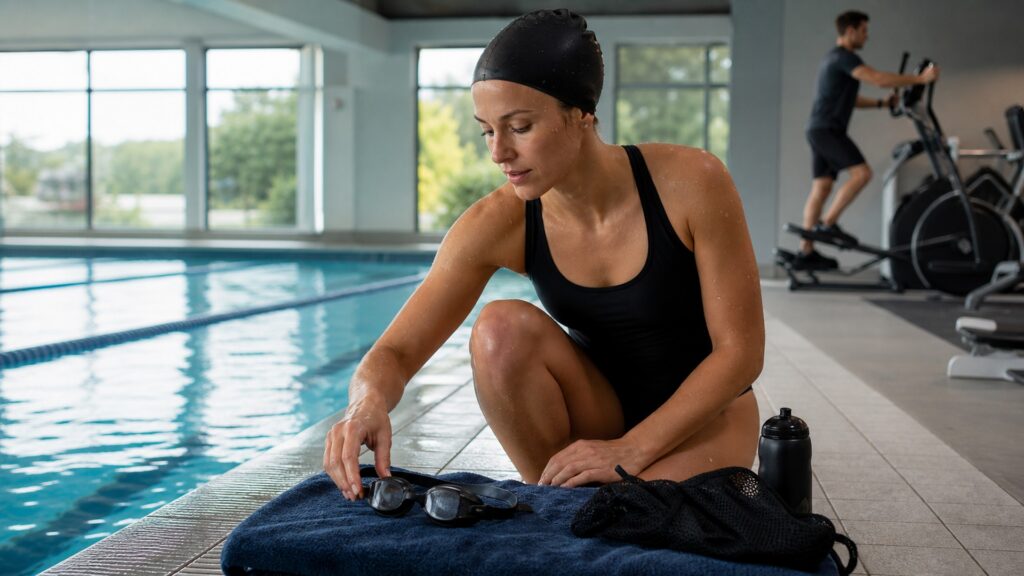
A practical decision path for choosing water gear instead of a dry-land cardio machine.
Tip: Start with the swimming situation, then choose the gear detail that solves that specific problem.
These concepts keep the decision tied to fit, water conditions, training purpose, and realistic limits.
A water session is a workout or lesson that takes place in a pool or open water.
Eye comfort is the reduction of irritation, splash, and pressure during swimming.
A cardio machine creates an indoor conditioning workout on land.
Low-impact conditioning is aerobic work that reduces pounding compared with running.
A pool barrier is the specific problem that makes swimming harder to complete.
Tool fit is whether the product solves the immediate workout problem.
Tip: The useful feature is the one that makes the swim clearer, safer, or easier to repeat.
If the session is in the pool or open water, goggles can be essential. They help the swimmer see, reduce eye irritation, and keep attention on technique or distance.
Goggles belong where water and vision are the immediate problem.
An elliptical machine is useful when the user wants steady conditioning without pool access, wet gear, or swim skill demands. It creates the workout rather than supporting a swim.
The elliptical is the better tool when the goal is land-based cardio.
Goggles can make practice more comfortable, but the practice still depends on water time. An elliptical can support fitness, but it does not teach breathing, body position, turns, or sighting.
The closer the goal is to swimming, the more goggles matter.
Pool access, weather, schedule, and comfort can decide the better choice. If there is no pool available, goggles cannot create a workout. If the user is already swimming, an elliptical will not solve leaking lenses.
Setting usually decides the answer faster than feature lists.
Swim goggles and elliptical machines are not competing versions of one product. One is worn in water; the other is used on land. The smart choice is the one that fits the immediate session.
They are different tools for different workout problems.
The decision depends on whether the user is swimming or conditioning on land.
The session is in water and vision or eye comfort matters.
The swimmer needs fit, tint, anti-fog performance, or a backup pair.
The goal is indoor low-impact cardio.
Pool access, swim skill, or wet conditions are not part of the plan.
The tools are too different to rank without naming the workout.
Goggles support swimming, but they do not create a conditioning session alone.
Metrics help land workouts, but they do not solve water visibility.
Beginners often benefit from comfortable goggles because clear vision reduces stress.
Many routines can include swimming with goggles and elliptical conditioning on other days.
Tip: Strong claims still need to match the swimmer, pool, and session.
Short answers for practical swimming decisions.
Use goggles when the workout involves swimming and you need clearer vision, comfort, or glare control.
Use an elliptical for dry-land cardio, low-impact conditioning, or days without pool access.
It can support general fitness, but it does not replace water skills such as breathing, turns, and sighting.
They can help a swimmer complete better swim sessions, but they are support gear rather than the source of resistance.
Choose goggles for the water problem and the elliptical for the land-cardio problem.
Use swim goggles instead of an elliptical machine when the workout is swimming and the problem is vision, seal, glare, or eye comfort.
Use the elliptical when the goal is low-impact conditioning on land.
Use these Review Streets paths to compare related categories and practical next decisions.
Explore the swim goggles category.
Review fit, visibility, pressure, and light conditions.
Match goggles to lap swimming, racing, lessons, and open water.
Choose a retailer
Prices checked regularly. We may earn a commission at no cost to you.