
Swim-Specific Practice
Swim-specific practice uses water and stroke movement to improve a swimming task.
- Example: using fins to work on kick timing
- Check: confirm the session is in the pool
- Limit: it requires water access
Use swim training gear instead of an exercise bike when the session goal is to improve swimming in the water. Training tools such as fins, pull buoys, kickboards, paddles, snorkels, and resistance gear can focus stroke mechanics, body position, kick rhythm, or water feel.
Exercise bikes make more sense when the goal is dry-land cardio, leg endurance, or a controlled indoor workout without pool access. The choice is swim-specific practice versus land-based conditioning.
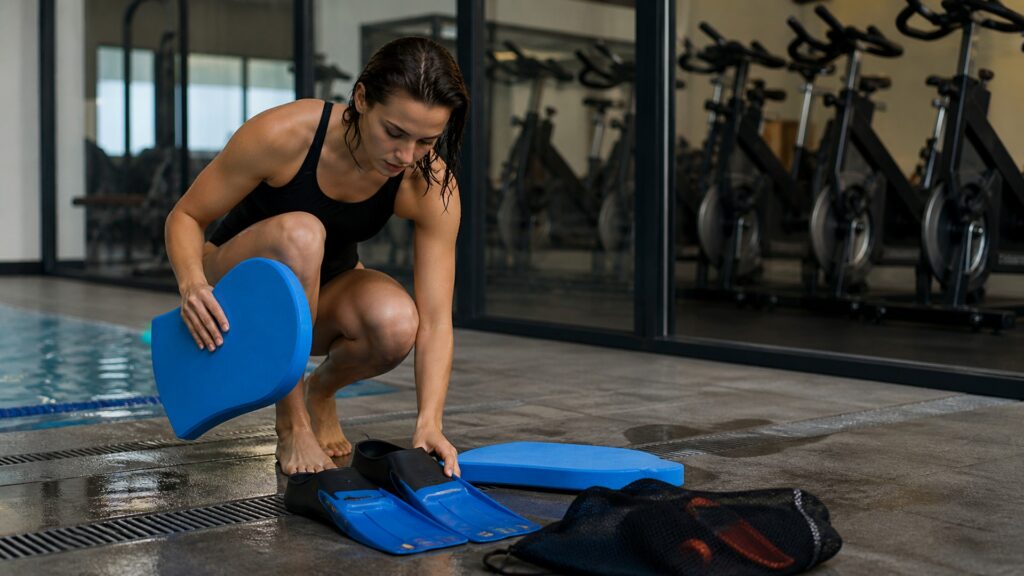
A practical way to decide between swim-specific tools and bike-based cardio.
Tip: Start with the swimming situation, then choose the gear detail that solves that specific problem.
These concepts keep the decision tied to fit, water conditions, training purpose, and realistic limits.
Swim-specific practice uses water and stroke movement to improve a swimming task.
Bike conditioning is cardio performed on an upright, recumbent, or indoor cycling bike.
Stroke feedback is what the swimmer feels from water pressure, body position, and timing.
Low-impact cardio raises aerobic demand with less impact than running.
Pool access is whether the swimmer can actually complete the planned water session.
Training priority is the main job of the session.
Tip: The useful feature is the one that makes the swim clearer, safer, or easier to repeat.
When the priority is body position, breathing, kick rhythm, or stroke feel, the work needs to happen in the water. Swim training gear can make one part of that skill easier to isolate.
Swim gear is the better tool when the goal is swimming skill.
Exercise bikes are useful when the goal is aerobic work without pool logistics. They can be controlled, measurable, and low impact.
The bike supports conditioning, not stroke mechanics.
A bike can help maintain aerobic volume on days when swimming is not practical. That makes it useful as a supplement, especially when shoulders need a break from paddles or resisted swim work.
Supplemental cardio works best when it does not crowd out water practice.
Fins, paddles, buoys, and snorkels give feedback the swimmer can feel immediately. That feedback is the reason to choose them over a bike when the session is about technique.
The tool should make the swim cue easier to understand.
If the workout asks for water feel or stroke practice, use swim training gear. If it asks for controlled cardio without swimming, use the exercise bike.
The right choice is the one that matches today's job.
The better option depends on whether the goal is swimming practice or land cardio.
The swimmer needs water-specific technique, feedback, or drill focus.
The session depends on body position, pull, kick, or breathing in water.
The user needs indoor cardio without pool access.
Low-impact endurance is more important than swim technique that day.
Conditioning and technique are related, but not identical.
Bike work can support endurance, but it does not replace water timing or feel.
Some gear reduces demands so the swimmer can focus on a skill.
They can be useful supplements when used for the right purpose.
Technique, conditioning, and recovery often need different tools.
Tip: Strong claims still need to match the swimmer, pool, and session.
Short answers for practical swimming decisions.
Choose it when the workout is in water and the goal is stroke skill, body position, resistance, or drill feedback.
Choose it for indoor cardio, recovery rides, or endurance work without pool access.
It can support general aerobic fitness, but it does not replace water-specific practice.
Yes, if they are practicing in water and the gear is simple, safe, and purposeful.
Use swim gear for swim practice and an exercise bike for land conditioning.
Use swim training gear instead of an exercise bike when the session needs water-specific practice, drill feedback, or stroke focus.
Use the bike when the goal is controlled low-impact cardio away from the pool.
Use these Review Streets paths to compare related categories and practical next decisions.
Explore the swim training gear category.
See how common tools change drills and body position.
Review how gear should support the training goal.
Choose a retailer
Prices checked regularly. We may earn a commission at no cost to you.