
Air Resistance
Air resistance uses a fan to create drag as the handle is pulled.
- Example: pulling harder makes the fan create more resistance
- Check: test easy and hard strokes
- Limit: fan noise may be higher than other rower types
Safety factors matter in air resistance rowers because the user moves through a repeated sliding stroke while pulling against fan resistance. Setup, technique, rail stability, foot straps, clearance, and pacing all affect control.
Air rowers can support demanding cardio, but hard pulling without good setup can make the movement sloppy. Safety starts with stable placement and foot connection, then continues through stroke control and realistic effort.
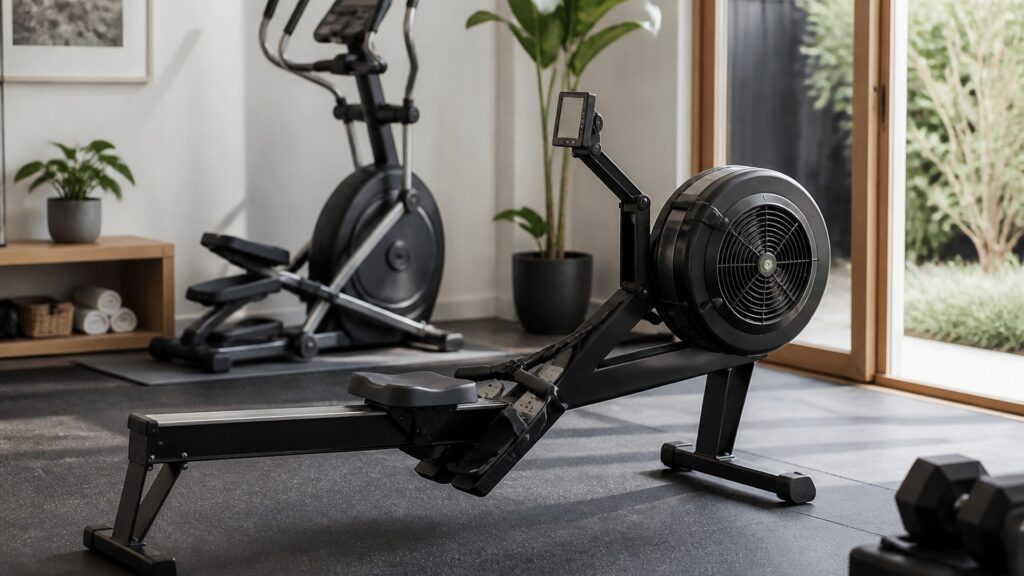
A practical look at setup, foot straps, stroke control, fan resistance, and room clearance.
Tip: Set the machine to the user first, then judge the workout at the pace and effort the user will repeat.
These concepts connect equipment design to comfort, effort, setup, and workout use.
Air resistance uses a fan to create drag as the handle is pulled.
Damper setting changes how much air enters the flywheel housing.
Stroke sequence is the order of leg drive, body swing, arm pull, and recovery.
Monitor feedback shows rowing data such as time, distance, pace, stroke rate, and watts.
Slide rail is the track that lets the seat move forward and backward during each stroke.
Workout role is the job the rower fills in a routine.
Tip: The right machine is the one whose motion, controls, and setup fit the routine.
A rowing machine needs stable floor contact because the user pushes and pulls along the rail. Movement or wobble can undermine control.
Stable placement is the first safety check.
The feet should stay secure during the drive and release during exit. Loose or uncomfortable straps can affect control.
Foot connection supports the stroke.
Hard pulling with poor sequence can strain posture and make the stroke feel rough. Smooth timing matters before intensity.
Control comes before effort.
Air resistance rises as stroke power rises. The user should add effort gradually instead of attacking the fan immediately.
Gradual effort helps preserve control.
The rower needs enough room for the rail, handle movement, mounting, and dismounting. Storage position should also be secure.
Room setup supports safer use.
Safety checks reduce avoidable setup and control problems.
They catch placement, foot strap, clearance, and technique issues before hard rows.
They keep fan effort and stroke control practical.
They do not replace coaching for rowing technique.
They cannot make a damaged or poorly assembled rower safe.
Responsive resistance still needs setup discipline.
Power should rise only when technique stays controlled.
Foot connection affects control and exit.
Damper choice should support smooth stroke feel.
Rail length, clearance, and storage need checking.
Tip: Test the actual fit, motion, and resistance before trusting category claims.
Short answers for practical equipment decisions.
Check stable floor placement, foot straps, and clear rail space.
Yes. Feet should stay secure and release easily.
No. Build effort gradually after the stroke feels controlled.
Leave clearance around the rail, handle, and mounting area.
An air rower is safer when placement, foot connection, technique, and room setup are checked before hard rowing.
Safety factors matter because air rowers combine sliding motion, foot connection, fan resistance, and repeated stroke technique.
Set the rower correctly and confirm control before adding intensity.
Use these Review Streets paths to compare related categories and practical next decisions.
Review the broader rowing-machine category.
Compare another rowing resistance style.
Explore more cardio equipment options.
Choose a retailer
Prices checked regularly. We may earn a commission at no cost to you.