
Sock Size Match
The fit relationship among foot, sock, and shoe.
- It affects sliding and crowding.
- Sizes vary by brand.
- It is not a medical fit.
Athletic sock safety factors matter because a sock sits in a tight, moving space between the foot and shoe.
Useful checks include sock size, toe seam bulk, heel slippage, cuff tightness, wet fabric behavior, worn elastic, holes, shoe crowding, material sensitivity, traction expectations, laundry wear, and the activity shoe being used.
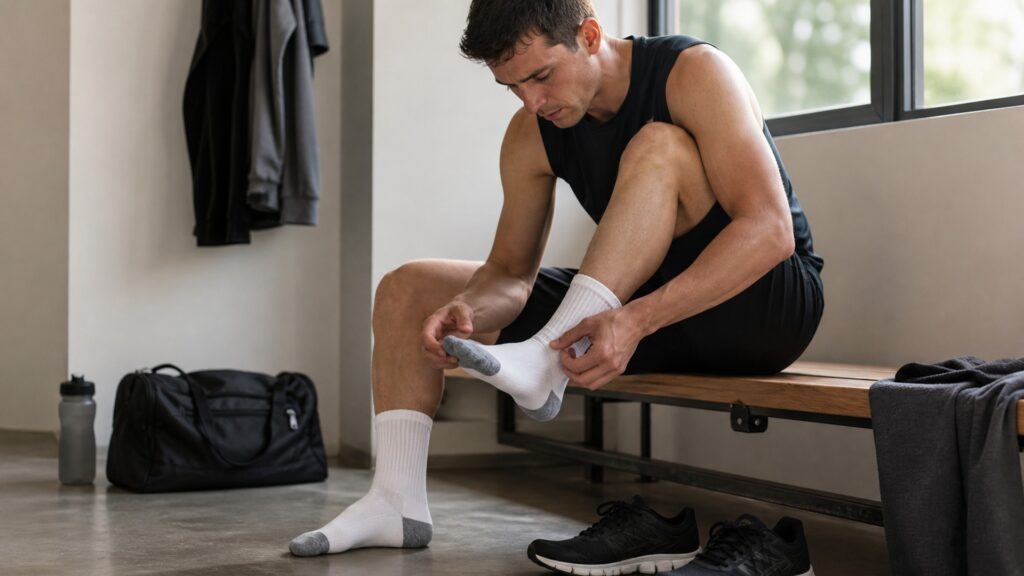
This explains practical sock checks while avoiding unsupported medical or injury-prevention claims.
Tip: Inspect the sock with the shoe: fit, seams, moisture, elastic, wear, and material contact.
These definitions connect the main idea to the variables, limits, and practical signals readers need to compare options.
The fit relationship among foot, sock, and shoe.
Thickness or raised material around a seam.
Sock stretch that no longer returns well.
How the sock feels and behaves when damp.
A tight fit caused or worsened by sock thickness.
A personal reaction or preference around fibers, seams, dyes, or finishes.
Tip: Use these terms for practical sock condition checks, not guarantees about injury or health.
A sock can fit the foot but still crowd the shoe, or fit the shoe while slipping on the heel.
Fit is a three-part check.
A worn sock may slide, thin out, lose shape, or bunch differently than it did when new.
Condition matters because socks are consumable gear.
Sweat, rain, shoe ventilation, and material blend affect how the sock behaves when damp.
Moisture belongs in a practical check, not a promise.
Fiber content, seams, dyes, compression bands, and finishes can matter for some users, but individual reactions should not be generalized.
Material discussion should stay careful.
Socks can alter contact and fit, but they cannot create shoe traction, correct structural shoe problems, or guarantee injury prevention.
The check has clear limits.
Safety-factor analysis explains sock fit, condition, moisture, material, and shoe-compatibility checks.
It separates sock checks from shoe traction and medical claims.
It helps readers inspect socks without overclaiming.
It does not guarantee safety, comfort, or injury prevention.
It does not replace medical advice or shoe fitting.
Common shortcuts and misunderstandings can make the topic seem simpler than it is.
Extra thickness can crowd a shoe.
Seams, size, and shoe volume still matter.
The shoe outsole controls ground traction.
Fiber and seam reactions vary by person.
Tip: Treat strong claims as starting points for comparison, not final answers.
Concise answers to common questions readers may have after the main explanation.
They are fit, condition, moisture, material, and shoe-compatibility checks.
Yes, cushion takes up space inside the shoe.
Socks sit inside the shoe; outsole traction belongs to the shoe.
When holes, flattened cushion, stretched elastic, or persistent slipping make them unsuitable for the activity.
That should not be promised from sock choice alone.
Athletic sock safety factors matter as practical checks around fit, seams, moisture, elastic, wear, materials, and shoe volume.
Those checks can guide product choice, but they do not guarantee safety or medical outcomes.
Use these Review Streets paths to connect the explainer to related categories, comparisons, and next decisions.
Use this for sock construction behind fit and condition checks.
Read this for how socks move during foot strike and push-off.
Browse socks after identifying fit and material checks.
Choose a retailer
Prices checked regularly. We may earn a commission at no cost to you.