Why Commercial Electric Vehicles Safety Factors Matters

Commercial electric-vehicle safety combines ordinary road and load precautions with knowledge of electric-drive controls, charging equipment, and electrical-system boundaries. Drivers still need an appropriate vehicle, a sound load arrangement, clear visibility, and an achievable schedule. Electric propulsion adds features and support needs that users should understand before the vehicle begins work.

The useful approach is vehicle-specific preparation. Learn its ready-to-drive indications and braking behavior, follow the charging instructions, report damaged equipment or warnings, and know who to contact after a fault or incident. High-voltage service and emergency response require the appropriate trained people; they are not extensions of routine driver checks.

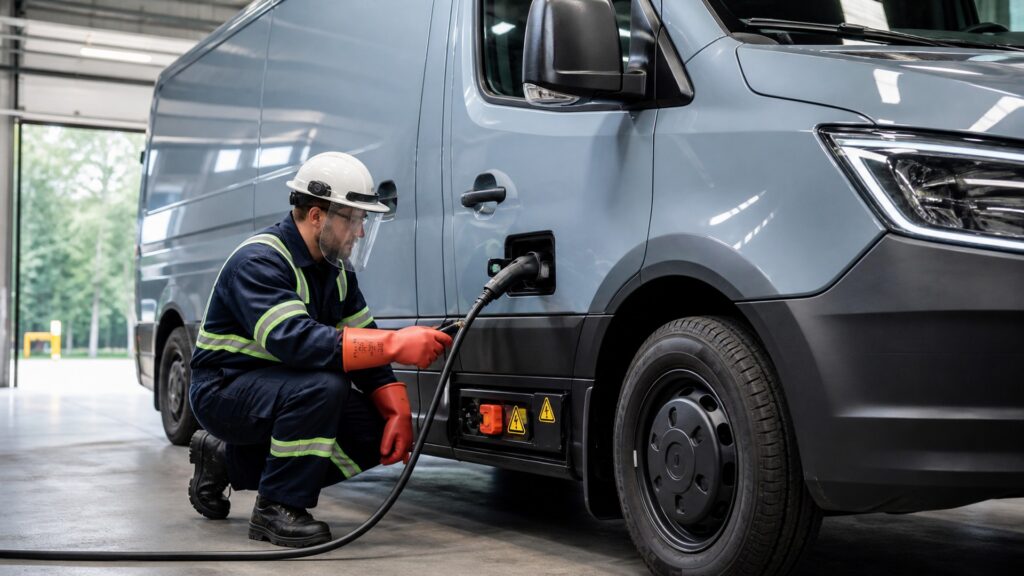
By: Review Streets Research Lab
Updated: October 6, 2026
Explainer · 8-12 min read
commercial electric vehicles explainer hero image for Review Streets
What You'll Learn

Connect Driving, Charging, and Support Responsibilities

Know which checks belong to the user and which require qualified help.

  • Why driver familiarization includes ready status and braking behavior
  • Why electric power does not change the need for load and tire checks
  • How charging-equipment condition affects safe use
  • Why high-voltage work has a separate service boundary
  • What information supports incident response and recovery

Tip: Use the manual for the exact vehicle and charging equipment. Familiarity with another EV does not establish identical controls or procedures.

Definitions

Six Safety Concepts for Commercial EV Use

Each concept calls for a specific observation or responsibility.

Ready-to-drive status

Ready-to-drive status indicates that the vehicle’s drive system is enabled under its operating conditions.

  • Example: the ready indication shown in the driver display
  • Check: the exact vehicle’s starting and parking instructions
  • Limit: lack of engine sound is not proof that the vehicle cannot move

Energy-recovering braking

Energy-recovering braking uses the electric drive to slow the vehicle while recovering some energy.

  • Example: deceleration when the driver releases the accelerator in an equipped mode
  • Check: the fitted system’s behavior and limits
  • Limit: it does not remove the conventional brakes or the need to use them appropriately

Load limits

Load limits define the applicable carrying boundaries for the vehicle and its axles.

  • Example: occupants, tools, and goods included in the loaded vehicle
  • Check: the exact configuration and loading instructions
  • Limit: electric motor response does not demonstrate spare carrying capacity

Charging-equipment condition

Charging-equipment condition concerns the physical and operating state of the equipment used to supply energy.

  • Example: a cable or connector with obvious damage
  • Check: the manufacturer’s use and inspection guidance
  • Limit: damaged equipment should not be used to meet a departure deadline

High-voltage service boundary

The high-voltage service boundary separates routine permitted user actions from work requiring specialized training and equipment.

  • Example: a driver reporting a warning instead of opening an electrical enclosure
  • Check: who is qualified for the specific task
  • Limit: switching the vehicle off does not authorize electrical repair

Incident response

Incident response is the planned action when damage, fire, or another serious problem occurs.

  • Example: contacting emergency services and identifying the electric vehicle
  • Check: the emergency plan and manufacturer guidance
  • Limit: an apparently stopped vehicle may still contain energized components

Tip: A clear report and a safe decision to stop using affected equipment are more useful than an improvised electrical diagnosis.

Driver preparation

Learn the Vehicle Before Its First Working Assignment

Review starting, ready indications, drive selection, parking, and the fitted braking modes before joining a busy route. Do not rely on sound alone to infer that an electric vehicle is off. Understand how the vehicle slows in its selected mode and when the brake pedal is required. Use the manufacturer’s instructions, because controls and energy-recovering behavior vary between vehicles.

  • Identify ready, drive, and park indications.
  • Become familiar with the fitted braking modes.
  • Keep control of the vehicle during maneuvers and stops.

NHTSA explains that energy-recovering braking works alongside conventional brakes. Treat it as part of the vehicle’s braking arrangement, not permission to ignore the brake pedal.

Reference: NHTSA electric-vehicle braking explanation.

Road and load

Keep Ordinary Vehicle Safety Checks in Place

A commercial EV still carries people, tools, or goods through road conditions that demand attention. Use appropriate restraints, secure carried items, and check the relevant loading limits. Inspect tires according to the vehicle’s instructions and respond to reported faults. Extra torque or quiet operation says nothing about whether the load is acceptable or the tire pressure is correct.

  • Include permanent equipment and carried goods in loading.
  • Use the specified tire pressures and condition checks.
  • Prepare the driver for dimensions, visibility, and the route.

NHTSA’s TireWise guidance explains why pressure and condition need attention. The vehicle placard and manual remain the relevant starting points.

Reference: NHTSA TireWise.

Charging use

Stop Using Visibly Damaged Charging Equipment

Follow the vehicle and equipment instructions and use the supported charging arrangement. Inspect for obvious damage within the prescribed user checks and report a problem to the responsible provider. Keep cables stored and routed as instructed so they are not unnecessarily exposed to vehicle movement or other damage. Do not improvise an extension-cord arrangement to reach an inconvenient outlet.

  • Follow the equipment’s connection and disconnection instructions.
  • Do not use charging equipment with obvious damage.
  • Report faults and use an appropriate alternative arrangement.

The U.S. Fire Administration advises following manufacturer guidance, avoiding damaged chargers, and not using extension cords or multiplug adapters with Level 1 charging equipment.

Reference: U.S. Fire Administration EV charging safety.

Service boundaries

Leave High-Voltage Assessment to Qualified Personnel

Drivers can record a warning, describe what happened, and follow the vehicle’s instructions. They should not remove covers, handle exposed high-voltage parts, or attempt electrical repairs. Arrange service by personnel qualified for the vehicle and task. A delivery deadline does not change that boundary, and switching off the controls should not be treated as proof that electrical components are safe to touch.

  • Record the warning and operating circumstances.
  • Use the designated service contact.
  • Keep unqualified people away from electrical work.

NHTSA calls for specialized EV high-voltage training and appropriate equipment for relevant service work.

Reference: NHTSA qualified EV service guidance.

After damage

Have a Clear Route to Emergency and Recovery Support

If fire or another immediate emergency occurs, move away from danger and contact emergency services. Identify the vehicle as electric and provide its location and known damage. Do not approach exposed electrical parts. After a collision, flooding, or suspected battery damage, follow professional and manufacturer guidance before charging, moving, or returning the vehicle to service. Recovery arrangements must suit the exact vehicle.

  • Give responders the vehicle identity and situation.
  • Contact the appropriate vehicle support provider.
  • Keep the vehicle out of assignments until appropriately assessed.

NHTSA warns that damaged high-voltage components may remain energized and that damage can lead to delayed hazards. Appearance alone is not a release-to-service decision.

Reference: NHTSA damaged-EV guidance.

Quick Reality Check

Routine User Checks and Specialist Work

Both matter, but they call for different competence and authority.

Driver and user responsibilities

Learn controls, follow charging instructions, and observe the vehicle and equipment.

Report warnings, damage, and changed conditions through the established process.

Qualified support responsibilities

Assess and repair electrical faults with the required training and equipment.

Provide appropriate incident, recovery, and return-to-service guidance.

Common Myths

Misconceptions About Commercial EV Safety

Quiet operation and advanced equipment do not remove practical responsibilities.

A quiet vehicle must be switched off

Use its status indications and prescribed parking procedure.

Energy-recovering braking removes the need for conventional brakes

The vehicle retains conventional braking functions and their required operation.

A damaged charging cable is acceptable for one urgent session

Do not use visibly damaged charging equipment; report it and arrange an appropriate alternative.

Switching off the vehicle makes high-voltage repair a routine user task

Relevant electrical work requires qualified personnel and equipment.

Tip: Follow the actual vehicle’s instructions and escalate uncertainty before it becomes an improvised repair.

FAQ

Questions About Commercial EV Safety Factors

Practical answers for everyday use and reporting.

What should a driver learn before changing to an EV?

The exact vehicle’s ready indications, controls, parking method, braking modes, charging process, and fault-reporting arrangements.

Are ordinary tire and load checks still needed?

Yes. Electric propulsion does not remove vehicle-specific pressure, condition, restraint, or loading requirements.

What should happen if a charger has obvious damage?

Stop using it, report it to the responsible provider, and arrange an appropriate alternative.

Who should assess a high-voltage problem?

Personnel with the specialized training and equipment appropriate to that vehicle and work.

Can a damaged EV be returned to work because it still moves?

Movement is not evidence of safety after damage. Obtain the appropriate assessment and follow manufacturer and professional guidance.

Bottom Line

Commercial EV safety depends on prepared drivers, appropriate loading, sound charging equipment, and clear boundaries for specialist work.

Use vehicle-specific instructions and make reporting, emergency contact, and recovery arrangements clear before the vehicle is assigned.

Next Steps

Go Deeper or Compare Your Options

Use these Review Streets paths to compare related categories and practical next decisions.