
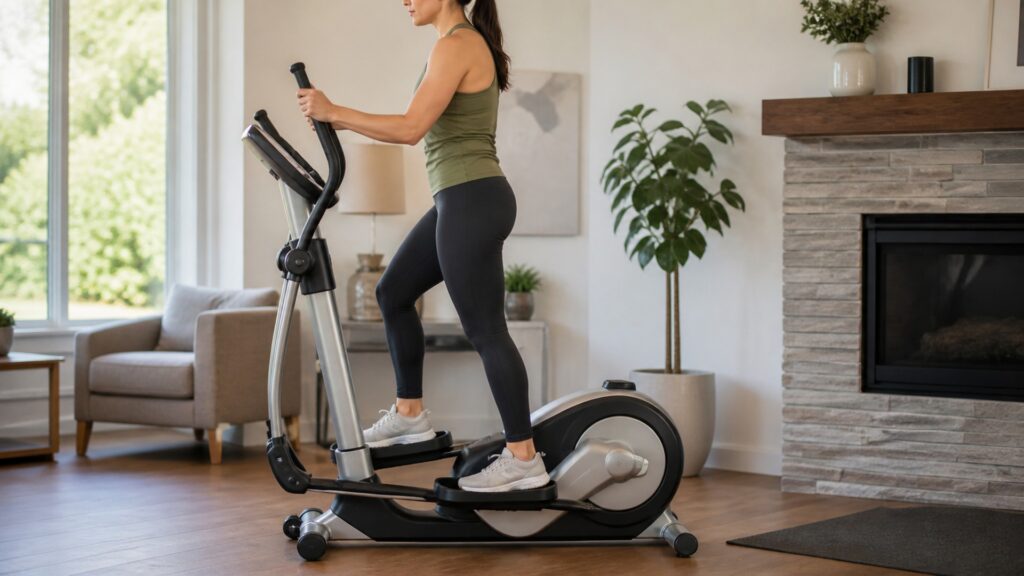
Why Compact Ellipticals Movement Pattern Matters

Movement pattern matters in compact ellipticals because smaller machines often change stride length, pedal path, handle position, and how much room the body has to move. A compact frame can fit the room while still feeling wrong if the stride is too short or the motion feels cramped.

The best compact elliptical supports a natural enough path for the user's body and workout pace. The motion should feel controlled at easy and moderate effort without forcing awkward knees, hips, posture, or foot placement.

By: Review Streets Research Lab
Updated: October 6, 2026
Explainer · 8-12 min read
compact ellipticals movement pattern explainer hero image for Review Streets
What You'll Learn

How Compact Size Changes The Stride

A practical look at stride length, pedal path, cadence, handle position, posture, and matching compact elliptical motion to the user.

  • Why shorter stride paths can feel different
  • How pedal spacing affects hip and knee comfort
  • Where handle placement changes posture
  • Why cadence can expose frame limits
  • How taller users should test compact machines
  • What movement signs mean the machine is not a good fit

Tip: Judge a compact elliptical by the workout it can support in the space available, not by size alone.

Definitions

Key Concepts Behind Compact Ellipticals Movement Pattern Matters

These terms keep compact elliptical choices tied to stride, stability, resistance, footprint, and real home use.

Footprint

Footprint is the floor space the elliptical occupies during storage and use.

  • Example: a short-frame elliptical used in a small apartment
  • Check: measure the space around the machine, not only the frame
  • Limit: a small footprint can still feel cramped if stride clearance is poor

Stride Path

Stride path is the shape and length of the pedal motion.

  • Example: a shorter oval stride on a compact machine
  • Check: test whether the motion feels smooth at normal cadence
  • Limit: short strides may feel choppy for taller users

Resistance Range

Resistance range is how much effort the machine can add across settings.

  • Example: magnetic resistance levels for easy and moderate sessions
  • Check: try both low and higher settings
  • Limit: small machines may have less top-end challenge

Frame Stability

Frame stability is how steady the machine feels under stepping force.

  • Example: a compact frame that does not rock during faster cadence
  • Check: watch for wobble, flex, or shifting
  • Limit: lighter frames may move more on slick floors

Console Simplicity

Console simplicity is how easily the display and controls support a workout.

  • Example: quick resistance buttons and basic time tracking
  • Check: confirm controls are readable while moving
  • Limit: basic consoles may lack advanced programs

Storage Fit

Storage fit is how well the machine can be moved, parked, or kept ready between sessions.

  • Example: transport wheels for moving the elliptical after use
  • Check: test the actual move path and storage spot
  • Limit: portable does not always mean easy to lift

Tip: Compact design helps most when the stride, frame, and resistance still match the user's normal workout.

Stride

Shorter Strides Can Feel Choppy

Compact ellipticals may use a shorter stride path to save space. That can work for some users but feel cramped for others.

  • Test the stride at normal pace.
  • Watch whether knees feel crowded.
  • Avoid judging comfort from a few slow steps.

Stride fit decides whether compact size is usable.

Pedals

Pedal Path Affects Hips And Knees

Pedal spacing, angle, and travel shape can change how the hips and knees track. A small machine should still let the body move without awkward twisting or reaching.

  • Check foot placement on the pedals.
  • Notice knee tracking during cadence.
  • Stop if the motion feels forced.

The path should feel smooth enough to repeat.

Posture

Handles And Console Position Change Body Angle

Compact frames can place handles and consoles closer to the user. That may encourage upright posture for some users or cramped shoulders for others.

  • Check reach to fixed and moving handles.
  • Keep shoulders relaxed.
  • Avoid leaning heavily on the console.

A good fit lets posture stay natural.

Cadence

Faster Movement Reveals Stability Limits

A compact elliptical may feel fine at a slow pace but rock, flex, or shorten the motion when cadence rises.

  • Try the pace planned for real workouts.
  • Watch whether the frame shifts.
  • Use a stable floor surface.

Movement pattern includes how the machine behaves under speed.

Decision

Choose Compact Only If The Motion Still Fits

Space savings are useful only when the machine supports a repeatable stride. The user should not have to fight the motion to get a workout.

  • Prioritize stride comfort.
  • Match resistance and cadence to the routine.
  • Choose a larger machine if compact motion feels cramped.

The motion has to earn the space savings.

Quick Reality Check

Where Movement Pattern Fit Helps

A compact elliptical is useful only when its smaller motion still works for the user.

Where It Helps

It shows whether stride, pedal path, handles, and cadence match the body.

It prevents buying a machine that fits the room but not the workout.

Where It Falls Short

It cannot make a too-short stride feel full-size.

It still requires enough clearance and stable floor placement.

Common Myths

Misconceptions About Compact Elliptical Movement

Compact motion can work well, but it needs checking in motion.

All elliptical strides feel alike

Stride path and pedal spacing can vary a lot.

Small footprint is the same as good fit

A machine can fit the room and still feel cramped.

Slow testing is enough

Normal workout cadence can reveal wobble or awkward tracking.

Compact machines are always easier on joints

Low-impact still depends on the user's fit with the motion.

Tip: The best compact elliptical is the one that stays stable and usable enough to become part of the routine.

FAQ

Frequently Asked Questions About Compact Elliptical Movement

Short answers for choosing compact ellipticals for real home workouts.

Why does movement pattern matter for compact ellipticals?

It determines whether the shorter frame still supports comfortable stride, posture, and cadence.

What should I test first?

Test stride length, pedal feel, handle reach, and frame stability at the pace you plan to use.

Are compact ellipticals good for tall users?

Some can work, but taller users should be especially careful about stride length.

What are signs of poor fit?

Cramped knees, awkward hips, shoulder tension, frame rocking, or a choppy stride are warning signs.

What is the practical takeaway?

Choose a compact elliptical only when the movement feels natural enough to repeat.

Bottom Line

Movement pattern matters because compact ellipticals save space by changing the machine's motion and frame layout.

The right model fits both the room and the user's stride.

Next Steps

Go Deeper or Compare Your Options

Use these Review Streets paths to compare related categories and practical next decisions.