
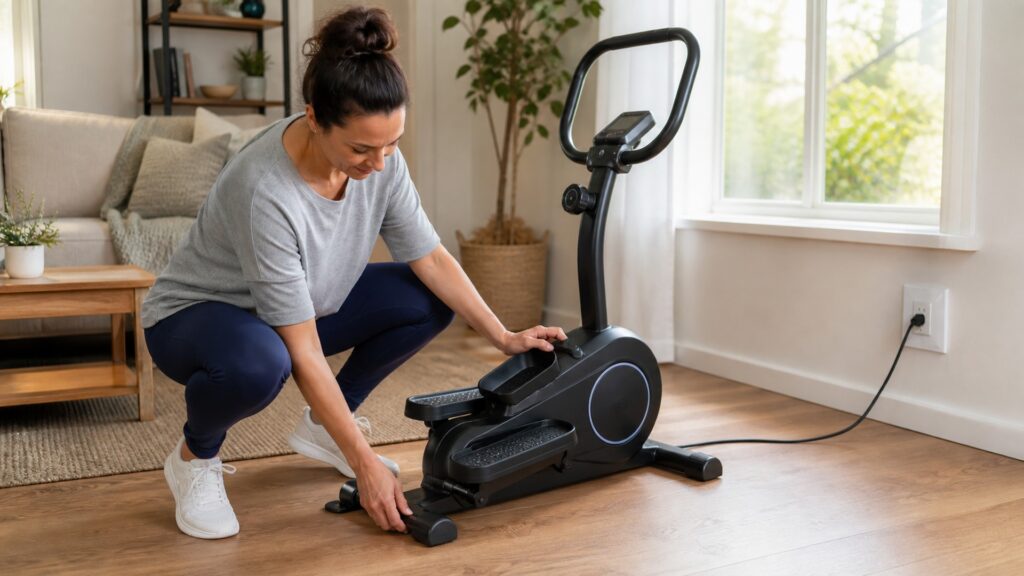
Why Compact Ellipticals Safety Factors Matters

Safety factors matter in compact ellipticals because smaller frames, lighter weight, tighter stride paths, and limited clearance can affect stability. A compact machine has to stay steady, easy to mount, and comfortable enough to use without awkward posture.

A compact elliptical can be a safe low-impact cardio option when it fits the user and the room. The main risks come from wobble, poor clearance, slippery floors, cramped movement, and ignoring weight or setup limits.

By: Review Streets Research Lab
Updated: October 6, 2026
Explainer · 8-12 min read
compact ellipticals safety factors explainer hero image for Review Streets
What You'll Learn

How Compact Design Affects Safer Use

A practical look at frame stability, clearance, floor grip, mounting, posture, resistance, and when a compact elliptical is not the right fit.

  • Why lighter frames need stability checks
  • How room clearance affects safe use
  • Where mounting and stepping off can create risk
  • Why stride comfort matters for joints
  • How floor surface changes machine movement
  • What warning signs mean the setup should change

Tip: Judge a compact elliptical by the workout it can support in the space available, not by size alone.

Definitions

Key Concepts Behind Compact Ellipticals Safety Factors Matters

These terms keep compact elliptical choices tied to stride, stability, resistance, footprint, and real home use.

Footprint

Footprint is the floor space the elliptical occupies during storage and use.

  • Example: a short-frame elliptical used in a small apartment
  • Check: measure the space around the machine, not only the frame
  • Limit: a small footprint can still feel cramped if stride clearance is poor

Stride Path

Stride path is the shape and length of the pedal motion.

  • Example: a shorter oval stride on a compact machine
  • Check: test whether the motion feels smooth at normal cadence
  • Limit: short strides may feel choppy for taller users

Resistance Range

Resistance range is how much effort the machine can add across settings.

  • Example: magnetic resistance levels for easy and moderate sessions
  • Check: try both low and higher settings
  • Limit: small machines may have less top-end challenge

Frame Stability

Frame stability is how steady the machine feels under stepping force.

  • Example: a compact frame that does not rock during faster cadence
  • Check: watch for wobble, flex, or shifting
  • Limit: lighter frames may move more on slick floors

Console Simplicity

Console simplicity is how easily the display and controls support a workout.

  • Example: quick resistance buttons and basic time tracking
  • Check: confirm controls are readable while moving
  • Limit: basic consoles may lack advanced programs

Storage Fit

Storage fit is how well the machine can be moved, parked, or kept ready between sessions.

  • Example: transport wheels for moving the elliptical after use
  • Check: test the actual move path and storage spot
  • Limit: portable does not always mean easy to lift

Tip: Compact design helps most when the stride, frame, and resistance still match the user's normal workout.

Stability

The Frame Should Not Rock Or Slide

Compact ellipticals may be lighter than full-size machines. That makes stability checks especially important before regular use.

  • Use the machine on a flat surface.
  • Check leveling feet if available.
  • Stop if the frame shifts during normal cadence.

A compact machine still needs a steady base.

Clearance

Small Rooms Still Need Safe Movement Space

A machine can fit on the floor but still lack safe clearance for pedals, handles, mounting, or stepping off.

  • Measure side and rear clearance.
  • Check ceiling height with the user on the pedals.
  • Keep cords and clutter away from the path.

Safety depends on the usable space around the machine.

Mounting

Getting On And Off Should Feel Controlled

Compact frames can have smaller steps, tighter handles, or lighter bases. The user should be able to mount and exit without wobbling or twisting.

  • Hold stable handles when stepping on.
  • Start with low resistance.
  • Avoid rushing off while pedals are moving.

The entry and exit are part of the workout setup.

Fit

Cramped Motion Can Create Strain

If the stride is too short or pedal path awkward, the user may compensate through knees, hips, back, or shoulders.

  • Test normal workout cadence.
  • Watch for forced posture.
  • Choose a larger frame if movement feels cramped.

Low impact still has to fit the body.

Decision

Use Compact Only When The Setup Stays Steady

A compact elliptical is practical when it fits the room, user, and workout. If it rocks, slides, crowds the body, or blocks safe access, the setup needs to change.

  • Check frame stability before intensity.
  • Use a mat if the floor is slick and the manufacturer allows it.
  • Respect user weight and setup guidance.

Space savings should not come at the cost of control.

Quick Reality Check

Where Safety Factors Help And Where They Stop

Safety checks make compact ellipticals more practical, but they cannot fix a poor fit.

Where They Help

They reduce wobble, clearance issues, mounting problems, and floor movement.

They help users decide whether the compact frame fits the body and room.

Where They Fall Short

They cannot make a too-small stride comfortable.

They cannot replace manufacturer setup limits or medical guidance.

Common Myths

Misconceptions About Compact Elliptical Safety

Compact does not automatically mean safer or less demanding.

Smaller machines are always safer

Small machines can still wobble, slide, or feel cramped.

Low impact means no fit concerns

Stride and posture still matter for knees, hips, and back.

If it fits the floor, it fits the room

Clearance around pedals, handles, and exits also matters.

Lightweight is always better

A lighter frame may be easier to move but less stable under speed.

Tip: The best compact elliptical is the one that stays stable and usable enough to become part of the routine.

FAQ

Frequently Asked Questions About Compact Elliptical Safety

Short answers for choosing compact ellipticals for real home workouts.

What makes a compact elliptical safer?

A stable frame, enough clearance, comfortable stride, controlled mounting, and a suitable floor surface all help.

Can compact ellipticals wobble?

Yes. Lighter frames may rock or shift if the floor, cadence, or user force exceeds what the machine handles well.

Do compact ellipticals need extra room?

Yes. Leave room for pedals, handles, access, and stepping off safely.

Are compact ellipticals good for beginners?

They can be, if the machine is stable, easy to mount, and comfortable at low resistance.

What is the practical takeaway?

A compact elliptical is safest when it fits both the room and the user's movement.

Bottom Line

Safety factors matter because compact ellipticals must stay stable while fitting a smaller space.

The safest choice is steady, comfortable, and easy to access at the user's real workout pace.

Next Steps

Go Deeper or Compare Your Options

Use these Review Streets paths to compare related categories and practical next decisions.