
Door swing
Door swing is the path and space occupied as a side door opens.
- Example: opening beside a garage wall
- Check: usable entry space with nearby obstacles
- Limit: the car fitting in a bay does not prove entry will be easy
A coupe's operating function is how its doors, seats, controls, luggage opening, and drivetrain work together during ordinary use. A shape that looks appealing can still become inconvenient if the door will not open far enough where you park, rear entry is difficult, or the regular load requires an awkward seating compromise.
Evaluate a complete trip rather than an isolated feature: enter, set the driving position, admit passengers, load belongings, drive, park, and get out again. The best coupe for you makes that sequence manageable while delivering the driving experience you want. The actual equipment and body layout matter more than assumptions about all two-door cars.
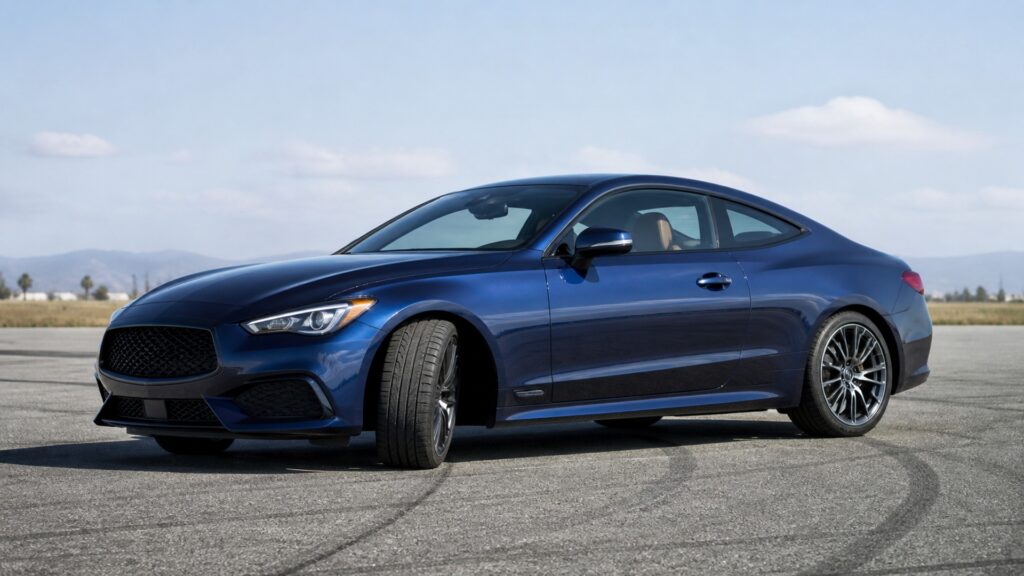
Connect the body and controls to the tasks you will repeat.
Tip: Repeat the complete entry and exit sequence with the people who will use the car.
These features determine whether the attractive body is convenient to live with.
Door swing is the path and space occupied as a side door opens.
Entry height is the relationship between the seat, sill, roof opening, and the person getting in.
Easy-entry movement shifts or tilts a seat to create a route to rear seating where fitted.
Window indexing is a small glass movement used by some frameless doors to clear and reseat against the seal.
Luggage access is the process of placing and removing belongings through the provided opening.
Low-speed control is the ease of positioning the car during starts, stops, and tight maneuvers.
Tip: Test the movement and its return to the normal travel position.
A long door can create a generous opening when fully extended and a restricted one when another car is close. Try the usable opening in a realistic space. Assess the sill and roof together with the seat height, and check whether you can reach the door handle comfortably once seated.
The practical test is whether you can repeat the movement comfortably, not whether the door technically opens.
When rear passengers enter through the front, seat movement is part of the journey. Learn the intended release and avoid forcing powered or manual mechanisms. After access, return the seat and backrest as instructed and confirm locking. Check that belts are not trapped and that the front occupant's position remains suitable.
A quick tilt mechanism is useful only if the available passage and seating arrangement work for the people using it.
Some coupes use frameless windows that move slightly to clear the weather seal before a door opens. Learn the expected behavior so a failure is noticeable. Trunk lids and liftbacks likewise have specific controls, support arrangements, and closure confirmations. Do not force a closure that meets resistance from glass or cargo.
Ford's Mustang short-drop guidance provides an example of glass movement coordinated with door operation; other coupes may use different arrangements. Ford: short-drop window operation.
A rear seat folded for a long item is not available to the passenger who needs it. Try the typical load with the required seats occupied or retained in their intended positions. Check the opening and the closed lid or hatch clearance, and use the car's prescribed cargo-securing provisions.
A suitcase fitting somewhere in an empty demonstration car is a weaker result than the whole group and its luggage fitting for the real journey.
Check gentle pedal response, steering effort, visibility, and braking in normal driving. Transmission and powertrain choices vary, so learn the actual controls rather than expecting every coupe to behave like a sports car. Evaluate the ride and driving position over enough time to notice recurring discomfort.
A satisfying coupe combines the preferred driving character with controls and access that remain manageable at the end of an ordinary day.
Convenience can fail between otherwise impressive individual features.
Doors open where you park, passengers enter comfortably, and moved seats return correctly.
Luggage fits with necessary seats available, and low-speed control feels natural.
Entry requires awkward movements or frequent seat adjustments that frustrate occupants.
The regular load displaces a passenger, blocks a view, or forces an unsuitable driving position.
The body label does not establish convenience.
It may help when fully open but need more room beside the car.
The mechanism is only part of the task; the opening and occupant still matter.
Powertrain, suspension, transmission, and control tuning differ.
Tip: Repeat the tasks that will happen every week, including returning the car to its usual configuration.
Practical answers about access, loading, and control.
Try entry and exit in a realistic parking space, then the passenger and luggage arrangement you expect to use.
Certain frameless designs lower the glass slightly to clear the seal. Consult the exact manual for normal behavior and faults.
Only if the driver can still maintain a correct driving position. Do not accept an unsuitable posture to make a load fit.
It can reveal obvious problems, but also test door use, seat movement, luggage, and the conditions you will repeatedly encounter.
A coupe works well when access, seating, luggage, and driving controls form a manageable daily routine.
Test the complete journey with realistic passengers and belongings before relying on an attractive shape or a single impressive feature.
Use these Review Streets paths to compare related categories and practical next decisions.
Compare coupe access and comfort with luxury sedans.
Assess model-specific protection and safe occupant use.
Decide when a coupe fits better than a hatchback.
Choose a retailer
Prices checked regularly. We may earn a commission at no cost to you.