
Crashworthiness
Crashworthiness is how a vehicle protects occupants in a collision.
- Example: performance in a specified crash test
- Check: model year, body variant, and individual results
- Limit: one score does not cover every possible collision
Coupe safety should be judged on the exact vehicle, its condition, and the people who will use it. A low roof, two doors, or a sporty appearance does not establish crash protection or safe handling. Relevant test results, suitable restraints, clear visibility, sound tires, and attentive driving provide a more useful basis for a decision.
The coupe layout adds practical checks: rear passengers may enter through the front, seats must return and lock correctly, and the driving position must provide an adequate view. If a child seat is needed, its permitted installation and day-to-day access deserve a real trial. These checks complement the usual vehicle-safety assessment rather than replacing it.
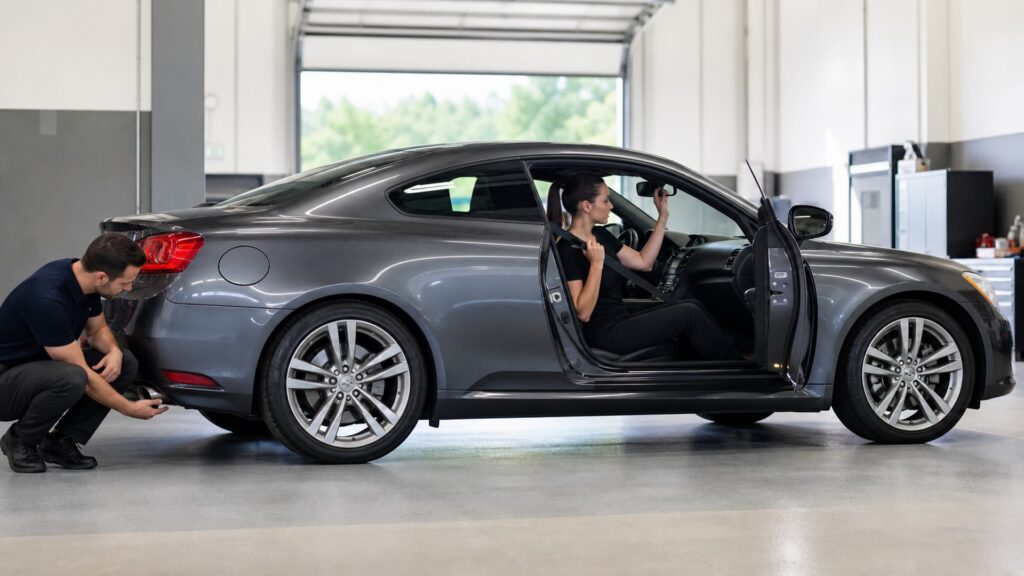
Combine test evidence with the seating and driving arrangement you will use.
Tip: A sporty shape is neither a safety rating nor a reason to dismiss model-specific evidence.
Each concept addresses a different part of protection or prevention.
Crashworthiness is how a vehicle protects occupants in a collision.
Restraint fit is the suitability and correct use of a belt or child restraint for its occupant and seating position.
Seat locking secures an adjustable seat or backrest in its intended travel position.
Usable visibility is the view available from the correctly adjusted driving position.
Tire suitability means the fitted tires meet the vehicle requirements and intended operating conditions.
Driver assistance provides warnings or limited control support under specified conditions.
Tip: Treat evidence, condition, and correct use as separate checks that all matter.
Use the exact model year and confirm that the result applies to the coupe you are considering. Read individual tests and any safety concerns, not just an overall star count. NHTSA limits frontal and overall comparisons to vehicles in the same class and within 250 pounds of one another.
A rating informs the design assessment; it does not tell you whether a particular used example has damage or worn components. NHTSA: safety-rating comparisons.
A two-door layout can make rear access more involved. Try the actual child restraint, where needed, using both manuals and an allowed seating position. Check that the front seat can remain correctly positioned and that everyone can use their belt. After moving seats for entry, verify their intended locked positions.
NHTSA provides child-seat selection and installation guidance and resources for finding qualified installation help. NHTSA: child-restraint guidance.
Adjust the seat and steering position so the driver can use the controls properly, then set the mirrors and assess the view. A sloping roof, thick pillars, cargo, or rear passengers may affect what is visible. Try normal parking and junction approaches rather than relying on a camera display in the showroom.
Driver-assistance features support observation; they do not make obstructed visibility or inattentive driving harmless. NHTSA: driver-assistance limits.
Check the actual wheel and tire arrangement, including different front and rear sizes where fitted. Use the specified pressures and suitable replacements. Have damage, vibration, pulling, or changes in braking assessed. A capable chassis cannot make a worn or unsuitable tire appropriate for the road conditions.
NHTSA's tire guidance is a practical starting point for pressure, wear, damage, and replacement questions. NHTSA: tire safety.
A coupe's styling or performance does not change the need for appropriate speed, following distance, and attention. Learn the controls and assistance features without testing the car's limits on public roads. Check the VIN for open recalls and follow any specific manufacturer instructions that apply.
The official recall lookup is one part of an ongoing safety routine, alongside maintenance and responsible use. NHTSA: VIN recall lookup.
Design evidence and daily preparation answer different questions.
Research relevant crash results, inspect condition, check the VIN, and test the required restraint setup.
Assess the driver's view and the actual passenger arrangement.
Confirm seats and restraints are correctly positioned, cargo is secured, and visibility is clear.
Use sound tires and adapt speed and attention to the conditions.
Avoid shortcuts based on styling or equipment alone.
Size, construction, year, equipment, and condition differ.
Suitability depends on the vehicle, allowed seating position, child restraint, and correct installation—not door count alone.
Systems have limits. The driver must continue observing and controlling the vehicle.
Tip: Try the real seating and restraint arrangement before deciding that it works.
Answers for choosing and using the actual vehicle.
The body label is not enough to judge. Use model-specific evidence, condition, equipment, and intended use.
No. Confirm that the published result applies to the exact body and model year.
Reassess compatibility and the permitted installation using both manuals and qualified help. Do not compromise the driver's correct position.
Confirm moved seats and backrests are locked as instructed and that all occupants can use their restraints correctly.
Coupe safety depends on the specific car, correct occupant protection, sound condition, and responsible driving.
Use test evidence carefully, then verify the seating, visibility, and maintenance details that affect your own journeys.
Use these Review Streets paths to compare related categories and practical next decisions.
Compare coupe access and comfort with luxury sedans.
Test the complete entry, loading, and driving routine.
Decide when a coupe fits better than a hatchback.
Choose a retailer
Prices checked regularly. We may earn a commission at no cost to you.