
Movement Interference
A way an accessory changes reach, clearance, steering space, or pedaling room.
- It can make a good accessory awkward.
- It depends on placement.
- It should be checked on the actual bike.
Cycling accessories movement pattern matters because add-ons occupy space where the rider pedals, steers, reaches, looks, brakes, shifts, and loads the bike.
A bottle cage, frame bag, light, computer, phone mount, saddle bag, rack, or helmet mount can be useful only if its placement works with the ride's actual motion.
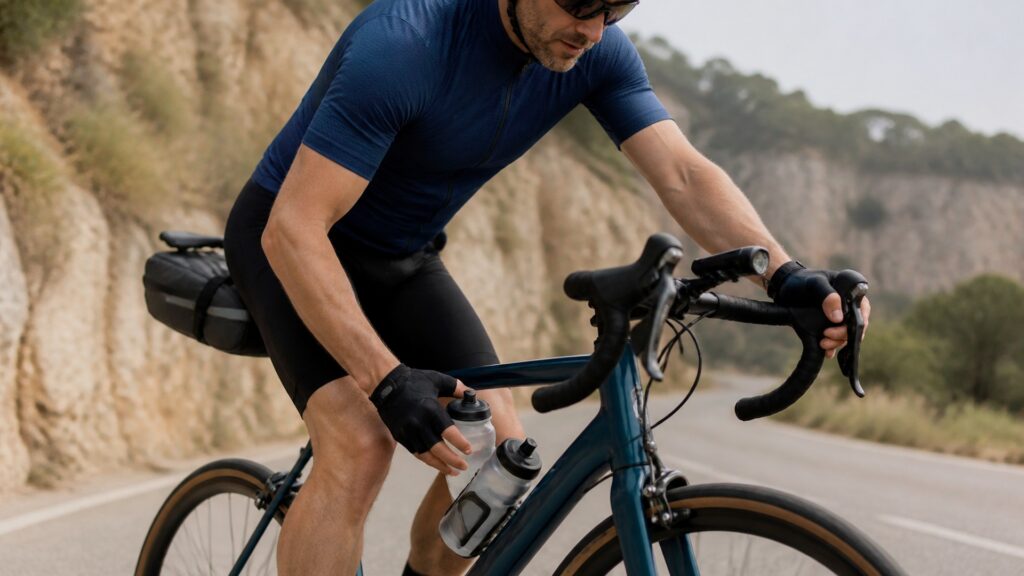
This explains accessory movement effects without turning them into broad physiology or safety claims.
Tip: Watch the accessory during the actual movement it affects: pedal, steer, reach, glance, brake, shift, or carry.
These definitions connect the main idea to the variables, limits, and practical signals readers need to compare options.
A way an accessory changes reach, clearance, steering space, or pedaling room.
Space around the knees, feet, cranks, and frame during the pedal stroke.
The movement needed to access a bottle, pocket, computer, phone, or tool.
Movement of a bag, rack load, or mounted item during riding.
The brief visual movement used to read a computer or phone.
How well a light or camera keeps its intended direction.
Tip: Use each term only where it changes movement, clearance, reach, or load behavior.
An accessory can interrupt pedaling, reaching, steering, braking, shifting, or looking if it occupies the wrong space.
Movement pattern starts with where the accessory sits.
Items near the frame triangle, top tube, down tube, or crank area should be checked against knees, shoes, straps, and bottle removal.
Pedaling clearance has a distinct home.
Lights, computers, bells, bags, and phone mounts can compete with hand positions, brake levers, shifters, cables, and turning room.
Accessory movement around the bars is not the same as storage volume.
A carried load may sway, rattle, bounce, or shift depending on attachment, weight, surface, and placement.
Load movement deserves its own explanation.
Accessory placement can explain interference, access, and control feel; it should not become a claim about injury prevention, rehabilitation, or personal safety.
Accessory movement analysis stays practical and observable.
Movement-pattern analysis explains how accessories interact with pedaling, steering, reaching, looking, and carrying.
It separates clearance, reach, controls, and load movement.
It helps test accessory placement on the actual bike.
It does not diagnose rider movement.
It does not guarantee comfort, safety, or injury prevention.
Common shortcuts and misunderstandings can make the topic seem simpler than it is.
A mount can attach securely and still interfere with knees, hands, cables, or bottle reach.
Movement, sway, rub, and access can matter as much as volume.
They also need to avoid blocking controls or drawing awkward reach patterns.
Placement can reduce interference, but medical claims require separate evidence.
Tip: Treat strong claims as starting points for comparison, not final answers.
Concise answers to common questions readers may have after the main explanation.
It is the way an accessory interacts with pedaling, steering, reaching, looking, braking, shifting, and load movement.
Bars hold hands, controls, cables, lights, computers, and sometimes bags, so space can run out quickly.
Yes. Some bags can reduce knee, bottle, or strap clearance depending on frame size and placement.
Yes. A moving load can change how the bike feels and how easy the item is to use.
No. It explains accessory placement and movement effects only.
Cycling accessories movement pattern matters because add-ons must coexist with pedaling, steering, reaching, looking, and carrying.
The right test is not whether the accessory exists; it is whether its placement works during the movement it affects.
Use these Review Streets paths to connect the explainer to related categories, comparisons, and next decisions.
Use this for accessory attachment and support mechanics.
Read this to compare accessory interaction with the bicycle's own movement.
Browse accessories after identifying placement and movement needs.
Choose a retailer
Prices checked regularly. We may earn a commission at no cost to you.