
Pedal Circle
The circular path made by the pedals around the bottom bracket.
- It starts the bicycle drive pattern.
- It is different from foot travel over the ground.
- Cadence describes how quickly it repeats.
Bicycle movement pattern matters because the rider turns cranks while balancing a two-wheel system that steers through tire contact with the ground.
That pattern is not the same as a stationary bike, treadmill, or rower. Pedaling, coasting, braking, steering, terrain feedback, and balance correction all shape the ride.
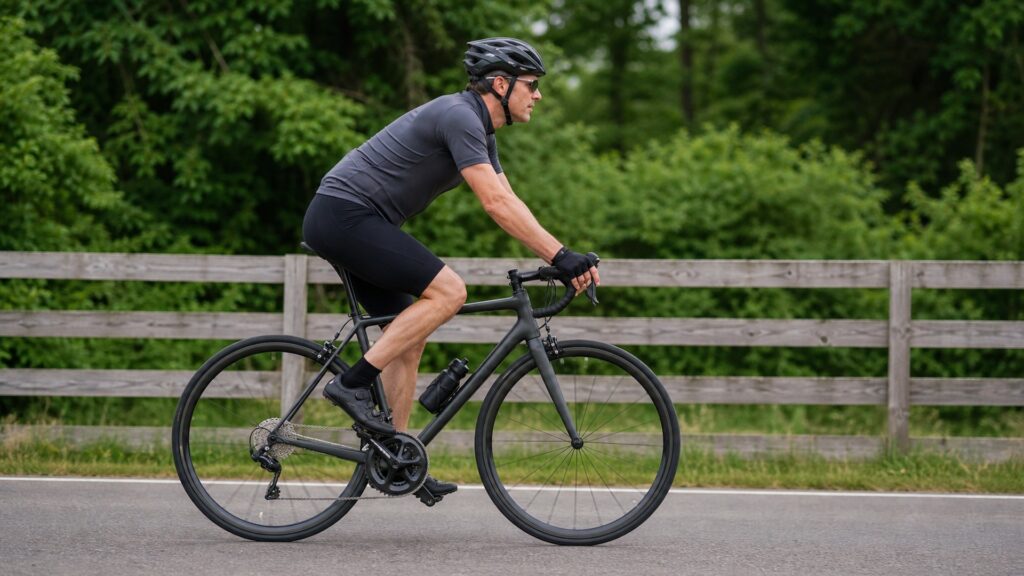
This explains why outdoor bicycle motion is more than circular pedaling.
Tip: Trace a ride through pedals, rear wheel, front wheel, and ground contact rather than treating cycling as a simple seated circle.
These definitions connect the main idea to the variables, limits, and practical signals readers need to compare options.
The circular path made by the pedals around the bottom bracket.
The chain-and-sprocket route that carries crank rotation toward the rear wheel.
The small steering and body adjustments used while the bicycle rolls.
Direction control through the bars, fork, and front tire.
A portion of the ride when the wheels keep moving while the rider is not pedaling.
Gradual control of braking force rather than an on-off stop.
Tip: Use this vocabulary to trace outdoor cycling motion through crank rotation, steering, balance, and coasting.
The rider supplies force through pedals and crank rotation, then the chain and rear wheel turn that force into forward motion.
The bicycle movement pattern begins with a mechanical drive chain.
Unlike fixed indoor equipment, a bicycle asks the rider to balance, steer, and adjust while the bike moves over changing ground.
Balance is not an extra feature; it is part of outdoor bicycle movement.
The pedals still turn in circles, but gear selection changes how cadence and force feel across flats, climbs, and starts.
Gearing explains why the same movement can feel different across terrain.
Bicycles include movement moments where the rider stops pedaling, modulates brakes, or sets up a turn.
A complete movement pattern includes non-pedaling phases.
The pattern explains how a bicycle moves and why it feels distinct, but it should not diagnose pain, prescribe cadence, or promise injury reduction.
The explanation stays with observable bicycle motion.
Movement-pattern analysis explains how bicycles combine pedaling, steering, balance, coasting, and braking.
It separates outdoor bicycle motion from stationary cycling.
It explains why gears and ground contact matter.
It does not diagnose rider movement.
It does not guarantee comfort, safety, or injury prevention.
Common shortcuts and misunderstandings can make the topic seem simpler than it is.
Both use pedals, but outdoor bicycles add balance, steering, terrain, braking, and coasting.
Cadence names crank rhythm, not steering or ground contact.
Gears change leverage and cadence choices, not the circular path.
Tires and frame feel matter, but movement pattern is about mechanics first.
Tip: Treat strong claims as starting points for comparison, not final answers.
Concise answers to common questions readers may have after the main explanation.
It is the way pedaling, drivetrain motion, steering, balance, coasting, braking, and ground contact work together.
A moving bicycle requires constant small corrections that fixed indoor equipment does not require in the same way.
It changes cadence and leverage choices while the pedal circle remains the same.
Yes. Coasting changes the ride because the wheels keep moving without active pedaling.
No. It explains the machine pattern, not personal medical suitability.
Bicycle movement pattern matters because the machine combines circular pedaling with balance, steering, braking, terrain feedback, and coasting.
That mix makes outdoor bicycles different from indoor machines that remove much of the ground-contact problem.
Use these Review Streets paths to connect the explainer to related categories, comparisons, and next decisions.
Use this for the full bicycle mechanism.
Read this for the indoor-trainer contrast.
Use this to separate movement from product safety checks.
Choose a retailer
Prices checked regularly. We may earn a commission at no cost to you.