
Light Aim
The direction a front or rear light points after mounting.
- It affects whether the light serves its intended visibility role.
- Surface vibration can shift weak mounts.
- Aim is checked on the actual setup.
Cycling accessory safety factors matter because add-ons can affect visibility, control space, load security, and repair readiness without becoming the bicycle's main safety system.
A front light, rear light, reflector, saddle bag, rack, pump, multi-tool, phone mount, or bottle cage needs the right attachment point, battery state, clearance, and fit for the route.
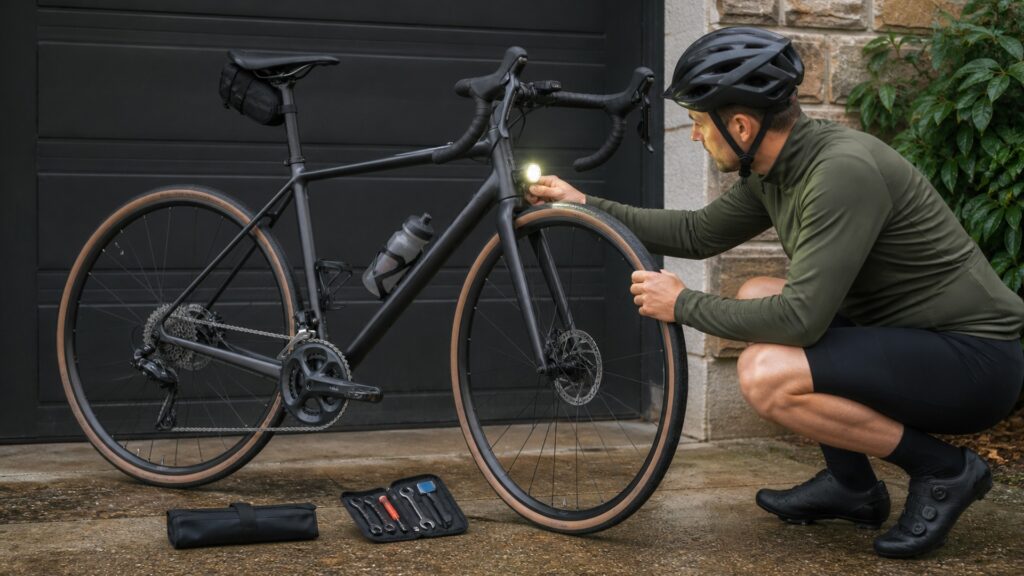
This explains safety-related accessory details without claiming any item can guarantee safer riding.
Tip: Start with what can be inspected: attachment, aim, charge, clearance, load movement, and compatibility.
These definitions connect the main idea to the variables, limits, and practical signals readers need to compare options.
The direction a front or rear light points after mounting.
The charge or power condition of an electronic accessory.
How securely an accessory stays attached during use.
Open space around brake levers, shifters, hands, and cables.
Whether a pump, tube, plug, lever, or multi-tool matches the bike.
How well a bag, rack, or cage keeps its contents stable.
Tip: Use the terms for accessory setup details rather than general riding advice.
A visibility accessory only performs its job when it is mounted where it can be seen, pointed usefully, and powered for the ride.
Visibility support has practical setup conditions.
Accessory mounts matter because a loose light, bag, computer, or bottle cage can move into awkward positions.
The safety factor is the attachment, not the product name.
Handlebar accessories are useful only if brake levers, shifters, grips, and cables remain clear and reachable.
Control clearance belongs in one focused explanation.
A pump, tube, plug, tire lever, or multi-tool supports a roadside problem only if it fits the tire, valve, axle, or fastener involved.
Repair accessories are readiness tools, not prevention claims.
Checking lights, mounts, batteries, loads, and tools can improve preparedness, but it cannot guarantee crash avoidance, legal compliance, or personal suitability.
The explanation stays with accessory setup.
Accessory safety-factor analysis separates visibility, retention, clearance, repair fit, and load security.
Accessory safety-factor analysis separates visibility, retention, clearance, repair fit, and load security.
It helps readers inspect add-ons without confusing them with brakes or bike handling.
It does not guarantee safety or compliance.
It does not replace local rules, product manuals, or qualified advice.
Common shortcuts and misunderstandings can make the topic seem simpler than it is.
Mount location, aim, mode, battery state, and rules can all matter.
Tools help respond to some issues but do not stop wear or damage.
Capacity can add sway, crowding, or access problems.
Reflectors and lights work in different ways.
Tip: Treat strong claims as starting points for comparison, not final answers.
Concise answers to common questions readers may have after the main explanation.
They are checks around accessory attachment, visibility, battery state, control clearance, load security, and repair compatibility.
Electronic accessories lose their function if the power mode or charge will not last.
No. Brakes are bicycle systems; accessories can only support surrounding ride needs.
Bars often hold hands, levers, shifters, cables, lights, computers, and phone mounts at once.
No. It organizes practical product checks only.
Cycling accessory safety factors matter when add-ons must stay attached, powered, visible, clear of controls, and compatible with the bike.
The useful check is concrete and limited: inspect the accessory setup, then follow the product manual and local rules.
Use these Review Streets paths to connect the explainer to related categories, comparisons, and next decisions.
Use this for attachment and support mechanics behind the safety checks.
Read this for clearance, sway, reach, and control-space movement effects.
Browse accessory categories after identifying the setup checks that matter.
Choose a retailer
Prices checked regularly. We may earn a commission at no cost to you.