
Riding Posture
The bent and reaching position used on the bike.
- It changes garment tension.
- Standing fit may mislead.
- Bike setup also matters.
Cycling apparel movement pattern matters because clothing has to stay useful while the rider bends at the hips, turns the pedals, reaches the bars, grips controls, looks around, and changes layers.
A jersey, bib short, glove, jacket, tight, or shoe cover can fit differently on the bike than it does standing in a room.
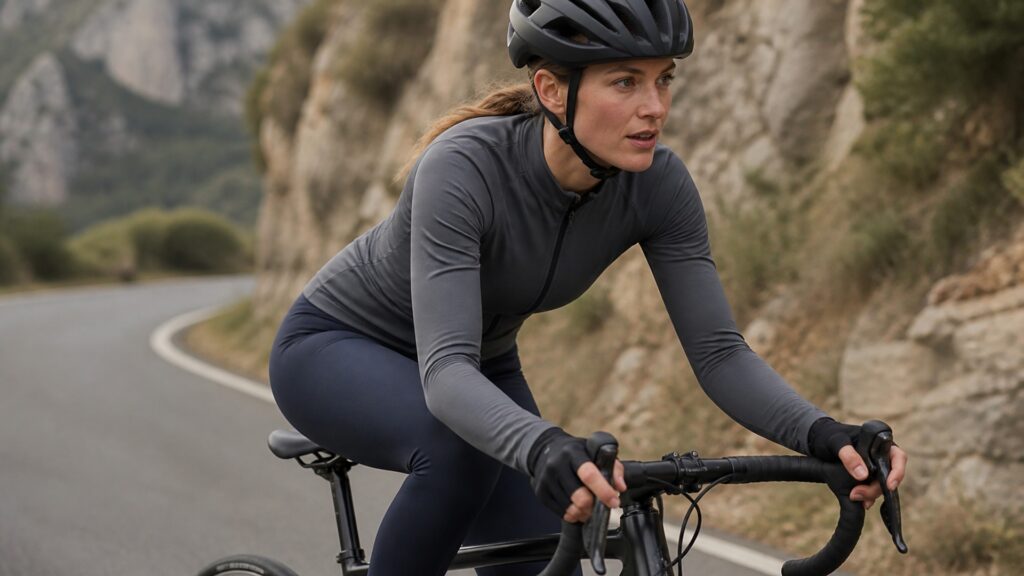
This explains how apparel moves with cycling posture without making body-performance claims.
Tip: Check apparel in the position and motion where it will be used: pedaling, reaching, gripping, zipping, and accessing pockets.
These definitions connect the main idea to the variables, limits, and practical signals readers need to compare options.
The bent and reaching position used on the bike.
Space for fabric near knees, thighs, cuffs, and shoes during the pedal stroke.
Fabric movement away from its intended position.
Movement of loaded apparel pockets while riding.
Fabric pull created when the rider reaches bars or controls.
The way glove fabric, seams, and palm material meet bars and levers.
Tip: Use the terms to track fabric movement rather than bicycle mechanics.
A garment can look short, long, tight, or loose while standing because it is meant to work when the rider bends and reaches.
Movement pattern begins with posture.
Pedaling repeats knee and hip movement, so fabric around thighs, knees, ankles, and shoe covers needs room and stable placement.
Pedaling gives lower-body apparel a distinct job.
Jerseys, jackets, gloves, and sleeves interact with shoulder reach, wrist angle, brake levers, and grip points.
Reaching and gripping belong together.
Rear pockets, vests, shells, and packed layers can bounce, sag, or shift depending on load and garment cut.
Storage inside apparel is a movement issue.
Clothing movement can explain fit problems, bunching, pull, or access; it should not claim injury prevention or individualized biomechanics.
The explanation remains about garments in motion.
Movement-pattern analysis explains how cycling clothing behaves during posture, pedaling, reaching, gripping, and pocket access.
It separates garment movement from bicycle movement.
It explains why on-bike fit matters.
It does not diagnose movement or injury.
It does not guarantee comfort, safety, or performance.
Common shortcuts and misunderstandings can make the topic seem simpler than it is.
Cycling apparel often changes once the rider bends and reaches.
Jerseys, jackets, gloves, pockets, and cuffs can all move.
They help placement but cannot correct every size or cut mismatch.
No such claim should be assumed from garment design alone.
Tip: Treat strong claims as starting points for comparison, not final answers.
Concise answers to common questions readers may have after the main explanation.
It is how cycling clothing behaves during riding posture, pedaling, reaching, gripping, and storage access.
The riding position changes fabric tension and coverage.
Yes. Loaded pockets can bounce, sag, or change reach.
Yes. Gloves interact with grip, levers, seams, and weather.
No. It explains garment behavior only.
Cycling apparel movement pattern matters because clothing has to work while the rider pedals, bends, reaches, grips, and carries small items.
The best test is the on-bike motion, not a standing pose.
Use these Review Streets paths to connect the explainer to related categories, comparisons, and next decisions.
Use this for the clothing construction behind movement behavior.
Read this for visibility, fit, and condition checks around apparel use.
Browse apparel after identifying movement and fit needs.
Choose a retailer
Prices checked regularly. We may earn a commission at no cost to you.