
Visibility Detail
A color, reflective panel, or placement choice intended to support being noticed.
- It depends on angle and conditions.
- It differs from active lighting.
- It cannot guarantee visibility.
Cycling apparel safety factors matter because worn gear can affect visibility support, weather coverage, grip feel, loose-fabric control, and whether clothing works with other equipment.
Reflective panels, bright colors, rain shells, thermal layers, glove palms, hem grippers, cuffs, zipper pulls, and helmet compatibility are practical checks, not guarantees.
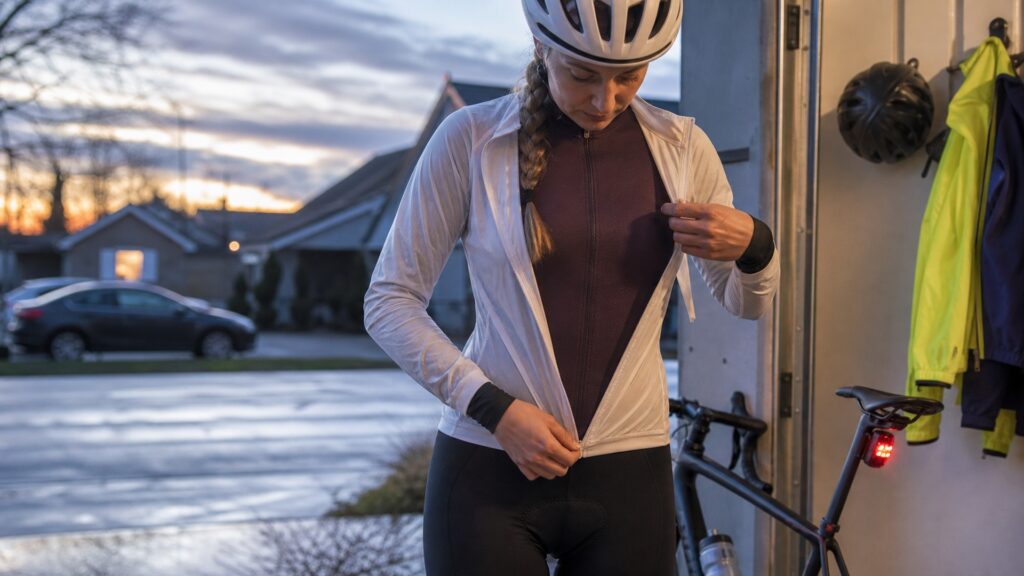
This explains apparel-related safety factors while keeping claims limited and evidence-aware.
Tip: Treat apparel safety factors as inspectable clothing conditions: visibility detail, fit, coverage, grip, compatibility, and condition.
These definitions connect the main idea to the variables, limits, and practical signals readers need to compare options.
A color, reflective panel, or placement choice intended to support being noticed.
A loose cuff, strap, drawcord, or fabric edge that could catch or flap during riding.
A glove palm or material area that contacts the handlebar.
A garment chosen for rain, wind, cold, sun, or heat exposure.
How apparel works with helmets, lights, shoes, pedals, or bags.
Inspection of worn fabric, closures, seams, reflective areas, or grippers.
Tip: Use the vocabulary for garment condition and compatibility, not crash predictions.
Reflective panels and bright colors can support being noticed, but angle, lighting, placement, motion, and local rules affect their usefulness.
Visibility details should stay modest.
Cuffs, zippers, hems, drawcords, and straps should sit where they do not distract, flap, or interfere with pedaling and controls.
Apparel safety factors include clothing placement.
Glove palms, cuffs, shoe covers, and socks interact with bars, levers, shoes, and weather exposure.
Touch-point clothing deserves its own section.
Rain shells, thermal layers, UV fabrics, and vents can change exposure, but they should not be framed as health guarantees.
Weather coverage is practical, not clinical.
Helmet straps, lights, bags, shoes, pedals, and accessories can interact with apparel fit and placement.
Safety-factor checks include what clothing touches.
Apparel safety-factor analysis explains visibility support, fit, loose fabric, contact points, weather coverage, compatibility, and condition checks.
It separates clothing checks from bicycle safety systems.
It keeps visibility, weather, and fit claims limited.
It does not guarantee crash prevention or legal compliance.
It does not provide medical or individualized safety advice.
Common shortcuts and misunderstandings can make the topic seem simpler than it is.
Reflective material depends on light angle, placement, and conditions.
Fit should support motion without assuming one style suits every rider.
They change exposure conditions but do not guarantee health outcomes.
They can change hand contact, but control depends on more than gloves.
Tip: Treat strong claims as starting points for comparison, not final answers.
Concise answers to common questions readers may have after the main explanation.
They are clothing checks around visibility, fit, loose fabric, grip, coverage, compatibility, and garment condition.
No. They return light; active lights emit it.
Loose or flapping fabric can interfere with movement or become distracting.
No. It can support conditions but cannot guarantee safety.
Yes. Visibility and equipment requirements vary by location.
Cycling apparel safety factors matter when clothing visibility, fit, closures, coverage, contact, and compatibility affect practical use.
The explanation should stay with checks a rider can observe and avoid promising protection that apparel cannot guarantee.
Use these Review Streets paths to connect the explainer to related categories, comparisons, and next decisions.
Use this for apparel construction and fit mechanics behind the checks.
Read this for how fabric moves during pedaling, reaching, and gripping.
Browse apparel after identifying visibility, coverage, and fit checks.
Choose a retailer
Prices checked regularly. We may earn a commission at no cost to you.